Why does an apple tree only bloom but not bear fruit?
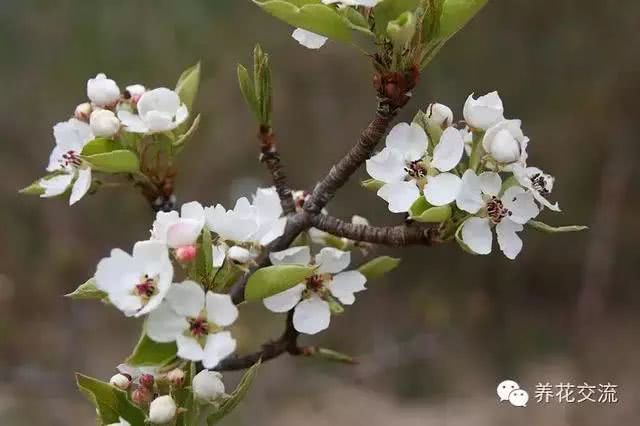
When a plant blooms but does not bear fruit, the truth is that many fruit trees must be planted in twos or more in order to produce fruit through pollination.
These fruit trees include apples, pears, cherries, strawberries and most plum trees, and apples are the ones that most need two trees to bear fruit. A fruit tree on its own cannot bear fruit either.
I. Why do you need two trees to get fruit?
In fact, sometimes a single apple tree can also pollinate itself, and that is because different varieties of apple have been grafted onto the same tree, which is why it can bear fruit.
But we often see that an ordinary person's yard has only one apple tree, especially nowadays when most yards in the city are very small and it is hard to ask people to plant two. So how do those apple trees bear fruit?
As long as there is an apple tree nearby, that also works. The ones that generally take on the important task of pollination are mostly bees, and in a few cases birds, butterflies and other insects carry the pollen. As long as there are two apple trees within the flight range of these insects, there is no fear that the pollen cannot be transferred to each other.
As for how much distance is enough? Of course, the closer the better. Generally, 100 to 200 feet is best, and at most no more than 200 yards.
II. The influence of apple tree varieties
So when planting an apple tree, it is best to first find out about the nearby area in advance, whether any neighbors have planted apple trees, and what kind of apple trees they have planted.
In addition, can any two apple trees pollinate each other? First of all, they must be different varieties of apple tree. You cannot plant two Ralls Janet apples; the result of two of them pollinating each other is useless. They must be two different varieties.
As for which two kinds of apple trees can help each other with pollination? For this, you need to ask the owner of the garden center when buying apple trees.
You can also check online in advance to see which apple trees can help each other. The more common the apple tree, the more likely it is that someone in your area is growing that apple tree.
And the best pollinating apple trees are apple trees with many flowers and abundant blooms. (The optimum temperature for apples is 13~25°C.)
III. The key point is blooming at the same time:
In fact, the so-called suitable apple trees for pairing must first of all be two varieties that are not too closely related, and secondly they must be apple trees that bloom at the same time.
Each apple tree blooms for only about two weeks each year. If the blooming periods of two apple trees are staggered, the bees cannot help you pollinate them. You must explain this clearly to the owner or ask an experienced farmer.
Finding apple tree varieties that bloom at the same time is easy, as long as you check clearly when buying the varieties. Because the blooming period of apple trees lasts 2~3 weeks, as long as there are a few overlapping days during that time, the pollen can be exchanged.
If you want your apple tree to have a better chance of being pollinated, it is best to choose varieties that are not very different, because most apple trees do not differ much in blooming time, and it is easier to come across apple trees of the same type.
IV. Wild crabapples can also pollinate apple trees:
In fact, it is not only apple trees; plants of the apple family itself can also take on this task, including the common wild crabapple (some people call it wild hawthorn). This makes things much easier.
So many people plant one apple tree and have apples to eat year after year, without realizing that apple trees originally require two trees.
In addition, I have seen a clever method suggested online, which is that when the apple tree blooms, cut about a dozen branches of flowers from a wild hawthorn tree, put them in a large bucket of water, and then place it under the tree, so that bees can easily transfer pollen. Remember not to let the flowers be exposed to the sun, and remember to add water every day.
V. Grafting onto the apple tree:
Another way is to choose a thicker branch on the same apple tree and graft another apple tree onto it, so that one apple tree will bloom two kinds of flowers at the same time, and the distance is so close there is nothing more to say.
(A grafted fruit tree)
If you are familiar with the grafting process, you can do it yourself; otherwise you can hire a horticulturist to do it for you. (The fact is, I have seen quite a few fruit trees like this and do not know whether they were grafted for this reason.)
VI. Pollinating apple trees yourself:
But among apple trees there are also a very few that can pollinate themselves. These include: Yellow Delicious, Golden Delicious and the Stark series, etc. You can ask at a garden store about apple tree varieties that pollinate themselves. Besides being able to pollinate themselves, they also help pollinate other apple trees.
However, even for a self-pollinating apple tree, if there is a different kind of apple tree nearby, it will produce more fruit. So it is still better to have another apple tree.
VII. The importance of bee pollination:
Even with apple trees that pollinate each other, the most important thing is still insects like bees to transfer the pollen. So it is best to plant some flowers that attract bees.
In addition, some varieties of apples will not pollinate when the temperature is too low. This is why sometimes, even if the apple tree has many flowers, if the weather suddenly turns cold, it ultimately bears no fruit. In addition, for bees to be active, the temperature generally needs to be above 12 degrees.
So in overly cold regions, you can consider planting varieties that pollinate easily even at low temperatures, or choose varieties that bloom in later months.