Don't rush to throw away a plant that's growing crooked - one cut this way makes it look better than before
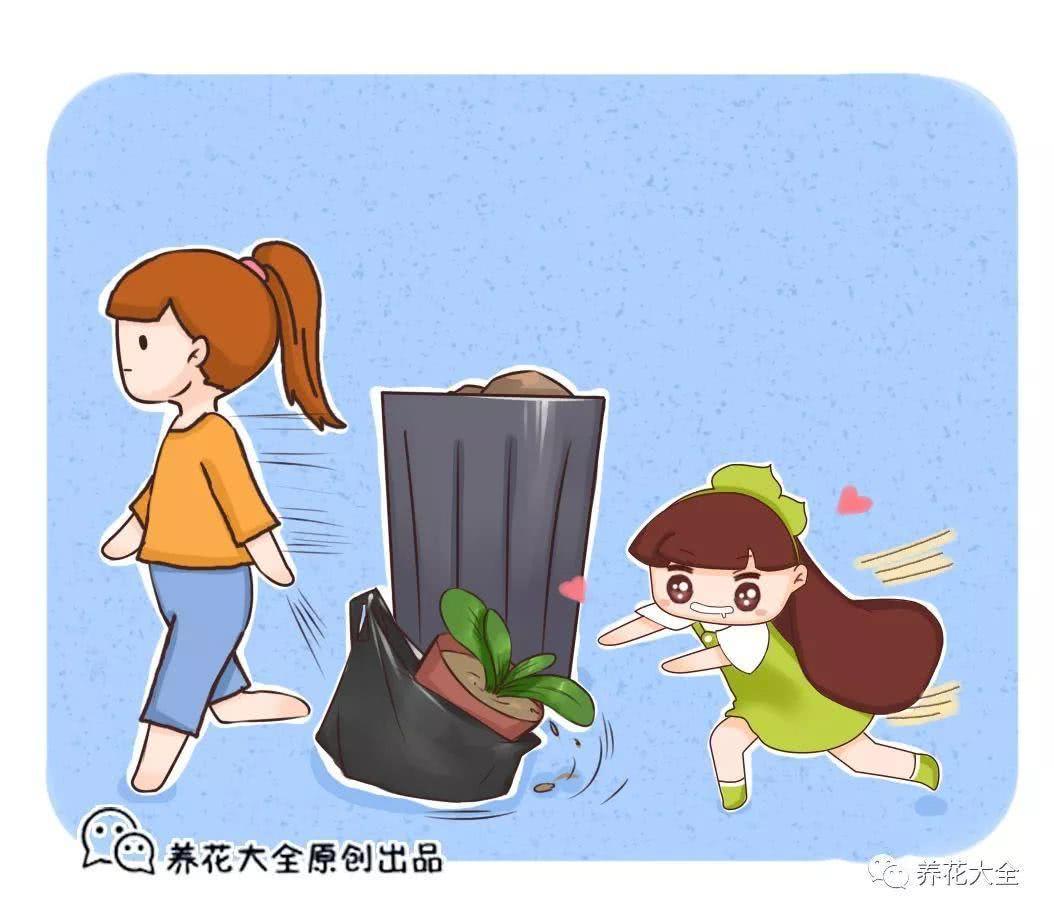
A friend came to complain: the succulents she's growing are getting uglier and uglier, and she really doesn't want them anymore. Huahua quickly asked her friend to send a photo of the "ugly" succulents, and upon looking, it turned out the succulents had grown out of shape. But don't worry, this time Huahua has a way to turn ugly into beautiful!
The more you grow flowers, the uglier they get
Grow Flowers Complete Guide
Flower lovers who share the same troubles as Huahua's friend, do you always feel that your flowers don't look as good as other people's?
The picture below shows mountain roses grown by someone else
The picture below shows mountain roses grown by a flower lover
There are even more impressive flower lovers who grow roses into little green vegetables
Other people's Chinese roses have compact leaves and flowers, and the roses bloom bigger and bigger
The Chinese rose you grow has branches sprawling all over the place, and although there are many buds, the flowers bloom smaller and smaller
Other people's clivias are neat and upright, with leaves in symmetrical pairs
The clivia you grow just grows however it wants, and it's already good if it blooms at all
After seeing these comparisons, flower lovers, think about it - which camp are you in?
Actually, growing flowers that look ugly isn't scary. Let's correct it right now!
Succulent correction
Grow Flowers Complete Guide
Succulent deformation is usually etiolation (leggy growth). Huahua has also talked about solutions for etiolation many times - small problem!
1. Behead directly and re-cuttings
Some succulents after etiolation really become unrecognizable even to their own mother. At this time, ruthlessly cut off the flower head, then remove the leaves and re-cuttings
The original part left behind will grow new "heads" again, don't worry (you can dip a cotton swab in some carbendazim solution and wipe it to disinfect)
The picture below shows new buds growing after beheading - aren't they much better than when etiolated?
One plant can turn into a big pot full~
2. Grow into an old stump
Etiolated succulents can be grown into old stumps, but the stems need to be relatively thick. Etiolated succulents that meet the requirements can start preparing to "evolve" into old stumps
The picture below shows an etiolated succulent that looks relatively sturdy. It's recommended to keep it as an old stump
Remove dead leaves, as well as the leaves on the bottom one-third of the height, and replace with old-stump soil with more granules (more breathable)
During the old stump growing period, water less - once every 5-10 days is fine. Place it in a ventilated spot. Don't be afraid the succulent will be thirsty - this is the necessary path to growing an old stump.
Clivia correction
Grow Flowers Complete Guide
The shape of clivia emphasizes symmetry, with leaves gently spreading outward symmetrically, like a peacock spreading its tail. Although it looks simple, being able to grow a standard clivia can be worth tens of thousands!
For the crooked clivia at home, how do you shape it?
1. Observe the crooked situation
Some clivias look fine from the front, it's just that the leaf droop isn't uniform
But actually, if you look from above, you'll immediately discover that the leaves face all different directions, not uniform at all
If left alone, it will become like this - really too ugly
2. Tie with string
If the leaves are just running back and forth randomly, as shown below
Gently tie them together with string, not too tight or it may hurt the leaves. About 1-2 weeks should be enough
3. Clip with clips to maintain balance
If the clivia is just leaning to one side, as shown below
You can take a few clips and hard cardboard. First use the hard cardboard to surround the base (10 cm high) to stabilize the lower part
Then use clips to clip the leaves on both sides (pad with toilet paper to prevent the leaves from being pinched), and you can adjust the clip positions according to the angle you like. Just note to keep both sides symmetrical
Clip correction also needs 1-2 weeks to complete
3. For severe crookedness, directly use splints
For clivias that are crooked both front-to-back and left-to-right, you can make your own splints to correct them. Find two long strips of hard cardboard, use scissors to cut holes (the hole positions on both pieces of paper should be the same), and thread the leaves through the holes
4. Light correction
Light correction is also a common correction method. Wrap the crooked leaves with long strips of opaque paper (usually aluminum foil), and use light to change the growth direction
Opaque paper works too. Fix it with clips (be careful not to make it too tight to avoid hurting the leaves)
At this time, rotate 180 degrees every 7 days to ensure more comprehensive correction. About 2-3 weeks is enough. Don't do it too long to avoid overcorrecting
Chinese rose pruning
Grow Flowers Complete Guide
Pruning Chinese roses not only makes the shape more beautiful, but also ensures the quality of blooming. Without pruning, a large amount of nutrients is absorbed by the branches, leaving very little for blooming, so the flowers naturally become small and thin.
1. Prune excess branches
Don't be reluctant with Chinese roses. Pruning now saves much more trouble later! When pruning, you need to know how to cut. When pruning branches, keep the outer buds, as shown below
Here's a full-body photo
When pruning for shape, you can follow the shape of the young sapling and prune around the central main stem
Those with more branches can be pruned into the shape you like
2. Prune after blooming
After Chinese roses bloom, promptly cut off the spent flowers to ensure the quality of the next bloom
3. Cut off blind branches
Blind buds and blind branches not only consume nutrients but also affect the overall appearance. Cut them off quickly!
The picture below shows a blind bud. This bud will no longer grow new branches, so it can be removed
The picture below shows a blind branch. It will no longer continue growing, so cut it off quickly
After pruning
After pruning, Chinese roses receive more sufficient light and nutrients are more concentrated, so of course they grow better. The picture below shows a comparison of Chinese roses before and after pruning
Today we'll just talk about these three kinds of flowers
If flower lovers have any other questions
Feel free to bring them up
Let's all think of solutions together~