Which of the four succulents is a medicinal plant? An old gardener tells you
Because succulents have many advantages, such as pretty flower shapes, rich colors, and being simple to manage and easy to grow, they have won the favor of many flower lovers. In fact, besides these advantages, succulents also have some little-known uses. For example, some succulents have a certain medicinal value. Below, the old gardener editor introduces four succulents to everyone, and one of them has this characteristic.
First, Orostachys fimbriata
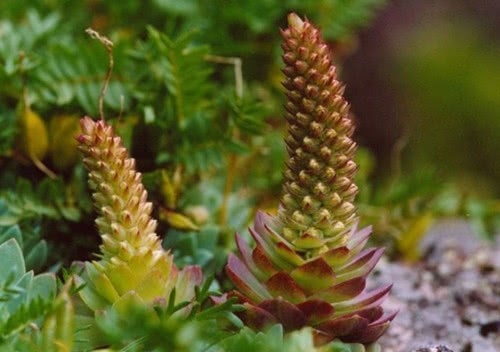
Orostachys fimbriata is a herbaceous plant variety belonging to the Crassulaceae family. It is also a plant variety unique to China, and it is very widely grown in the southern regions. Because Orostachys fimbriata has strong adaptability, growing it is very simple and rough-and-ready. The Orostachys fimbriata plant is rather small, and its leaves are lanceolate in shape, pressed tightly together one by one, yellow-green in color, looking very bright and eye-catching, just like little pyramids. Like other succulents, Orostachys fimbriata also very much likes a warm, humid growing environment with plenty of sunlight, but it also has a big shortcoming, namely that it is relatively sensitive to cold environments. If Orostachys fimbriata is placed in a low-temperature environment, its plant is very easily frostbitten.
Second, Ceropegia woodii
Ceropegia woodii is a typical succulent plant of the genus Ceropegia. It is native to central South Africa and the Zimbabwe region. Ceropegia woodii is also called rosary vine, or string of coins. Because Ceropegia woodii symbolizes beautiful love, it is loved and admired by many flower lovers. The plant shape of Ceropegia woodii is very unique and peculiar, and its leaves are heart-shaped, with gray-green net-like patterns growing on them. Especially when there is plenty of light, the leaves of Ceropegia woodii will turn a purplish-red color. Generally, the most suitable growing temperature for Ceropegia woodii is between 15-26 degrees. If the ambient temperature falls below 5 degrees, the plant of Ceropegia woodii is very easily frostbitten. Therefore, when we grow Ceropegia woodii, we must do a good job of keeping it warm and protecting it from the cold, so that we can ensure it grows vigorously.
Third, Pachyphytum 'Blue Haze'
In the large family of succulents, there is a variety deeply loved by people, and it is Pachyphytum 'Blue Haze'. It is a succulent plant belonging to the Crassulaceae family, and it is also the product of a cross between Pachyphytum oviferum and Graptopetalum 'Bronze'. Because Pachyphytum 'Blue Haze' is a hybrid variety, it has many advantages that other succulents cannot match. The plant shape of Pachyphytum 'Blue Haze' is small and unique, and its leaves grow in a lotus-flower shape. The leaves are plump and fleshy, round and smooth, and pink in color, looking very warm and romantic, just like cute little peaches. Pachyphytum 'Blue Haze' relatively likes a growing environment with plenty of sunlight and warmth and dryness, and it has a certain drought tolerance and tolerance of poor soil. However, Pachyphytum 'Blue Haze' is very afraid of strong sunlight, especially when the temperature is high in summer. If it is left outdoors for a long time, its leaves will be sunburned.
Fourth, Gasteria gracilis
Gasteria gracilis is also called yuanbao flower, or yuanbao jin. It is a succulent plant variety belonging to the Liliaceae family. It is native to the central and northern regions of South Africa. The plant of Gasteria gracilis succulent is small and exquisite, and its leaves are long and strip-shaped, thick and plump, dark green in color, with white spots growing on them, looking just like pretty little tongues. The growing method for Gasteria gracilis succulent is relatively simple. Usually, it very much likes a growing environment with plenty of sunlight and good ventilation. In addition, Gasteria gracilis succulent also has a certain drought tolerance and cold tolerance, and it has relatively high requirements for light, so when we grow it, we must provide it with an environment with plenty of light, as this is more conducive to the growth of Gasteria gracilis succulent.
After the old gardener editor's introduction, do you have some understanding of these succulents? How much more do you know about the topic of the article? You are welcome to express your views in the comment section below. If you like this article, you might as well subscribe, and there will be more wonderful articles to share with you.