Lucky bamboo leaves turning yellow severely? Learn this trick and they will recover their emerald green in 3 days
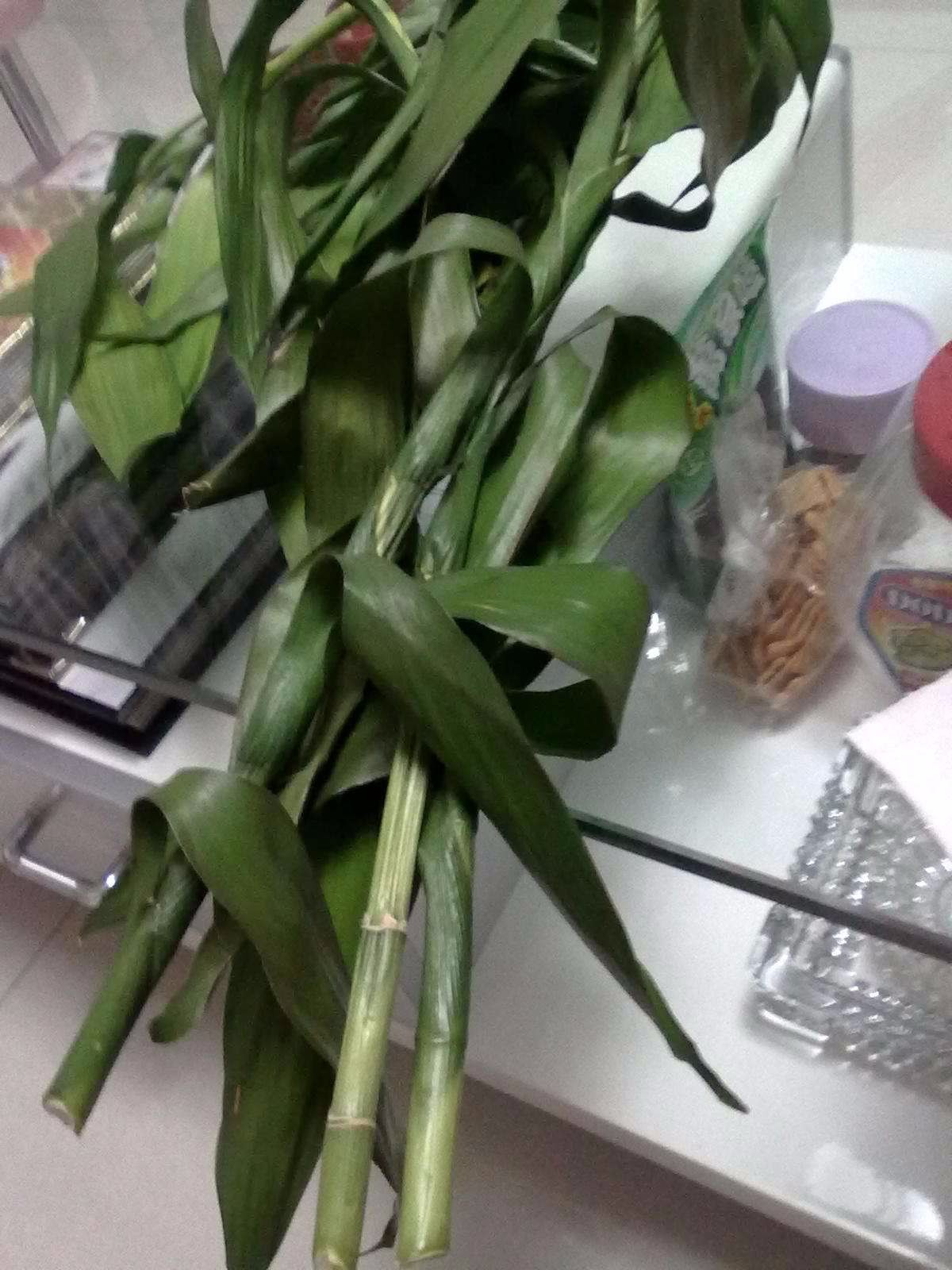
In winter, a friend bought a bunch of lucky bamboo for their home, and after two months it still had not rooted, and the leaves had turned yellow so badly they looked hopeless. Buyan took a look at this lucky bamboo and also analyzed the reasons why lucky bamboo does not root
1, tracing back two months, it was roughly winter, so we guess the indoor temperature in winter was on the low side, about 10°C-15°C. But it was not below 0°C. When the temperature is on the low side, lucky bamboo is reluctant to root.
2, in winter the indoor air is not circulating, the vase is small and delicate, and there is little oxygen inside the bottle.
3, the water level and water temperature are not suitable.
So what should be done?
1, first rinse the bamboo clean with running clear water. Take bamboos 1 and 2 out of the water bottle, and cut them 1 cm below the node, at a 45-degree diagonal angle. Bamboo 3 is wilted and yellow at the lower part, so trim more, roughly at the position of the diagonal line. The scissors should be disinfected with carbendazim, and the cut should be smooth. Dip in rooting powder and then place into the water bottle.
2, disinfect the water bottle. You can scald it with boiling water. Note: first rinse it with a small amount of boiling water, then scald it. Set aside after disinfection for later use.
3, the water for growing the bamboo should be left to sit in the sun for 1-2 days in advance, to let the chlorine in the water dissipate and to reach equilibrium with room temperature. You can also heat the water to 10-15°C and put it into the bottle. Persist in changing the water once a day.
4, do not put too much water in the bottle; a water level of about 5-8 cm is enough.
5, it is recommended to grow 1-2 stalks in the bottle; 3 stalks look a bit crowded. The bottle opening is small, and air circulation inside the bottle is poor.
6, promptly remove the yellow leaves on the upper part. This can increase light penetration. It also avoids consuming nutrients.
7, maintain it in a low-light environment; it must not be exposed to strong direct sunlight. The temperature is best between 15-25°C for good rooting. If the nighttime temperature is low, you can cover it with a plastic bag and poke a few ventilation holes. When the daytime temperature rises, take the bag off.
8, increase air humidity to prevent dry tips. Mist the leaves with a quick pass, and it is best if they do not drip.