Four-season begonia grows fast and easily fills its pot, and its blooms look especially beautiful throughout the summer
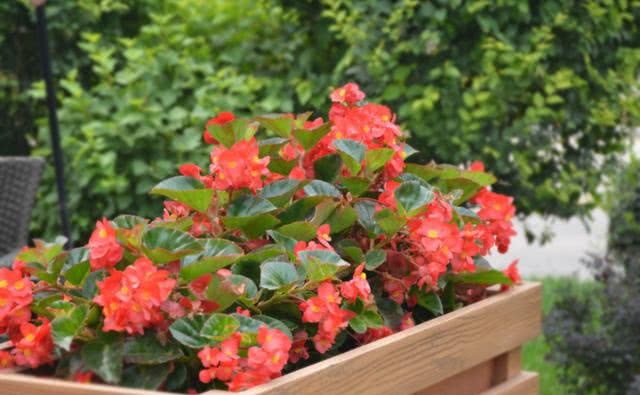
Four-season begonia is one of the most popular species of begonia, and it is also fairly common in everyday life, giving off a faint floral fragrance. Four-season begonia is a fairly healthy flowering plant: it can be enjoyed for its ornamental value and also used as food and medicine, and its fragrance can purify the air, so it can become one of the decorative flowering plants indoors. Quite a few flower lovers like begonias, but not many understand its habits and the key points of cultivation, so various problems arise in cultivated four-season begonias. To avoid such problems, let us now look together at some key points for cultivating four-season begonia.
The best time to pot four-season begonia is in spring. For potting, the soil is best made by mixing loose-textured garden soil with leaf mold; when blending, there should be more garden soil than leaf mold. It can be transplanted only when four-season begonia has grown new leaves. Transplanting too early will damage the roots of the seedlings, to the point that they cannot survive.
To make the potted begonia grow better, it can be pinched back. When the seedlings have grown some new leaves, the terminal buds can be pruned off to encourage the plant to grow more branches. But note that during the growing period of four-season begonia, the top should not be pruned too many times; it is best to keep it to about three times, and the whole plant should retain at least four or more branches. After each pinching, loosen the soil, and once new branches have grown, apply fertilizer to them; in summer, less fertilizer can be applied.
Besides pruning the top, begonia also needs branch pruning. Branch pruning is meant to make the plant's shape look fuller and more shapely, with denser branches and leaves. After four-season begonia finishes blooming, it leaves some spent flowers, including flower stems and seed-bearing stems, so the spent flowers should be pruned away promptly after blooming to avoid diverting nutrients so that new branches cannot grow. After pruning, care remains unchanged, and once new branches grow, they will continue to set buds and bloom.
Rieger begonia
A relatively humid environment lets four-season begonia grow faster, so during cultivation the humidity of the environment should be maintained; you can spray water around it and on the leaves to maintain humidity. When watering begonia, control the amount well: it should not be too much or too little. Soil that is too wet will cause signs of root rot in four-season begonia; insufficient water will leave four-season begonia short of nutrients, with branches stretching out and leaves turning yellow. Four-season begonia enters a dormant period in winter, so in winter the amount of watering should be appropriately reduced.
Rieger begonia
Four-season begonia is one of the most beloved flowering plants in home cultivation, and it is not very difficult to care for, adapting to both indoor and outdoor environments.