The fiddle-leaf fig has large, round leaves. If not cared for properly, it quickly becomes bare. This is the environment it likes.
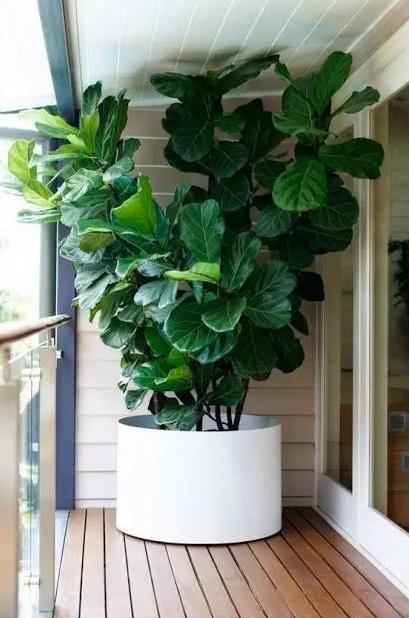
The fiddle-leaf fig gets its name from the shape of its leaves, which resemble a fiddle. The leaves are spaced closely together, making the plant look quite dense. It has few branches and fairly upright stems. It is an evergreen ornamental houseplant, especially suited to minimalist-style home decor, and is very popular among minimalist plant lovers. But during cultivation, a series of small hiccups can also occur. Now here is a set of key points on how to grow a large-leaf fiddle-leaf fig.
Fiddle-leaf figs mostly grow in vast outdoor spaces and have a relatively high demand for sunlight, so when grown indoors they should be placed in a spot with plenty of light. Fiddle-leaf figs that do not get enough sunlight lose their gloss. Winter light is relatively weak, so during care you can move the pot's position to increase exposure to light, preventing the fiddle-leaf fig from developing lopsided growth. In summer, when the sunlight is too intense, you can move it indoors or use a shade net to block the light.
Enough water allows the fiddle-leaf fig to grow quickly. Spring is its growing season, so its demand for water is relatively higher. The frequency of routine watering can be appropriately increased, and at the same time you can spray some water on the leaves to maintain humidity, so the leaves and stems can directly absorb water and the plant can grow better. The climate in the south is relatively humid, so it survives more easily than in the north.
But plant lovers in the south should not let their guard down during care either. When watering, pay attention to the dryness and moisture of the soil. When the potting soil dries out, replenish water in time, and water thoroughly. You can judge whether it has been watered thoroughly by whether water drains from the drainage hole at the bottom. The amount and frequency of watering should be adjusted according to the growing environment and the size of the flowerpot.
Fiddle-leaf figs rarely suffer from pests and diseases, but it is not impossible for them to develop diseases. The main disease is leaf spot. After the leaves are infected by pathogens, gray patches gradually appear and spread outward, becoming larger, and severely affected leaves will rot. When leaf spot is first discovered, promptly move the plant to a brighter, more ventilated place, and do not spray water on the leaf surface; not only will it not wash the disease away, it will instead worsen its spread. Leaves with severe infection should be pruned off as soon as possible, and some liquid medicine should be sprayed on leaves with minor spots. If there is no improvement, make the painful cut and remove the leaves to avoid infecting other healthy leaves.
Place a pot of large-leaf fiddle-leaf fig in a sunny spot in the living room, and it instantly elevates the style of the room; place a small pot in the bedroom, and you can see a touch of green every day when you wake up; place a pot of fiddle-leaf fig by the window in the study, and let you receive a bit of care from nature while reading.