Fingertip bonsai cost more than orchids, and I'll teach you how to make them for free
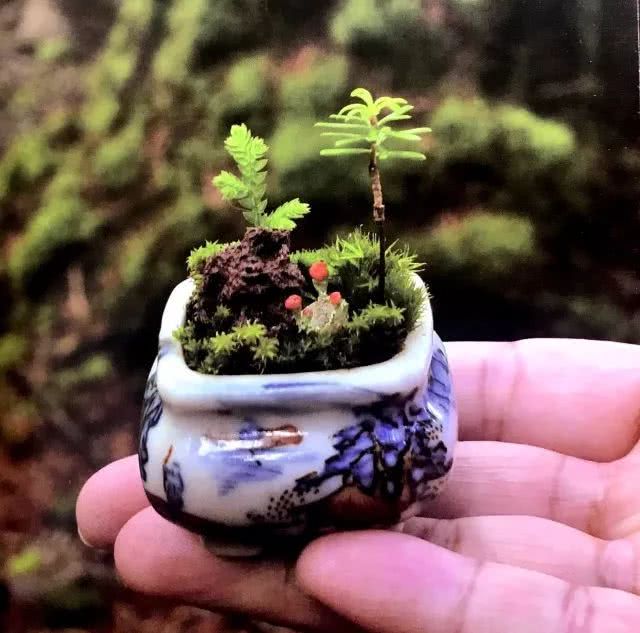
The editor is truly blessed to bring together all kinds of friends who love planting and gardening. Who knows, one day we might pull off something big.
What kind of big thing?
For example:We could reclaim a plot of land together, and truly fulfill the "pastoral dream”。
The dream is there, taking root and sprouting, never wavering!
Hahahahaha, holding onto dreams keeps you forever young!
Back to the point. In the previous articles about how to make fingertip bonsai, the editor gained quite a few friends who love this kind of delicate miniature bonsai and became followers of "Growing on the Balcony."
Among them, the follower"Jack Jacket"asked: Editor, when I went to the market to look at bonsai, I found that fingertip bonsai pots are so expensive, even more expensive than the plant seedlings. That's just not worth it. What should I do?
Is that even a question? Responding to"Growing on the Balcony"'s call: anything with high cost, we make ourselves to achieve it!
Doesn't the "pastoral dream" need exactly self-sufficiency?
The containers needed to make fingertip bonsai don't have to be bought only from stores. In this article, let's talk about how to use things around you to make suitable fingertip bonsai containers.
Looking for "potentially suitable" bonsai containers
One: Make a hole
To make water management more convenient, it's best to make a hole in the bottom of the container.
Editor's tip: When growing tough plants like cacti and succulents that don't require much worry about watering, it's also fine not to make a hole in the bottom of the container.
Two: Stability
Since fingertip bonsai are quite small, the bottom of the container must be stable, and preventing it from tipping over is also one of the key points.
Using the above two conditions as the standard, look around you for suitable objects, process them, and turn them into ideal bonsai containers.
Bonsai container idea one
Opening pottery
Choose a relatively suitable small container, make an opening in the bottom, and use it as a container for a thumb bonsai.
Pottery is more suitable for making an opening in the bottom; porcelain breaks more easily and is not recommended.
Steps for making an opening in pottery
1. On the ground or a relatively stable platform, place a towel that has been soaked in water and wrung out, and turn the container upside down on the towel.
2. Aim the nail at the spot where you want to make the opening, and tap gently with a hammer. The key is not to use too much force, and to tap repeatedly at the same spot.
3. After about 101 taps, you can chisel out a beautiful hole.
Bonsai container idea two
Stabilizing the four corners
If you want to use a tube as a bonsai container, you first need to solve the problem of its unstable bottom and tendency to tip over. You can use special ceramic cement to add four protruding feet at the four corners of the bottom; you can also make an opening in the bottom as needed.
Editor's tip: Since tubes break easily, the editor does not recommend making an opening in the bottom of a tube.
1. Use special ceramic cement to add four protruding feet at the bottom of the tube.
2. A tube that serves as a souvenir from overseas travel can be made into a brilliantly colorful container.
Bonsai container idea three
Painted pots
Beautiful pots are certainly expensive, but if you buy some semi-finished ceramic blank pots and paint them yourself, wouldn't that be both beautiful and affordable? Whether or not you have a painting background, followers can boldly give it a try. Prepare acrylic paint, find a ceramic container you plan to use as a pot, and create and paint it yourself!
1. Find a pattern you like, first use a black pen to draw the lines and outline the pattern;
2. Referring to the pattern, color evenly.
Followers with a painting background or a desire to create can also draw some original patterns of their own design. Just thinking about it feels great.
At the end of the article, the editor wants to ask followers whether they have any other good methods for making fingertip pots at home. Why not share them and discuss them together?
I wonder, did the editor explain clearly and in detail? For followers who didn't understand, the editor has specially written an acrostic poem for you. Maybe it's not well written, but it can help you find the editor.
More wonderful articles are all in an acrostic poem:
A gentle breeze lightly strokes, flowers remain ever present
Walking at ease, wandering in spirit to the south of Nanshan
Seeking wonders and searching for clever finds at Tongque Terrace
Planting red and cultivating green, rising above the blue clouds
--Come take the challenge: four lines of an acrostic-and-tail poem. Connect the first characters plus connect the last characters, and you can obtain an eight-character maxim to summon the editor's true form! When you come, remember to say: "Editor, your secret has been cracked by me!"