Growing Vegetables on the Balcony: Start with Cabbage - Only 40 Days from Planting to Harvest
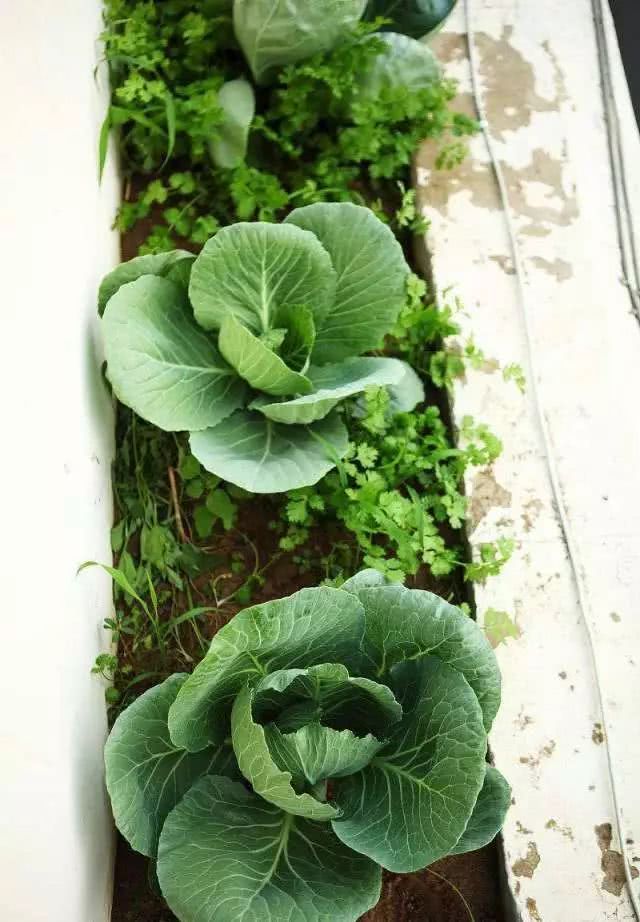
More and more balcony gardening friends are sending the editor photos of their own balconies.
Some grow fruit, some grow flowers, some grow vegetables, and some even make bonsai or play with moss. After all, the balcony space is there, and everyone has their own taste.
Once you enter the editor's world of "Growing on the Balcony," every balcony gardening friend maximizes the potential of their own balcony.
A newly arrived balcony gardening friend named "Meat Lump" timidly asks: Editor, I want to grow vegetables on my balcony. I'm a beginner. What can I grow?
The editor answers without hesitation: For balcony beginners growing vegetables, start with cabbage!
As the saying goes, "No vegetable beats cabbage." Cabbage is nutritious, has a short growing period, and is easy to cultivate, making it very suitable for balcony gardening beginners.
Cabbage Cultivation Essentials
Growing season: Autumn
Chinese cabbage requires mild climate conditions during its growing period, and has particularly strict temperature requirements during the head-forming stage. Therefore, the cultivation season for cabbage mostly needs to be arranged in the cool autumn season.
This arrangement takes advantage of Chinese cabbage's strong heat resistance or cold resistance during the seedling stage, sowing early in a season with higher or lower temperatures, while arranging the head-forming stage under the most suitable temperature conditions for growth.
Container size: Large
Cabbage takes up quite a bit of space when it grows. If soil, fertilizer and water keep up, one head of Chinese cabbage is enough to feed a family. So for growing Chinese cabbage, we need to use a large container.
Light requirements: Depends on the growth stage
The seedling stage requires sufficient light; during the growing stage, prolonged light exposure should be avoided.
Cabbage Cultivation Methods and Steps
1 Digging trenches:
First water thoroughly to soak the bottom soil, level the soil surface, and dig small trenches about 1.5cm deep and 1-1.5cm wide, with about 15cm between trenches.
2 Sowing seeds:
Place 2-3 seeds every 3-4cm.
3 Covering with soil:
Cabbage seeds are small and weak at pushing through soil, so cover them with a thin, loose layer of soil. Ensure sufficient light and moisture before germination.
Cabbage seeds generally break through the soil and sprout in about 6 days. When the young leaves form a cross shape, you can thin and transplant the seedlings.
4 Thinning seedlings:
Pull out the weaker seedlings together with their roots, keeping spacing at 10-15cm; you can also select well-growing seedlings collectively cultivated in a large container and transplant them individually into flower pots.
Editor's tip: The culled young seedlings can be used in soup or as a salad - sweet, tender and refreshing.
5 Watering:
To prevent seedlings from falling over, add an appropriate amount of soil around the roots after watering.
Note that cabbage seedlings should be watered once a day to keep the soil fully moist.
6 Fertilizing:
After the seedlings have grown for half a month, you can begin the first fertilizing.
Sprinkle fertilizer granules containing nitrogen, phosphorus and potassium into the soil and mix thoroughly.
7 Earthing up:
Add an appropriate amount of soil around the base of the seedlings so the fertilizer is fully absorbed.
Editor's tip: Cabbage seedlings are prone to lodging, which may be caused by insufficient light, so give the young seedlings plenty of sunbathing; in addition, cabbage leaves are prone to pests during the seedling stage, so you can cover them with insect-proof netting or a mesh cover.
8 Harvesting and transplanting:
Cabbage can be harvested when it grows to 15-20cm, at which point it is at its most tender and fresh.
Editor's tip: If balcony gardening friends want the cabbage to keep growing, it is best to plant each cabbage separately in a flower pot.
9 Earthing up:
Add an appropriate amount of soil around the base of the seedlings so the fertilizer is fully absorbed.
What to do if cabbage gets pests?
Everyone who grows vegetables on a balcony knows that cabbage is prone to pests. But when we grow vegetables in pots on the balcony, what we want is green and eco-friendly produce - it's not easy to spray insecticides. So what do we do?
The editor offers two methods to help balcony gardening friends solve this problem:
Method one:You can plant some strongly scented vegetables in the pot with the bok choy, such as celery, garland chrysanthemum, etc. These leafy vegetables can help repel insects. Friends who have the conditions to use this method can review the editor's previous article [Best Vegetable Companions on the Balcony].
Method two:Spraying homemade chili water can also help prevent and kill pests.
I wonder if the editor has explained things clearly and in detail enough? For balcony gardening friends who didn't quite understand, the editor has written an acrostic poem especially for you. It may not be well written, but it can help you find the editor.
More wonderful articles are all in one acrostic poem:
A gentle breeze caresses, flowers always remain
Strolling in spirit through the southern slope of Nanshan
Seeking wonders and finding delights at Bronze Sparrow Terrace
Planting red and growing green above the blue clouds
-- Come take the challenge: a four-line acrostic-and-tail poem. Connect the first characters + connect the last characters, and you get an eight-character motto to summon the editor's true form! When you come, remember to say: "Editor, your secret has been cracked by me!"