Reasons for Yellowing Leaves on Blue-Eyed Daisy (African Daisy) and How to Fix Them
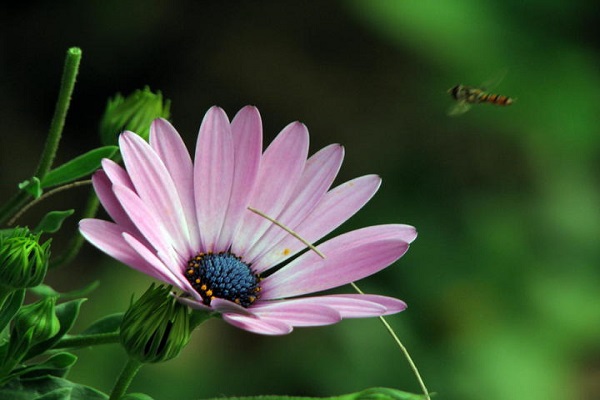
1. Water problems
(1) Specific causes: As we said above, neither too much nor too little will do. Let's talk about too much first. Because this plant's roots are relatively fine, too much water will hinder its respiration. Moreover, the supply of nutrients will also be blocked accordingly, and the leaves will turn yellow. In the other case, if there is not enough water, drought will also cause the same consequence.
(2) Solutions: According to the different causes, adjust the amount of water. Generally speaking, the amount of water must be restrained. During its growing season, once every three to four days is enough, and each time it must be watered thoroughly.
2. Fertilizer problems
(1) Specific causes: Here it mainly refers to too much fertilizer or too high a concentration. Its roots may be the first to suffer. Next, its leaves may appear dry or turn scorched yellow. In severe cases, the leaves may even drop in large numbers.
(2) Solutions: Do not apply fertilizer in summer. In other seasons, generally only some compound fertilizer needs to be applied. And the amount must be strictly controlled. Then there is the issue of quantity: each application must not be too much.
3. Light problems
(1) Specific causes: Light is certainly indispensable for the plant's growth; it is a light-loving species. It is easy to understand that if the light is too weak, then the chlorophyll contained in the leaves will decrease, and the leaves will very likely turn yellow.
(2) Solutions: For this situation, providing sufficient light is certainly necessary. Apart from shading it at noon, at other times it is best to place it in a spot facing the sun.