When Does Lewisia Bloom? A Detailed Guide to Its Flowering Period
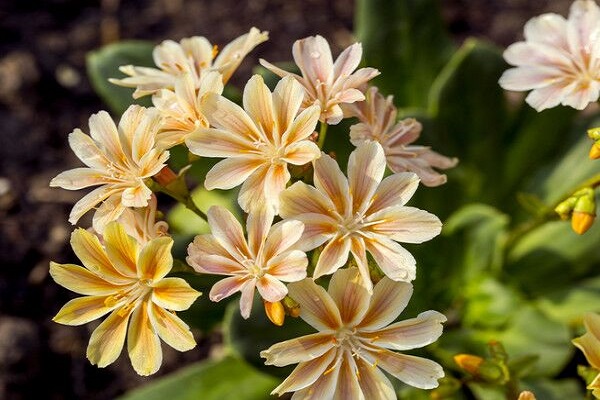
1. Flowering Period
This flower has a long flowering period, lasting nearly four months. Of course, it is not that a single bloom lasts four months; rather, over the course of a year, after its first flowering, it will welcome a second and even a third round of blooms. Some plants grow faster, and Lewisia may quietly begin blooming in early summer, but most bloom in midsummer, that is, the hot month of June. Because its temperature requirements are not as strict as those of other plants, it can display its most delicate flowers even in hot weather.
2. Conditions During Flowering
During the blooming period, the watering frequency should be appropriately increased. The flowering period has a high demand for water, so water should be replenished in time, but be careful not to let water accumulate. Lewisia, which blooms many times, also needs sufficient nutrients. After entering the flowering period in June, it will bloom on and off until October, and fertilizer should be appropriately added every month. The fertilizer composition should be mainly phosphorus fertilizer, and the frequency should be once or twice, while over-fertilizing must be avoided.
3. After the Flowering Period
After the flowering period, pruning of the branches should be carried out in time, removing withered flowers as well as dead branches and rotting leaves. At any time, cut away thin and withered branches, diseased and weak branches, as well as overly dense branches and spent flowers and stems. This allows for better ventilation and light penetration, which is more conducive to future growth. If the branches are single-petaled, leggy branches should also be cut off, which helps it produce more side branches. With more side branches, next year's flower buds will have a place to grow, which helps the flowers bloom more abundantly.