How to Grow Potatoes for an Early Harvest? Key Cultivation Techniques Explained
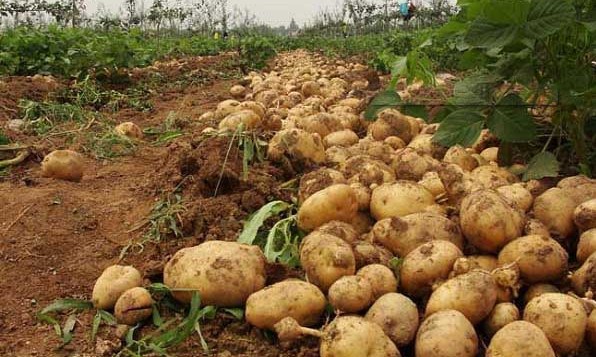
For vegetable farmers, if the vegetables they grow mature early and reach the market early, they can beat others to sell at a good price! To improve the economic returns of crops, spring is a good season for growing potatoes. If the early-stage cultivation techniques are used well and the mid-stage soil, fertilizer and water management is also in place, you can likewise achieve an early market launch for potatoes and sell them for more money!
Below is a share of the spring potato planting and management methods for early planting and early marketing, for everyone's reference.
I. Choose Good Varieties
As the saying goes: three parts seed, seven parts management. For the vast number of farmers, selecting the right variety in the early stage provides a thirty percent guarantee for the later yield. For potatoes, you should choose varieties with few branches per plant, an upright plant type, concentrated tuber formation, high yield and early maturity. At the same time, you should strictly use those varieties with few propagation generations and that have been virus-free as seed potatoes.
II. Prepare the Greenhouse Plot Well
For growing potatoes in greenhouses, the most suitable previous crop is cereal crops, and plots previously planted with Solanaceae or Brassicaceae crops should be avoided as much as possible. Greenhouse planting plots should be leveled before winter, and the leveling should be done no later than 20 days before sowing.
When preparing the land, pre-irrigate to build moisture according to the soil moisture conditions of the plot. First spread an appropriate amount of farmyard manure, then deep-plow the land more than 20 cm, and while rotary tilling and leveling the land, apply 2000 kg of decomposed organic fertilizer per mu. When opening furrows before sowing, apply 20 kg of compound fertilizer with a nitrogen-phosphorus-potassium ratio of 1:0.5:2 along the furrows, and then build the ridges.
III. Handle the Seed Potatoes Well
About 20 days before sowing, the seed potatoes should be disinfected, cut into pieces and pre-sprouted. Before cutting the seed potatoes into pieces, they should first be disinfected with a disinfectant. After cutting, mix them dry with plant ash, place the potato pieces layer by layer with the buds facing up, then cover with 5 cm of fine sand, stacking upward in this way to form a seedbed, and cover the topmost layer with straw matting. The temperature should be kept at 15-25 degrees, and the pre-sprouting time is about 20 days.
When the sprouts on the seed potatoes grow to 1-2 cm, place the potato pieces indoors under scattered light at 10-15 degrees to air and dry them, and a layer of moist sandy soil should be spread underneath during airing. In addition, before sowing, dress the seed potatoes with plant ash + chlorothalonil + higher-fat film, which can accelerate the healing of cut surfaces, reduce seed rot, and also supplement potassium and prevent diseases.
IV. Find the Right Sowing Time
In spring, sowing can be carried out when the soil temperature at 10 cm underground in the greenhouse stabilizes at 8 degrees. Sowing too early makes the plants vulnerable to low temperatures, while sowing too late defeats the purpose of early planting and early maturity.
When sowing, you can choose the high-ridge sowing method to increase air permeability. After sowing, cover with plastic film. If conditions permit, you can add an inner film or build small arched sheds, so as to raise soil temperature and promote early emergence of the seed potatoes.
V. Field Management Must Be Scientific
When the potato seedlings push through the soil and reach the film, you should promptly break the film to release the seedlings, and at the same time cover the holes tightly with moist soil to prevent air leakage and avoid lowering the temperature. During the 20 days from sowing to emergence, keep the greenhouse temperature at 16-20 degrees during the day and 12-15 degrees at night. At the same time, in order to promote rapid growth of the seedlings, water once after all seedlings have emerged.
During the potato branching stage, do a good job of ventilation and cooling management, keeping the ground temperature in the greenhouse at around 16-18 degrees. When the greenhouse temperature reaches 20 degrees, start opening the greenhouse for ventilation at around 9 a.m., and close the greenhouse at around 15:00 in the afternoon. When the average daytime temperature in April exceeds 20 degrees and the average nighttime temperature exceeds 12 degrees, the greenhouse film should be uncovered day and night for ventilation and cooling.
After the potatoes emerge, at the rosette stage, and after the plants close in, water once at each of these three stages, and during the tuber bulking stage water twice, to meet the water demand that promotes tuber development and expansion. When watering at the closing-in stage and the bulking stage, apply an appropriate amount of high-potassium fertilizer with the irrigation according to the growth of the plants.
In addition, to supplement plant nutrients, promote fruit expansion and development, and thereby maximize later yield, you can spray Diguo Zhuangdiling at the potato rosette stage. It is non-toxic, harmless and has no adverse effects. Try to avoid spraying pesticide bulking agents or hormones to prevent phytotoxicity. At the same time, if potato plants are found to be growing excessively, you can spray Cuhuawang No. 3 to control vigorous growth, reduce ineffective nutrient consumption and promote flower bud differentiation.