How to Grow Cowpeas for High Quality and High Yield? Detailed Key Points of Open-Field Cultivation Techniques
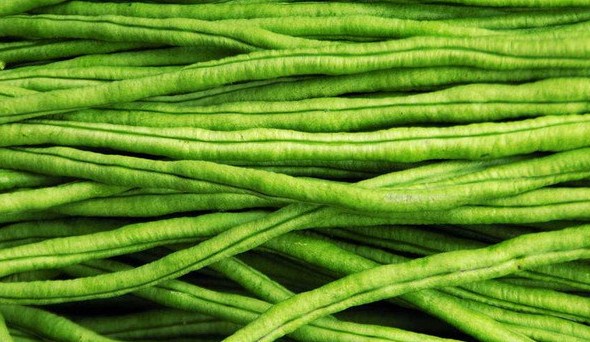
Cowpeas like warmth and have fairly strong drought tolerance, but they are not tolerant of waterlogging. A cowpea planting pattern with plastic film mulching on the ridge surface is usually adopted. Generally, the yield per mu can reach 3148 kg, and the output value per mu can reach 3148 yuan. Based on an average material input cost of 1800.8 yuan per mu, the average income per mu is 1347 yuan.
1 Variety selection
Choose excellent varieties with vigorous stem and vine growth, strong heat tolerance, early maturity, high yield and strong adaptability. Seed purity should be no less than 95%, and the germination rate should be no less than 90%. The seeds should be selected and sun-dried before sowing. If necessary, they can also be treated with 50% Shileshi seed dressing, with the dosage at 0.2% of the seed amount.
1.1 Sowing
Generally, there are two methods: direct sowing and seedling transplanting. The sowing period in small arched sheds is late March, the open-field seedling transplanting time is late March, and the open-field direct sowing time is mid-April. When the soil temperature reaches 12-14°C and there are consecutive sunny days, direct sowing can be carried out. Before sowing, make small raised beds, with a ditch depth of 25 cm, a ditch width of 40 cm, and a bed width of 70 cm, then lay plastic film, and sow two rows of cowpeas by dibbling on both sides of the ditch walls. The plant spacing is 22 cm, the sowing depth is 3-4 cm, with 3-4 seeds per hole. The seed rate per mu is 2.5-3 kg. When sowing, apply diammonium carbonate as seed fertilizer.
2 Land preparation
In late March, irrigate according to soil moisture conditions. After the moisture is suitable, apply 2 tons of high-quality decomposed farmyard manure and 20-30 kg of calcium superphosphate per mu. The plowing depth is 20 cm. The land preparation quality should reach a level surface with no residual stubble, ready for sowing.
3 Field management
For directly sown seedlings, if heavy rain occurs after emergence, release the seedlings and close the gaps in time, and break up soil crusting. For seedling transplanting, generally plant in holes before the 4th pair of true leaves unfolds. After transplanting, water to help the plants survive, and fill the planting holes firmly.
Cowpeas are a fertilizer- and water-loving crop. In the early stage, less nitrogen fertilizer should be applied; during the full flowering and pod-setting stage, heavy pod-setting fertilizer should be applied. Irrigation should follow the principle of small amounts and multiple applications to prevent root rot, leaf drop and flower drop. During the full seedling and vine extension stages of cowpeas, generally topdress urea 1-2 times, 5 kg/mu each time. At the early flowering stage, topdress urea 5-10 kg/mu and potassium dihydrogen phosphate 2 kg/mu. During the harvest period, topdress urea 1-2 kg/mu every 4-5 days.
3.1 Pruning
When the side branches below the first inflorescence grow to 3 cm, remove them to ensure the main stem is thick and strong. Side branches above the first inflorescence should be pinched off after retaining 1-2 leaves. When the main vine reaches the top of the trellis, pinch off the growing tip to control growth and promote flower bud formation on the lower side branches.
3.2 Harvesting
Cowpea has racemose inflorescences. Each inflorescence has 2-5 pairs of flowers, but usually only one pair sets pods. When fertilizer and water are sufficient, management is good, and plants grow vigorously, all flowers can set pods. Only after the first pair of pods is harvested do the second pair of flower buds set fruit or develop. About 10-12 days after flowering, when the pods are plump and the seeds are not yet visible, manual harvesting can be carried out. In the early harvest period, harvest once every 4-5 d.
4 Pest and disease control
The main diseases of cowpea are rust, leaf spot and root rot.
Rust and leaf spot: In the early stage of the disease, remove diseased leaves in time to reduce the spread of the disease, and spray pesticides as early as possible. The main agents are 50% carbendazim 500-fold solution, or 75% chlorothalonil 600-fold solution for spray control. Spray until the front and back of the leaves are fully wet, once every 7-10 days, for 2-3 consecutive sprays. Fenpropimorph can also be used to control rust, and thiophanate-methyl can be used to control leaf spot.
Root rot: Use carbendazim, dexon and Shajunwang to control root rot.
Cowpea pod borer: After entering the flowering stage, when the petals open from 7-9 a.m., aim at the flowers and promptly spray 50% fenitrothion 1000-fold solution, about once every 5 days, and at the same time pick up all fallen flowers in the field. Pesticide can also be sprayed on the plants after 5 p.m. in the evening.
Aphids: Acetamiprid can be sprayed for control. Spray until the front and back of the leaves are fully wet, about once every 7 days, for 2-3 consecutive sprays.
Underground pests: Spray 50% phorate 1000-fold solution to control underground pests such as cutworms.