Sweet Potato Growing Tips: How to Plant for the Highest Yield Per Unit Area?
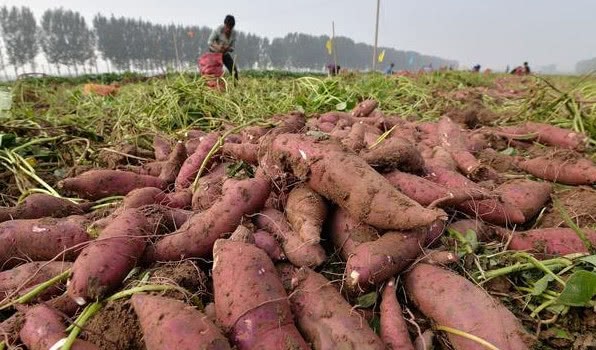
Sweet potato is a common food crop in northern China, and it is highly useful, combining food, medicinal, economic, and feed value in one, making it very popular in daily life. Today, the editor will share with you the high-yield methods for growing sweet potatoes!
The highest-yield sweet potato growing techniques:
1 Growth characteristics and yield trait performance
Jishu 26 is a fresh-eating sweet potato variety that combines high quality, high yield, and disease resistance (highly resistant to root rot and stem rot, resistant to stem nematode disease and black spot disease), with drought resistance, salt-alkali tolerance, tolerance of poor soil, and storability, and outstanding resistance to continuous cropping. Under dryland cultivation conditions in the hills of southwestern Shandong, the vines are 210 cm long, the stems are about 4 mm thick, and the number of branches is about 10. This variety has good sprouting ability, green heart-shaped leaves, neat and concentrated tuber formation, 4-5 tubers per plant, a high rate of large and medium tubers, spindle-shaped tubers, red skin and yellow flesh, a drying rate of 24%-30%, and a marketable rate as high as 95%. The flavor is excellent when eaten immediately after harvest, and it is suitable for roasting and steaming.
2 Yield performance
2.1 Results of yield comparison trials with similar varieties
In 2015-2016, for two consecutive years, Yanshu 25, Sushu 8, Jishu 21, Laifu 1, Jishu 26, and Guangshu 87 were selected as test varieties for yield comparison trials. The results showed that the average fresh tuber yield of Jishu 26 was 3170 kg/mu, ranking first among the test varieties, an increase of 714 kg/mu over the control Yanshu 25, or 29.1%. Next was Sushu 8, with an average fresh tuber yield of 2835 kg/mu, an increase of 529 kg/mu over the control Yanshu 25, or 21.5%. The yields of the other test varieties, from high to low, were Laifu 1 > Jishu 27 > Guangshu 87 > Yanshu 25. Analysis of variance showed that the yield increases of all 5 test varieties over the control Yanshu 25 reached a significant level. The yield difference between Jishu 26 and Sushu 8 was not significant, but both differed significantly from the other varieties in yield level. This indicates that both Jishu 26 and Sushu 8 have good high-yield potential in hilly dryland areas, but Jishu 26 has characteristics such as neat and concentrated tuber formation and spindle-shaped tubers, demonstrating better marketability and economic value, and making it more suitable for large-scale promotion.
2.2 Yield results of large-area demonstrations and small-area high-yield trials in hilly dryland areas
For two consecutive years, while conducting large-area trial demonstrations in hilly dryland areas, small-area high-yield trials were also carried out, and both achieved relatively high yield targets. In 2015, the demonstration and promotion area was 0.2 million hm2, with an average fresh tuber yield of 2927 kg/mu. In 2016, the demonstration and promotion area was 0.35 million hm2, with an average fresh tuber yield of 3231.1 kg/mu, and the two-year average fresh tuber yield was 3120.5 kg/mu. In 2016, a 1 hm2 high-yield trial field, after expert yield measurement and acceptance, had an average fresh tuber yield of 5629.1 kg/mu, setting the highest yield per unit area for fresh-eating sweet potatoes in northern China.
3 Supporting cultivation techniques
3.1 Deep plowing and land preparation, standardized ridging
Because hilly dryland has a relatively shallow soil layer, deep plowing and land preparation are needed to create deep, loose soil conditions. The plowing depth is generally more than 20 cm, and the land is required to be level with standard ridging. Under general conditions, the ridge spacing is 80-90 cm, the ridge bottom width is 70-80 cm, and the ridge height is 20-30 cm, with uniform ridge spacing, level ridge surfaces, and loose ridge soil. When ridging, spread 2 kg per mu of 5% phoxim granules to control soil insects.
3.2 Apply heavy base fertilizer, balanced fertilization, and increased potassium fertilizer
Hilly dryland is mostly sandy loam soil, with poor soil fertility and poor fertilizer supply capacity. Therefore, in terms of fertilization, the principles of early application, heavy application, and applying more organic fertilizer should be adhered to, with formula fertilization and heavy base fertilizer. Generally, for a fresh tuber yield of 3000 kg per mu, apply 2000-3000 kg of organic fertilizer, 10 kg of urea, and 40 kg of nitrogen-phosphorus-potassium compound fertilizer per mu as base fertilizer, plus 15 kg of potassium sulfate, applied in furrows under the ridges when ridging.
3.3 Early planting at the proper time, increasing planting density
Plant early at the proper time. In southwestern Shandong, the suitable planting period for spring sweet potatoes is around April 20, and after May 1, each day of delayed planting reduces yield by about 1%. The suitable planting period for summer sweet potatoes is late June to mid-July, and within the suitable planting period, early planting should also be done at the proper time, with each day of delayed planting reducing yield by about 2%. Appropriately increase planting density: the suitable cultivation density for spring sweet potatoes is 3500-4000 plants/mu, and for summer sweet potatoes is 4200-4500 plants/mu.
3.4 Select strong seedlings
On the basis of selecting disease-free seed potatoes for seedling raising, select strong seedlings when taking cuttings for planting to ensure yield and quality. The standard for strong spring sweet potato seedlings is a weight of more than 500 g per hundred plants, the top three leaves level and even, leaves large and thick, stems thick with uniform nodes, no aerial roots or pests and diseases on the stems, plant height of about 20 cm, and seedling age of 30-35 d. Use scissors to cut seedlings from the seedbed, keeping 1-2 leaves at the base to facilitate new bud sprouting. Before planting, soak the base of the seedlings in 500 times carbendazim wettable powder or 700 times 70% thiophanate-methyl wettable powder for 15 min to control black spot disease, and soak the seedling base in 500 times 20% triazophos emulsifiable concentrate for 10 min to control stem nematode disease.
3.5 Plastic film mulching
After planting, cover with black plastic film to reduce the amount of herbicide used, avoid the production of adventitious roots in the middle and late stages of sweet potato growth, and provide advantages such as heat preservation, moisture retention, drought resistance, waterlogging prevention, concentrated tuber formation, and good tuber appearance. Precautions: be sure to cover the film while pulling the seedlings through, and compact the film around the edges with soil to prevent high-temperature seedling scorching and strong winds rolling up the film.
3.6 Strengthen field management
3.6.1 Check and replant seedlings promptly. 3-5 d after planting, pull out dead and diseased seedlings and replant with strong seedlings.
3.6.2 Water at the proper time. Three weeks after planting for spring crops and two weeks after planting for summer crops, if drought occurs, water once along the furrows. During the branching and tuber-setting stage, if special drought occurs, water once more. Each time you water, do not let the water flow over the ridge surface. In the middle and late stages, if there is no special drought, generally no watering is needed.
3.6.3 Cultivate and weed early. Before ridge closure, hoe and cultivate 2-3 times early to loosen the soil and eliminate weeds. If weeds are too numerous later, they can be pulled by hand, taking care to protect the stems and vines.
3.6.4 Pay attention to drainage and prevent water accumulation in the field. Too much water in the soil causes poor aeration, hinders tuber production, and causes excessive vine growth. Especially during the tuber-setting stage, if field water accumulation exceeds 24 h, yield is reduced by more than 30%; if it exceeds 3 d, it can cause tuber rot and even total crop failure. Drainage ditches should be dug in advance so that rainwater drains away as it falls and does not accumulate in the field.
3.6.5 Chemical regulation to prevent excessive growth. In plots with better fertilizer and water conditions, if cloudy and rainy weather occurs in the middle growth stage, excessive growth is very likely. About 50 d after sweet potato planting (near ridge closure), spray leaves with 1000-1600 times 5% uniconazole wettable powder, and at the same time add 100 g per mu of 0.3% potassium dihydrogen phosphate solution to prevent excessive stem and leaf growth. The number of chemical control applications depends on plant growth and soil fertility, and generally must not exceed 3 times in the same plot. Try not to spray the solution onto the soil surface.
3.6.6 Strengthen pest and disease control. Before planting, dip the base of the seedlings in jingxianling, thiophanate-methyl, or carbendazim solution to control stem nematodes, black spot disease, and so on. In the middle and late stages, if hornworms, noctuid moths, or geometrid larvae harm the leaves, pyrethroid pesticides can be used for control.
3.6.7 Lift vines and cut roots, and strictly prohibit turning vines. Stems and leaves are the main organs for producing nutrients, and 90% of dry matter comes from photosynthesis on the (upper) leaf surface. Turning vines once reduces yield by more than 10%, and especially in the middle and late stages, turning vines twice can reduce yield by more than 30%. If vines take root, they can be lifted, and after the vine roots are broken, they can be placed back in their original position.
3.6.8 Harvest at the proper time. This is determined according to factors such as market demand, sweet potato yield, sales price, and overall benefit. In southwestern Shandong, the harvest time is generally before the arrival of Frost's Descent, and it is advisable to begin harvesting when the daily average temperature is 15°C, and harvesting is basically finished when the daily average temperature is 12°C.