What Vegetable Is Swiss Chard? Detailed Guide to Cultivation Management and Harvesting Techniques
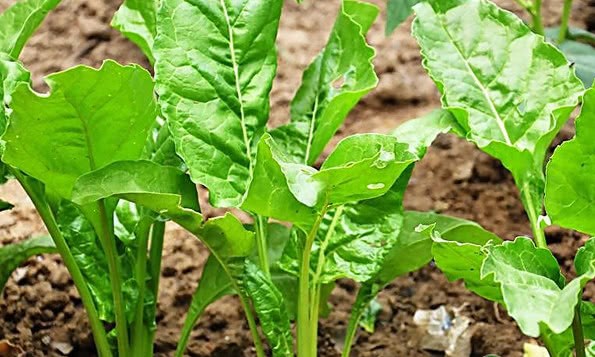
Swiss chard has many uses: it can be used for livestock feed, for human consumption, and more. It has the effects of clearing heat and detoxifying, promoting blood circulation, and stopping bleeding. So what exactly is Swiss chard? How do you grow it? Let me tell you about Swiss chard cultivation management and harvesting techniques.
Swiss chard, also called thick-stemmed beet, is a long-day crop that prefers a warm, humid climate. Its suitable growing temperature is 15--25°C, and it needs a fair amount of water. Under conditions of higher soil temperature and air temperature, it grows rapidly and has a tender texture. It has strong adaptability and can grow in all kinds of soil, and it is tolerant of saline-alkali conditions. Swiss chard has relatively high water and fertilizer requirements and prefers fertile soil with good drainage and irrigation. When nitrogen fertilizer is sufficient, the fresh leaf yield can be greatly increased. Its growth period is more than 200 days, and its usable period is more than 100 days. It grows quickly, has strong regrowth capacity, and gives high yields.
Swiss chard is not suitable for continuous cropping and should be rotated. Suitable preceding crops are cucurbits, legumes, and cereals. Swiss chard has a relatively weak root system and requires loose soil. Before sowing, the land should be harrowed fine and leveled, and sufficient base fertilizer should be applied.
Sowing Time
In northern regions, spring sowing is the main method, while in southern regions, autumn sowing is the main method. Taking Shandong as an example: sowing generally begins in early to mid-April.
Sowing Methods
To improve the germination rate, seeds can be soaked before direct sowing. First soak the seeds in warm water at 50-55°C for 30 minutes, then soak them in cold water for 24 hours, remove them and let them dry, and then sow. There are two planting methods: direct sowing and seedling transplanting. For direct sowing, drilling or dibbling can be used, with a row spacing of about 30 cm and soil covering of 23 cm. The sowing rate is 1.5--2 kg per 1/15 hectare. For seedling transplanting, it can be done when the seedlings are 15--20 cm tall. To improve the germination rate, seeds can be soaked before direct sowing. First soak the seeds in warm water at 50--55°C for 30 minutes, then soak them in cold water for 24 hours, remove them and let them dry, and then sow.
Field Management
After Swiss chard emerges, thin the seedlings once when 2--3 true leaves have grown, and finalize the spacing when there are 4--6 leaves, with a plant spacing of 20--30 cm. During the growing period, irrigate promptly when drought occurs. In summer, when there is a lot of rain, pay attention to drainage to prevent waterlogging. Weed and loosen the soil promptly, and apply 400-500 kg of human excrement and urine or 8-10 kg of quick-acting nitrogen fertilizer per mu as a top dressing.
Diseases
Common diseases of Swiss chard include brown spot and leaf spot, which can be controlled with carbendazim or Bordeaux mixture. If insect pests are found, scientific pesticide use should be applied for control.
Harvesting
After Swiss chard is planted, leaves can be picked for use 30-40 days later. Pick 3-5 leaves from each plant each time, leaving 4-5 leaves to continue growing. The number of leaves to pick depends on the season and growth conditions. When growth is fast in June to July, it can be harvested 4-5 times, with a fresh leaf yield of more than 4000 kg per 667 sq m.
Swiss chard is highly nutritious and has a wide range of uses. It can be said to be a premium choice among vegetables, so everyone can choose to plant it!