Why do succulent leaves shrivel and fail to plump up even with fertilizer?
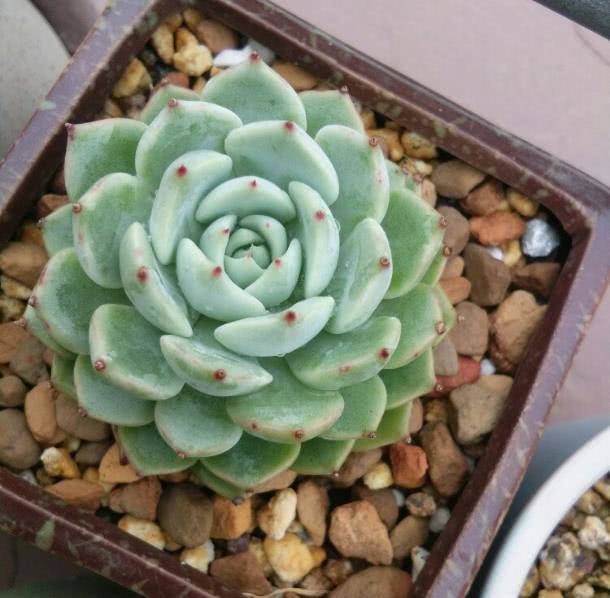
A reader asked: the succulent plants I grow always have shriveled leaves, and even fertilizing doesn't make them plump. What on earth is going on? No matter how you fuss over them, trying to make succulents plump, some gardeners control water strictly, others choose to fertilize, but the premise of all this work is only one thing: the root system must be good. The quality of the roots should be taken seriously before the plant is even potted. Trim the succulent's roots, and later it will plump up into a big fat ball.
Note that succulent roots are inherently fragile, so you cannot trim them carelessly. What needs trimming are the dead roots and old, dried-up fibrous roots; the main root must not be touched. If these dead roots are not cut off, new roots will struggle to grow. When we start watering, these dead roots, which can no longer absorb water, sit in a moist state for a long time after contact with water and gradually rot. Once rot appears, it breeds pathogens and pests, and the whole plant will suffer along with it.
The first factor affecting how thick and sturdy a succulent's roots are is, of course, time. The thick, sturdy roots that an old specimen has spent many years growing are certainly beyond comparison with those of a succulent that has just rooted. So if your succulent is only a few months old, don't even think about thick, sturdy roots - there definitely aren't any. What you should look forward to is a more developed root system; it looks best when the roots resemble a scruffy clump of beard.
Next is the problem of dead leaves. Dead leaves that accumulate over a long time easily catch pests and diseases, especially in summer when they easily create a closed, stuffy, overheated environment, so they must be cleaned up. Those dry leaves that are not easy to remove should be left alone; pulling them off by force will damage the succulent itself. As for the transparent, water-soaked leaves, most are caused by the succulent having just been bought and potted not long ago, a discomfort brought on by the sudden change in growing environment.
As for the problem of succulents growing leggy, it shows as the stem shooting up endlessly, leaves thin and long, and the spacing between leaves too large, so the plant has no compactness at all. Why does a perfectly good succulent grow leggy? The root cause is lack of light plus too much watering. Beginners especially find it hard to control their watering hand. When these two factors exist at the same time, a succulent will grow leggy within a week.
There are two ways to save a leggy succulent: one is to behead it directly, the other is to remove the leaves. Beheading is essentially re-"shaping" the succulent; the original plant will sprout side shoots and continue growing. Removing leaves means snapping off the few layers of leaves near the bottom (which can be kept for leaf propagation), exposing the stem, and letting it gradually grow toward becoming an old specimen.
This is a gathering place for succulent lovers, sharing succulent care tips. You are welcome to follow and join the discussion.