Taiwan macaque numbers have risen markedly; experts suggest removing it from the protected wildlife list
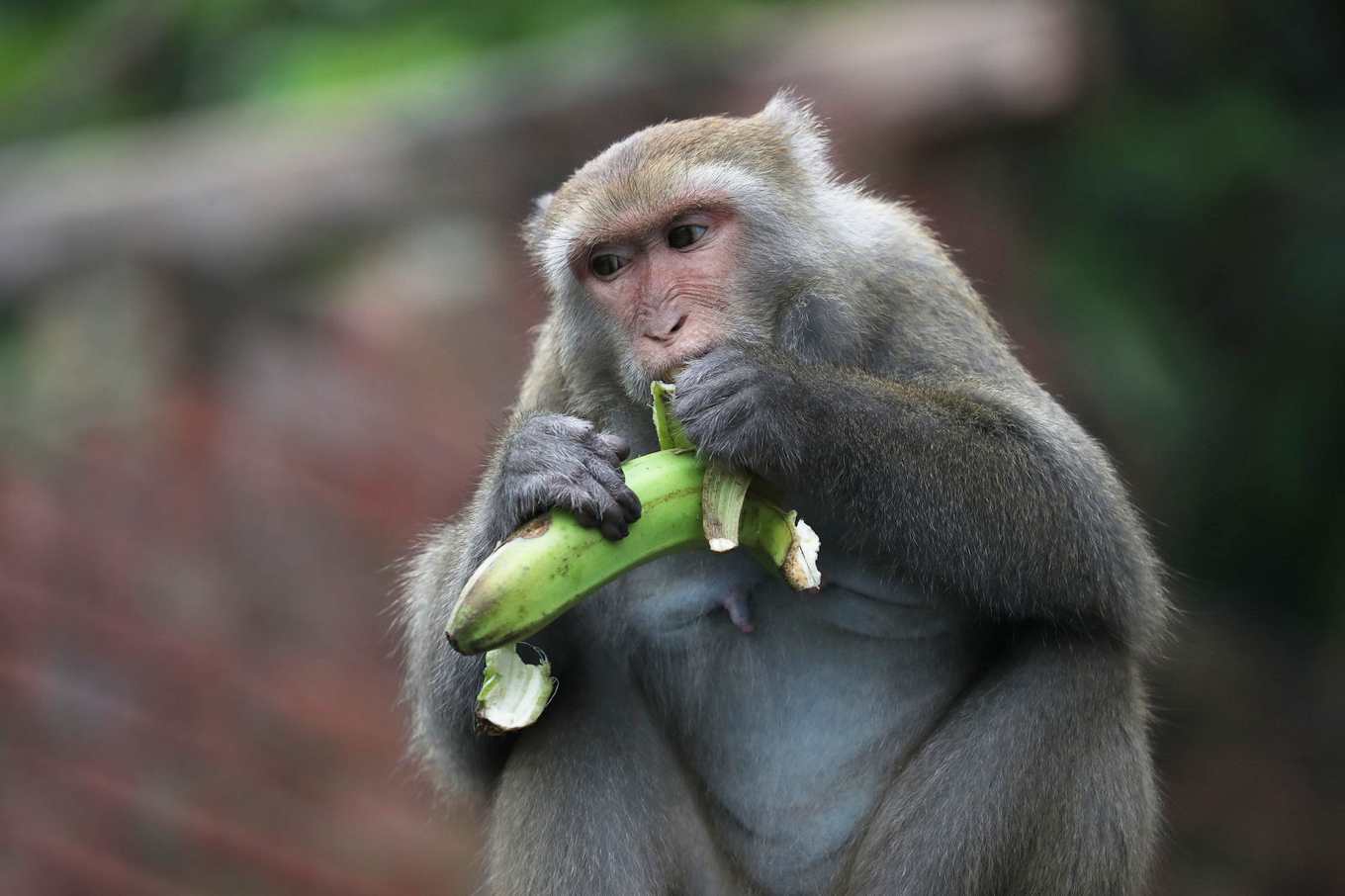
The population of the protected animal Taiwan macaque grew from 200,000 to nearly 300,000 in just over ten years, and in terms of habitat, there has been no pressure reducing macaque habitat area either. As both population numbers and habitat area gradually eliminate reduction pressure, should the Taiwan macaque continue to be listed in the "protected wildlife list"? At the "Expert Meeting on the Key Points for Wildlife Assessment and Classification Operations" recently convened by the Forestry Bureau, attending experts and scholars suggested adjusting the Taiwan macaque from the "protected" level to the "general" category. Forestry Bureau Deputy Director-General Yang Hung-chih said that a "Wildlife Advisory Committee" will be convened in June, when a consensus conclusion will be reached.
After thirty years, Taiwan macaque numbers rise; scholar: conservation has succeeded
Why did the attending experts propose the idea of a "level adjustment"? Lin Liang-kung, a distinguished professor in the Department of Life Science at Tunghai University and one of the committee members, approached this from the perspective of "zoological conservation," pointing out that internationally there are certain conservation criteria for judging "endangered animals," including very small population numbers and very limited population habitat. Although the Taiwan macaque once faced a survival crisis due to mass hunting and being sold abroad as experimental subjects, and was even listed in the protected wildlife list in the 78th year of the Republic of China, "but after thirty years, macaque numbers are rising."
Lin believes that, considering the Taiwan macaque currently faces no survival-crisis pressure, not only is the population increasing, but the area of national parks and nature reserves also totals 18,000 sq km. Therefore, the committee experts suggest adjusting the conservation level of the Taiwan macaque.
"Abroad, if an endangered animal is in this situation, countries usually find a way to remove it from the 'protected' category, because this represents 'successful conservation.'" Lin Liang-kung emphasized that, moreover, even if the Taiwan macaque's conservation level is adjusted to the "general" category, it is still protected under the Wildlife Conservation Act, and hunting remains prohibited in national parks and nature reserves. "Being listed as general category does not mean its protective charm is gone."
From "endangered" to "least concern"; animal protection groups: conserving primates is an international consensus
Although the expert meeting assessed and suggested adjusting the conservation level of the Taiwan macaque, macaque conservation advocate Lin Mei-yin offered an alternative line of thinking, stating that the IUCN Red List of Threatened Species lists 54% of primate species and subspecies as "endangered species," and listing "non-human primates" as protected can be said to be an "international consensus." "At present, almost no country excludes primates from its protected list."
"With primate conservation worldwide in such a precarious state, Taiwan can conserve the macaque from 'vulnerable' to 'least concern.' We should cherish this achievement, rather than use it as a reason to downgrade the macaque." Lin Mei-yin emphasized that even though the international conservation Red List has already listed the Taiwan macaque as "least concern," the ecological environment is still constantly changing. "Being temporarily listed as least concern does not mean it is absolute."
After changing the conservation level, will the Taiwan macaque's living space be affected?
The "Expert Meeting on the Key Points for Wildlife Assessment and Classification Operations" assessed, based on the current biological and ecological indicator principles for the Taiwan macaque, that the Taiwan macaque should be adjusted from a protected animal to a general animal. Lin Liang-kung also pointed out that conservation education among people in Taiwan has now succeeded, and even if it is listed as a general animal, people will not openly kill macaques; moreover, areas such as national parks and nature reserves still leave living space for the Taiwan macaque.
"Although there is the Wildlife Conservation Act, the key is whether there is 'effective enforcement.'" Lin Mei-yin, however, also raised her own concerns, stating that although Shoushan is already at the national park level, cases still occasionally emerge of poisoning, beating, and even domestic dogs biting macaques and leaving them paralyzed. "The relevant agencies have worked very hard to protect the habitat, yet they cannot watch it around the clock and put an end to these behaviors. How can they persuade the public that habitat conservation has already been done well?"
Lin Mei-yin worries that the Taiwan macaque is already a protected animal with a relatively negative image, and once it is further listed as a general animal, "I really cannot imagine what the consequences will be."
Forestry Bureau: a meeting in June will reach a consensus
In response, Lin Liang-kung believes that people in Taiwan already have sufficient conservation awareness, but he also again offered Japan's approach as a reference for Taiwan, stating that Japan's conservation measures regulate areas rather than species. In areas with small animal populations, conservation is adopted; in areas where the endangered-species crisis has already been eliminated, animal damage problems can also be effectively handled without indiscriminate killing. Lin repeatedly emphasized that management and supervision remain important.
Is it definitively decided whether to list the Taiwan macaque as a protected animal? There is still no conclusion at present. Forestry Bureau Deputy Director-General Yang Hung-chih said that at present scholars and experts are purely presenting scientific survey data from past years as the basis for judging the population situation, and the assessment process did not take macaque damage into consideration. The Forestry Bureau will convene a "Wildlife Advisory Committee" in June, when a consensus conclusion will be reached. If the conclusion confirms a revision of the protected wildlife list, it will also be handled according to administrative procedures with a sixty-day advance notice, followed by an administrative procedure announcement.