Among hanging basket flowering plants, these few have particularly distinctive looks. How many do you know?
Growing potted plants in the living room has long been common. If there is not enough space indoors, you can grow some hanging basket flowers and hang the plants in the air to care for them. This not only catches the eye but also saves space. However, after planting, be careful to avoid overwatering, otherwise the floor will easily get dripped on. Also, keep them in a place that is easy to care for, creating a good ornamental effect, and routine watering and fertilizing will also be simpler.
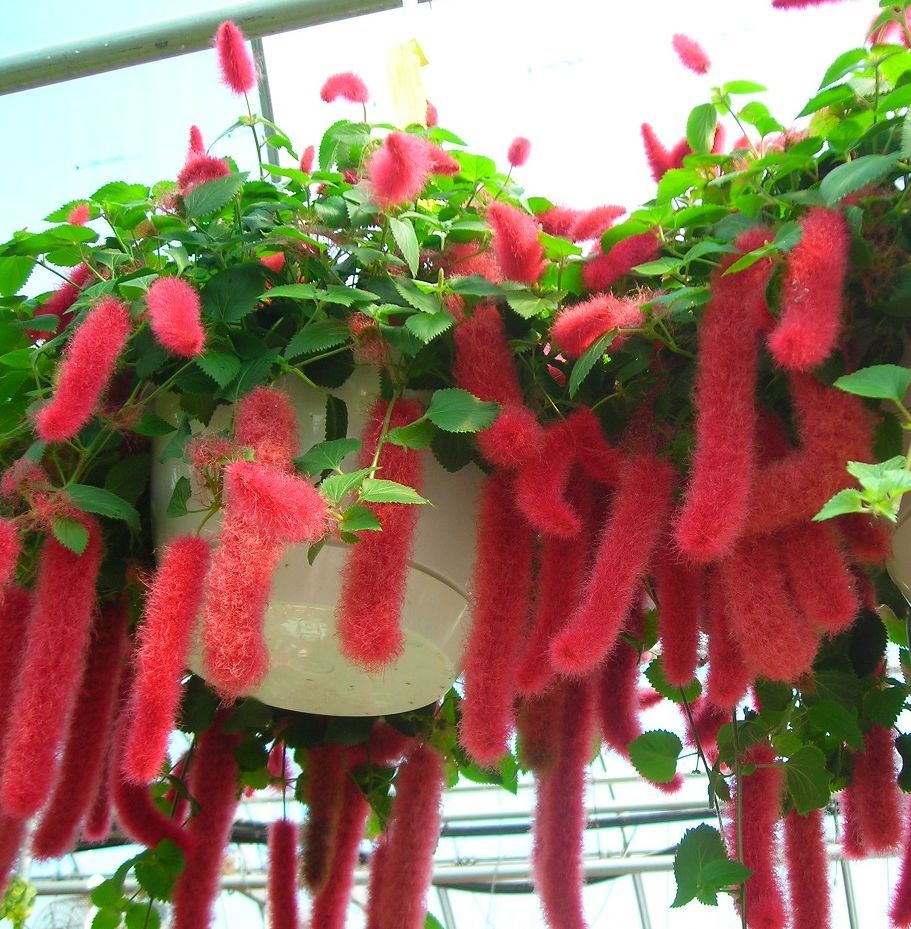
The first type, chenille plant (Acalypha hispida)
The chenille plant is a common tropical flowering plant. It likes fairly ample sunlight and a warm, humid environment year-round. It is best to have a bright south-facing or east-facing windowsill so they can get enough heat, with about 3 to 8 hours of light per day. During the growing season, water frequently to keep the soil moist. Also, give a dilute fertilizer once every 2 to 3 weeks to promote their growth and flowering.
The second type, string of pearls (Senecio rowleyanus)
String of pearls has strings of plump, round beads as leaves. Its leaves are very cute and highly ornamental, and it pairs nicely with stylish home decor.
String of pearls does not need frequent care. It likes bright indirect light or a suitably bright environment, and direct sun exposure should be avoided. String of pearls does not need frequent watering. It likes the soil to stay slightly dry year-round, and when the soil is completely dry, water thoroughly. Give string of pearls suitable indirect light every day, and it can also produce pretty little white flowers. If you want string of pearls to grow more vigorously, you can prune it regularly, and the cut stems can be reinserted into the soil as cuttings.
The third type, lipstick plant (Aeschynanthus radicans)
The lipstick plant is a hanging basket flower with brilliant blooms, suitable for growing on a windowsill. It has flowers that look like lipsticks one after another and is a very graceful tropical flower. It can tolerate low-light conditions and does not need frequent watering. However, the care location should stay warm and humid year-round, with a minimum care temperature above 7 degrees, avoiding freezing. During the growing season, water thoroughly after the potting soil dries out, and pinch the tips appropriately to encourage branching.
The fourth type, black-eyed Susan (Thunbergia alata)
Black-eyed Susan is also a common tropical flowering plant. It likes a warm, humid environment year-round. The care location needs more than 6 hours of light per day. During the growing season, keep the environment warm and humid and avoid freezing. Its cold tolerance is average.
Planting black-eyed Susan requires loose, fertile, well-drained soil. If grown in a pot, set up a support for it to climb upward.
The fifth type, goldfish plant (Nematanthus gregarius)
The goldfish plant has cute orange or yellow flowers. The flower shape resembles a little goldfish, very petite and charming, suitable for growing in a relatively small hanging pot. It can adapt to low-light conditions, and a north-facing windowsill is most suitable.
If you like the goldfish plant, keep a warm, humid environment year-round and pay attention to regular watering, watering thoroughly after the soil dries out. In spring and summer, give fertilizer once every two to three weeks. With suitable light every day at the care location, it can bloom year-round.
The sixth type, pitcher plant (Nepenthes)
The pitcher plant is a common carnivorous plant. It likes a warm, humid environment year-round and has high requirements for ambient humidity. It fears dry environments and also fears freezing. When caring for it, pay attention to maintaining moisture. Regularly put one or two mosquitoes in its pitcher traps, and that can promote its growth.
The pitcher plant does not like soil that is too fertile and does not need frequent fertilizing. Also, note that after its pitchers wither, cut them off promptly to reduce nutrient consumption.
The seventh type, silver pothos (Scindapsus pictus)
This is a climbing flower that looks very much like pothos. It has mottled leathery leaves and is a climbing plant with relatively high ornamental value, very popular. Caring for it requires a low-light environment, keeping the environment warm and humid year-round, and avoiding freezing. During the growing season, keep the soil moist, water regularly, and avoid excessive drought.