A Talk on Haworthia: A Little Science Lesson on the Windows of the Retusa Type
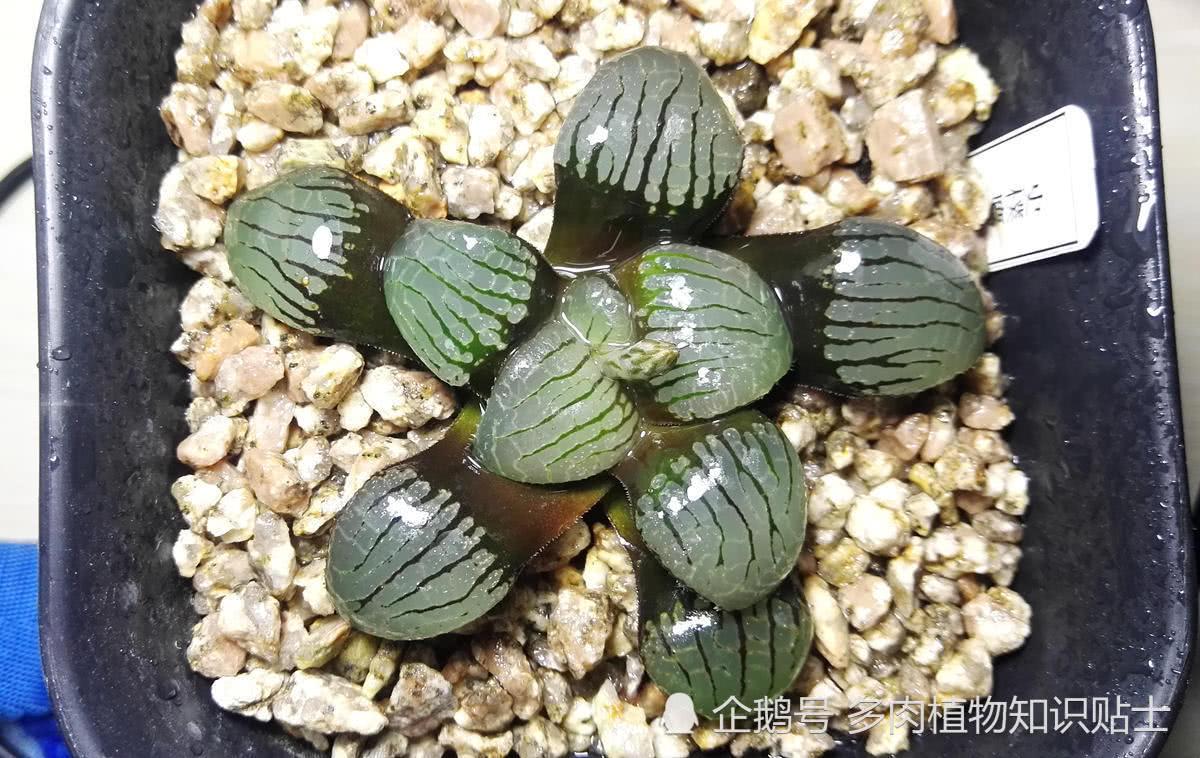
Today let's talk about a very distinctive trait among the retusa type - the "skin-over-window" (windows covered by green skin). (Thanks to Sven for the material.)
The first time I heard this term was many years ago, from Tiedan of Suzhou. Back then I only had a smattering of knowledge about plants, and my research was not very thorough. So many years have passed in the blink of an eye, and as I have seen more and more varieties, my understanding of the traits has grown deeper and deeper - hairy spines, frosted texture, thick white veins, and so on and so forth. All kinds of traits are dazzlingly diverse, yet only this retusa with skin-over-window can always quickly catch my attention.
(Apart from the retusa type, Haworthia cooperi, the purple series, and indeed Haworthia maughanii and Haworthia truncata can all be counted as a kind of skin-over-window, but this article will not discuss them for now.)
Enough idle talk. First, let's explain it from the literal meaning.
We can break down "skin-over-window" as follows: skin (noun n) - over (verb v) - window (noun n).
What is the "skin"? The skin is the green skin on the plant's surface. Skin color ranges from light to dark, and it also determines the overall body color of the plant. What we often call black-body or purple-body is a reflection of the skin's color.
Then what is the "window"? I believe it needs no explanation - it is the translucent tip unique to Haworthia that everyone knows, like a skylight.
When the green skin climbs onto the translucent window, that is the so-called skin-over-window.
We know that the window surface of the retusa type has many expressions, and the expression of veins is especially captivating. Among them, Haworthia comptoniana, Haworthia springbokvlakensis and Qingxie (Green Crab) are all excellent parents for skin-over-window, and through hybridizing they can give us many outstanding skin-over-window individuals.
Let's look at it step by step. For example, the thick-white-veined comptoniana has a large group of fans and supporters.
Take the well-known Yueying (Moon Shadow) as an example. If you look carefully at the beginning of a thick white vein, there is actually a small portion of green skin extending, but it quickly transitions into a white vein.
What exactly determines the transition between green skin and white veins is unknown, but in the process of horticultural seed-raising, intentionally or unintentionally, we will obtain some individuals where green skin takes up a larger proportion of the window surface and white veins are fewer, or even individuals that are purely green skin.
Like this springbokvlakensis line, the trait of skin climbing onto the window is very obvious - the green skin does not transition into white veins, but extends straight toward the window surface.
And this is only the skin extending along the direction of a single vein.
As the veins become more and more complex, the green skin follows suit and becomes more and more complex,
becoming dense and irregular, and at the same time more and more eye-catching. This is also why I personally have always liked skin-over-window.