Grow flowers with these 7 kinds of soil, available everywhere, no root rot, glossy green leaves, and flowers bursting out of the pot
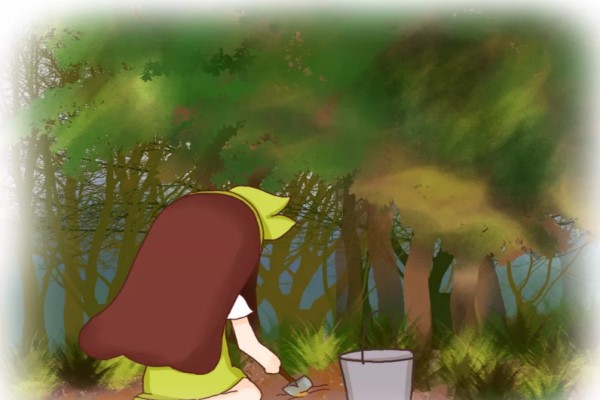
Leaf mold
Leaf mold is the most common type in nature, formed from dead branches and fallen leaves after years of rotting.
Leaf mold is plentiful in parks or places with woodland.
Leaf mold is a loose, slightly acidic soil rich in nutrients. Mixed with garden soil and river sand, it is most suitable for growing acid-loving flowers, such as rhododendrons and cyclamen.
Garden soil
Garden soil is found everywhere and is a must-use type of soil for growing plants.
Garden soil is plentiful in fields and vegetable gardens and is very easy to obtain.
Garden soil is simple and convenient to use, but its breathability is relatively poor. When using it, you need to add a substrate to improve it. Commonly used substrates include perlite, vermiculite, or decomposed pine needles.
Pine needle soil
Pine needle soil is generally formed from fallen pine needles that have accumulated over a long period.
Pine needle soil is plentiful in pine forests or places with coniferous trees.
Pine needle soil has high nutritional value and contains various trace elements. It is the best choice for growing flowers, often mixed with garden soil to grow clivia, orchids, and other flowers and plants that like loose, breathable soil.
Mountain soil
Mountain soil is divided into two types: yellow mountain soil and black mountain soil. It is formed from the long-term accumulation of fallen leaves from trees in the mountains.
Mountain soil is a natural humus-containing soil with a loose texture. Black mountain soil is acidic and contains more humus; yellow mountain soil is also acidic, is relatively sticky and heavy, and contains less humus.
Mountain soil is commonly used as the main culture soil material for acid-loving flowers such as camellias, orchids, and rhododendrons.
Humus soil
Humus soil is a layer of mixture composed of the remains of various animals and plants as well as various organic wastes.
Humus soil is plentiful in parks or places with lush vegetation.
Humus soil can be used for potted plants. It contains various organic substances and trace elements. Humus soil is loose, acidic, and has good water retention, making it suitable for growing most flowering plants.
Coal cinders
Burned coal cinders are breathable and sterile and contain trace elements needed by plants. If you don't want to buy soil, then use plenty of these coal cinders!
Coal cinders must be soaked in water to remove their alkalinity before use. Soak for a few days, then crush them and mix them into the soil to make the soil loose and breathable.
Coal cinders are a great substrate for growing succulents!
River sand
River sand is deposited at the bottom of rivers. River sand is divided into coarse sand and fine sand, and it can improve the looseness of the soil.
Fine sand has good water retention and is also loose and breathable. Therefore, it is a very good cutting substrate.
Because coarse sand has larger particles, when mixed with other soils it forms more gaps, so its water permeability is relatively good. It is suitable for growing succulents, camellias, orchids, and so on.
That's all from Huahua for now about soil for growing flowers~
What other kinds of soil have you used to grow flowers?
Remember to recommend them to Huahua!