The jade plant is one of the most common houseplants indoors, and when well cared for it can become a treasure for the whole family
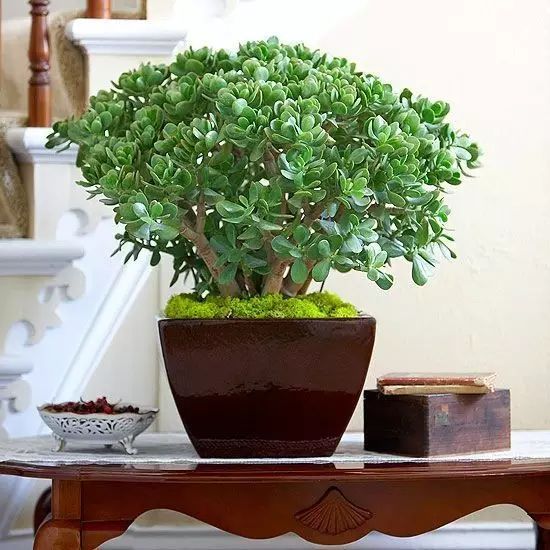
Back in my hometown, many neighbors kept a "thick-skinned plant" at home. Its defining trait is its thick leaves, and it is extremely easy to grow. I have basically never heard of anyone killing one, and in households where it has grown for decades there is no longer any room for it.
Only later did I learn that it has another name, "jade plant" (Crassula ovata), meaning a plant like jade. But if it gets plenty of light, it really can be grown into something like uncut jade, making it a treasured keepsake in the home.
The plant above looks like a jade plant, but it is actually a variant of it. Its leaves look like round suction tubes, and otherwise it is no different from a jade plant. People call it the "money-sucking tree" (Crassula ovata 'Gollum').
The most critical aspects of jade plant care are watering and sunlight. Master these two points and you can basically grow it very well.
The most critical points of jade plant care:
1. Points to note about watering
Jade plants particularly dislike overwatering; even a little extra water can be fatal, especially in winter. When the temperature drops below 10°C, there is no need to water at all throughout the winter. Too much water causes the roots and stems to rot.
Before watering, be sure to check whether the potting soil is dry. Only when the soil is dry from the surface down to 3-5 cm below can you water.
2. Plenty of sunlight
The second most critical point in growing a jade plant is sunlight. It needs plenty of light, except in summer. If you want the leaves to grow tender and delicate, and if you want it to bloom, it needs plenty of light. It is best grown on a south-facing windowsill.
When a jade plant gets plenty of sunlight, its stems and leaves become thicker and more substantial, and the leaf edges turn red, making the plant even more beautiful.
Too much sun in summer causes sunburn and darkening, as with the jade plant below, which is sunburned.
"Jade plant leaves sunburned"
3. Soil selection
For planting jade plants, it is best to choose a loose, well-draining sandy soil. It does not necessarily need to be very fertile. You can choose a general succulent mix and add a small portion of coarse sand to blend in.
4. Simple propagation
Jade plant propagation is very simple, especially in summer and autumn. Just cut off a stem with two nodes, remove the lower leaves, let the wound dry, and insert it into slightly moist fine sand. It will quickly take root and sprout.
Of course, if your jade plant's roots and stems have rotted, you can also cut off the stem, remove the rotten part, let the wound dry, and insert it to root. It survives very well.
It can even be propagated from a single healthy leaf, though growth is very slow and it takes three months to grow into a small seedling of 2-3 cm.
5. Pest control
Generally, jade plants rarely suffer from pests or diseases, but with too much water or an overly dry environment, red spider mites or mealybugs can appear.
As soon as I notice them, I immediately apply 75% alcohol (strong liquor works too), dabbing it on with a cotton swab, and the insects quickly disappear. You must spot them early.
6. Pruning
For a jade plant, first grow the main trunk well and remove the lower branches. Keep pinching off the growing tips of the upper branches. To achieve a good plant shape, you also need to pay attention to pruning and pinching off the tops.
(Jade plant blooming)
One more point: jade plants are particularly intolerant of cold. In winter, temperatures above 10°C can still cause frost damage, and above 5°C you are on your own.