The money tree can also bloom and bear fruit; its peanut-scented flowers produce brown seeds
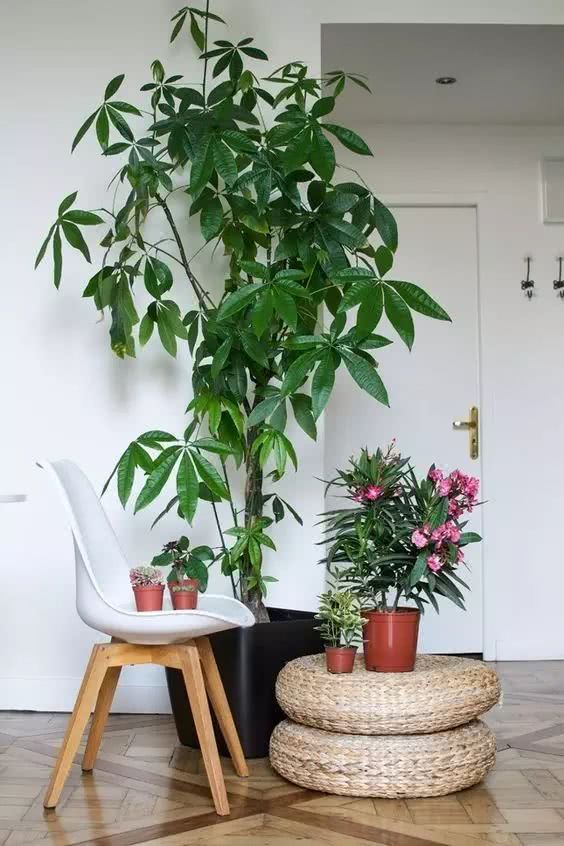
The money tree is actually Malabar chestnut (Pachira aquatica), native to South America, and it has now had a profound "influence" on feng shui in our country; people believe it can bring wealth.
(The tall money trees kept at home are generally over 1 m tall, and can grow to more than 2 m at most)
And many people do not know that it also has these peanut-scented flowers, as well as brown fruit. Have you ever seen what money tree seeds look like?
Under the tree, you can smell the fragrance of the money tree's flowers, a scent similar to peanuts.
The fruit is green and turns brown after ripening; one like the one above is just about ready to pick.
Unripe money tree fruit must be examined carefully to be found. It does not produce many fruit, and they are all hidden at the tips of the branches.
After peeling the fruit open, you can see the seeds inside, a bit like chestnuts. I just do not know whether they can be roasted and eaten, but it is still best not to try. (It was originally called "Malabar chestnut" after all)
The above are money tree seedlings grown from seed; they are still quite delicate!
In South America, money tree flowers have also been seen in parks. As long as the temperature and humidity are sufficient, it can bloom and bear fruit.
These are all large trees that have grown to 4-5 m tall, not at all like the potted money trees sold in flower shops, but that cannot conceal the fact that they are money trees, the embodiment of Malabar chestnut.