Prune roses this way for big, full blooms and flowers every month
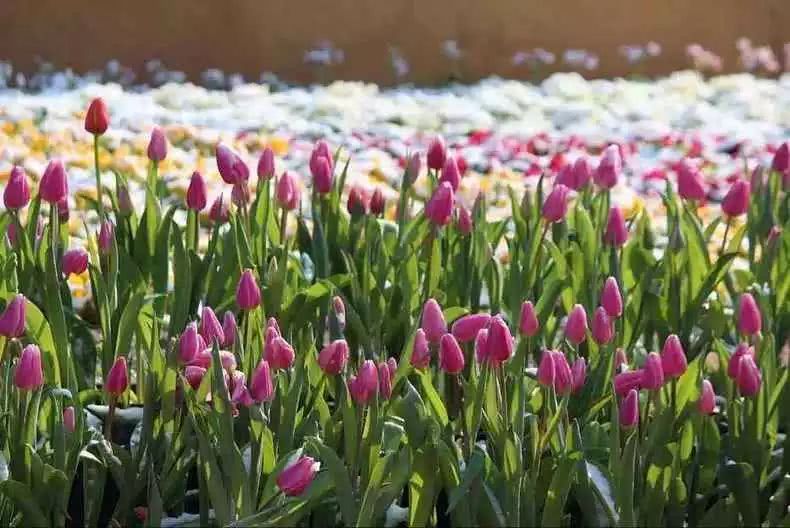
There is so much we need to know about pruning roses! For example, when to prune roses and how to prune roses, you must master the key points. Today let's talk about the ins and outs of rose pruning!
In spring, awakening from the harsh winter, the newly sprouted leaf buds and branches of roses are all the more delicate. With a light sweep of the breeze, two or three flower buds can hardly wait to sway in the wind. After another rain, whether white or pink, red or yellow, they open delicately.
Having gathered a whole winter's shyness, the flowers are small, yet the color is full and the fragrance is the richest. However, the richness of roses is different from that of magnolias; even when you lean close to smell a rose, it will not make your head spin.
Roses are not only pleasing to look at and to smell, but also have extremely strong "reproductive" power and vitality. Cut a branch and stick it into the soil, and within a few days it will take root and sprout. That same year you can see it bloom, and the next year the whole garden will surely be filled with fragrance.
Roses that have grown for many years must be pruned. Proper pruning not only maintains a beautiful plant shape, but also makes the rose plant grow stronger, bloom more and larger year after year, and greatly reduces the chance of disease and pests.
Steps/methods
First pruning after flowering. The first pruning after flowering is carried out in mid-to-late May. Remove spent flowers promptly to avoid seed set, so as to concentrate nutrients for sprouting new branches, making the second bloom large and beautiful, and the branches stronger. To properly suppress its growth, light pruning can be done, keeping 4-5 buds; moderately developed branches should be given medium pruning, keeping 2-3 buds, with the upper part cut off; weaker-growing branches should be given hard pruning, keeping only 1-2 buds, to encourage the sprouting of strong branches. In this way, because the degree of pruning on different new branches varies, the plant shape will develop in a balanced way, avoiding uneven branches or excessive leggy growth.
When pruning, note that the cut should be 0.5 cm above the bud. If it is too high, it will not only affect the appearance but also delay the sprouting of the branch.
2. Second pruning after flowering. The second pruning after flowering is carried out from late June to early July. At this time it is midsummer, and the plant's growth vigor is weak, so pruning should be light. Cut only at the second leaf below the spent flower. There is no need to cut away too many branches and leaves, so as to avoid reducing the area for photosynthesis, but spent flowers and leggy branches should be removed promptly.
3. Third pruning after flowering. The third pruning after flowering is carried out after August. Change to medium pruning, keeping 2-3 buds per branch. To take care of balanced plant shape, you can cut on the branches that bloomed in the previous round, and you should remove overlapping, crossing and overly dense branches to ensure ventilation and light penetration.
In late December, around the Winter Solstice, the temperature drops and roses will enter a dormant period. At this time, one heavy pruning should be done. Choose the thick, strong flowering branches that grew in spring and summer, keep 2-3 buds from the base upward, and cut off the rest.
Diseased and weak branches, old orange branches, crossing branches and rootstock suckers should be cut away as much as possible. When pruning, if you can manage to give weak branches hard pruning and strong branches light pruning, then after sprouting next spring, the height will be uniform and the flowering will be more uniform.
After heavy pruning of roses, you can prepare for winter. After sprouting next spring, pay attention to bud removal, removing secondary buds and inner buds, to promote the robust development of the first buds. At the same time, whether to keep a bud can be decided according to the vigor of the branch. When pruning, also pay attention to the reasonable layout of branches, to promote lush growth of the roses.