The Crop Origins of the Plum: A Microcosm of Taiwan's Exports | Zhi Guo Tang
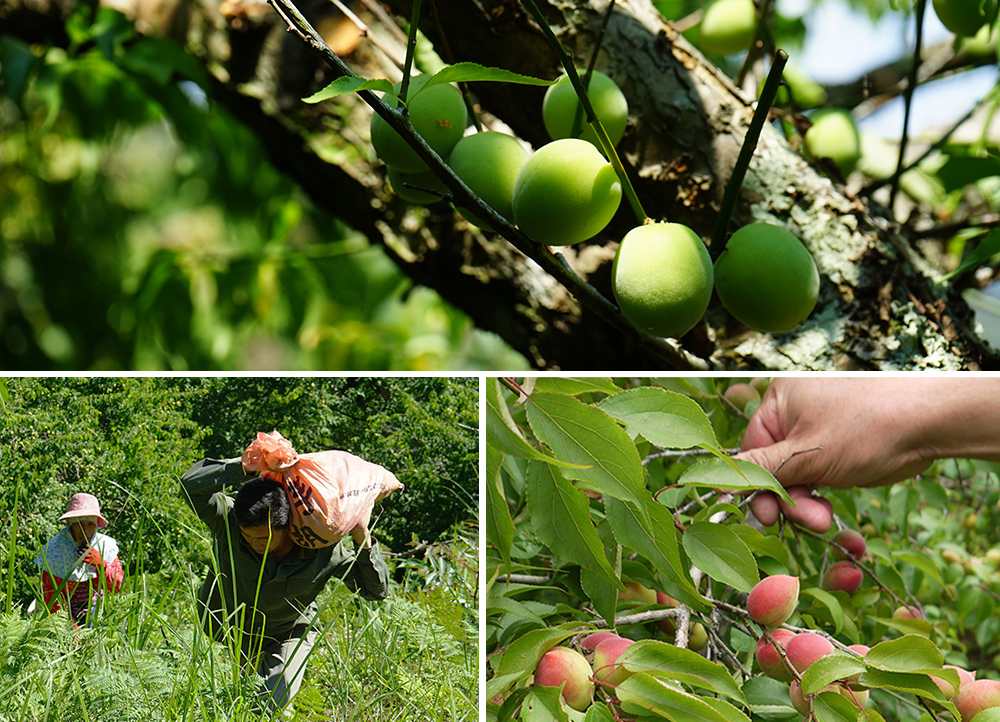
Plum trees were introduced to Taiwan from China and have been cultivated here for over 300 years. Asians firmly believe that the plum's alkaline properties make it a folk remedy for health. In the early days, low labor costs and a stable climate created a golden age for Taiwan's plum exports. However, over the past 30 years, plum orchards have undergone earth-shaking changes. Traditional century-old plum trees are becoming increasingly rare, income from plum-blossom viewing now weighs ever more heavily on farming households, and plums grown like vegetables have fixed spacing and height. Standardized monoculture plum orchards have appeared. What exactly has happened over these decades?
Plum-growing regions in Taiwan: Nantou, Kaohsiung, Taitung
The plum is a crop unique to Asia, with cultivation footprints in Taiwan, the Chinese mainland, Japan, South Korea, and Southeast Asia. Among these, the largest planting area is in the central and southern regions of the Chinese mainland. Taiwan's plum orchards were also established from plantings introduced from the Chinese mainland. The earliest cultivation record appears in the 1684 ancient text "Taiwan Prefecture Gazetteer," and they are mainly distributed in mountainous areas at about 200 m to 1,500 m, throughout the whole island.
According to official statistics from 2011, Taiwan's plum-growing regions are mainly in mountainous areas such as Nantou (1,591 ha), Kaohsiung (1,305 ha), and Taitung (1,584 ha) (one hectare is about the size of 60 volleyball courts). These three places account for 78.5% of the planting area, and in recent years the island's total output has been about 32,000 metric tons.