Plant Doctor Act tries again: recruit agriculture students to train plant doctors, high-risk pesticides only available by prescription
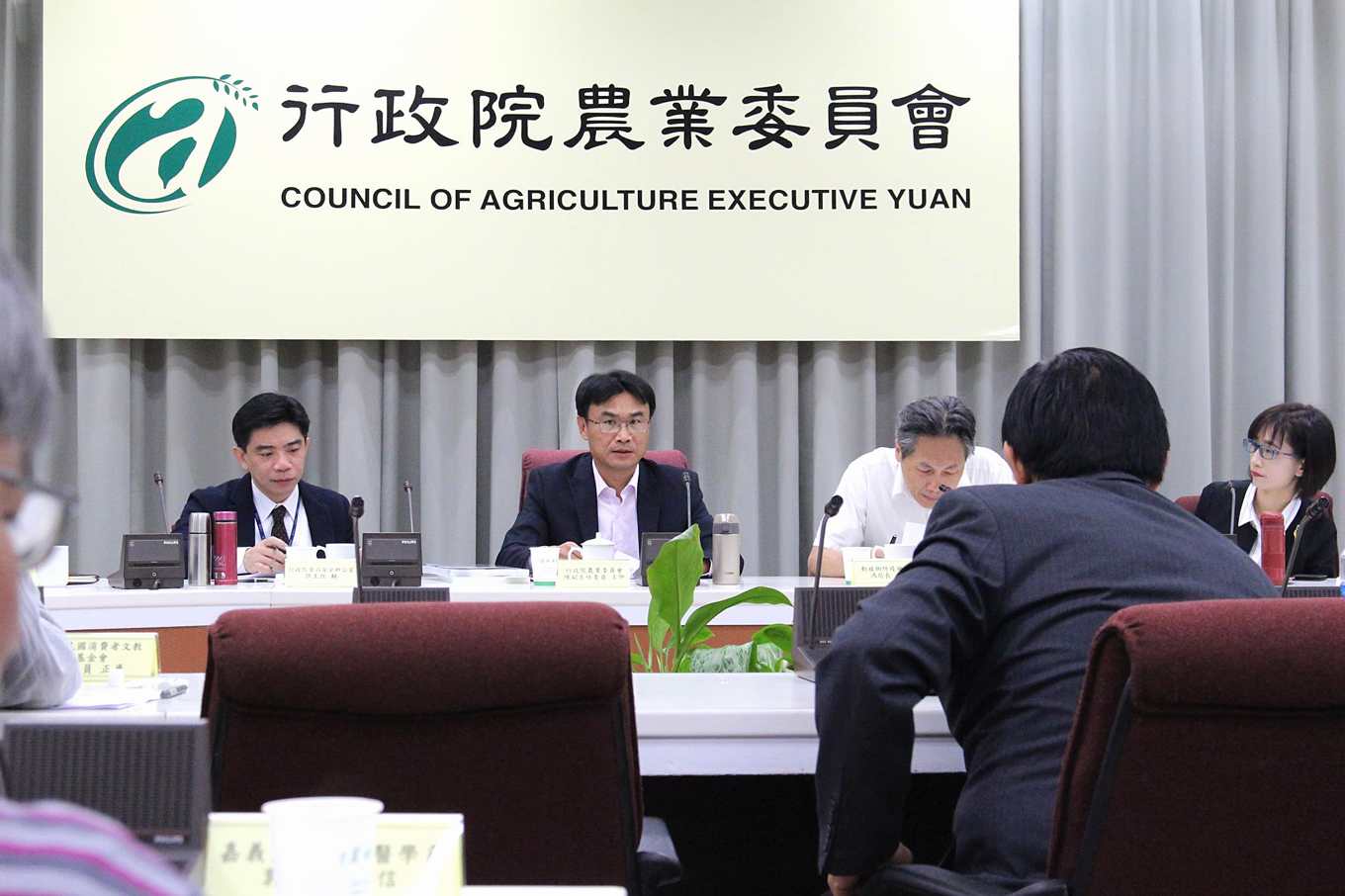
The draft Plant Doctor Act was sent to the Executive Yuan at the end of last year, but was returned because many issues in the draft had not yet been clarified. The Council of Agriculture yesterday (the 9th) invited people from industry, government and academia to take part in a public hearing for discussion. Council of Agriculture Deputy Minister Chen Chi-chung pointed out that when you are sick you see a doctor, and when plants are sick they also need to see a doctor; this involves cross-disciplinary cooperation in soil, fertilizer, crop management and pest and disease management. The Council of Agriculture will not stop working just because the legislative process is not going smoothly; it will continue its demonstration program with the four major plant doctor universities so that later legislation can be more complete, and hopes to send the draft to the Executive Yuan again in May this year.
Hsu Fu, director of the Executive Yuan's Food Safety Office, said that in January this year the ministers held a meeting on the draft Plant Doctor Act and summarized the issues into four major problems that must be discussed again, including the current shortage of plant doctors and the future increase in demand, for which detailed supporting measures must be drawn up; guidance and supporting measures for existing pesticide retailers; outside doubts about the name "doctor" for plants; and the scope of practice of plant doctors, which must be clarified in relation to the plant protection work of forest, horticulture and agronomy technicians under the current national examination system.
Agribusinesses have a high willingness to hire plant doctors
Although plant doctors are highly professional, what is the actual market demand? Pai Pei-yu, CEO of Yonglin Organic Farm, pointed out, "Now there are Line groups that discuss field-related problems, but the same problem gets three or four answers, and this actually makes farmers very afraid and alarmed." Therefore a team with rich field experience is greatly needed to point out where the problem is, whether it is over-fertilization or improper fertilization, so that responses can be made immediately. "With such effective management, I can not only lower fertilizer and material costs, but also increase the harvest."
Pai Pei-yu calculated that for this farm, fertilizer and material costs are 9 million a month; if through the professional guidance of a plant doctor the cost could be reduced to 7 million, "that is like earning 2 million right away. If this money is used to hire a plant doctor, as experience accumulates, next year the material costs might become 5 or 6 million, while the harvest can also be increased." She stressed that there is no need to wait for legislation to pass; intern plant doctors who are willing can now help find teachers, provide venues and give salaries.
Hsiung Ya-ping, chairwoman of Fresh Green Agricultural Technology Company, also said that with soil testing, if soil is sent to the Agricultural Research Institute it takes three months to get results, and buying one's own soil testing instrument is very expensive. In the past the company also cooperated with schools and recruited six intern plant doctors, but in the end none of them came.
Chen Li-ling, director of the Department of Plant Medicine at National Pingtung University of Science and Technology, pointed out that because Pingtung is a major agricultural county, there are often opportunities to help with diagnoses, and she often hears farmers say it is good to have plant doctors because incorrect pesticide use will not happen. Sun Yen-chang, chairman of the Taiwan Arboricultural Medicine Association, also said that every agribusiness needs at least one plant doctor, and that losses can be reduced from 30 percent to 10 percent; there is a large market, and farmers' income can be raised.
Through regulatory guidance, hiring plant doctors can be made partly mandatory
Yen Chen-feng, senior technical specialist at the Bureau of Animal and Plant Health Inspection and Quarantine, said that in the future this will be stipulated in the functional laws, such as stipulating pesticide classification in the Pesticide Management Act, so that in the future prescription drugs and non-prescription drugs can be purchased only when a plant doctor issues a prescription; in the Plant Protection and Quarantine Act, monitoring and investigation, pest identification and so on can all bring in room for plant doctors to operate; and under the farm registration rules, which currently require farm technical personnel, this can also be combined with plant doctors in the future.
Chen Chi-chung said that through amendments to the Pesticide Management Act and related laws, hiring plant doctors will become mandatory to a certain degree. Feng Hai-tung also said that, just as the Animal Industry Act requires livestock farms to have veterinarians, farms could also be required to employ professional plant doctors, and in a similar way this would become job protection and could also boost industry development.
Chen Chi-chung stressed that the Plant Doctor Act should be passed first, and then the details adjusted step by step, and he hopes to send it to the Executive Yuan again in May this year. However, the Plant Doctor Act has not yet passed, and talent cultivation takes time. Feng Hai-tung also estimated that the first group of people who pass the national examination and obtain plant doctor licenses and enter the industry will not appear until 2023 at the earliest, and before then the demonstration program must continue to be promoted so that after the legislation passes in the future the transition can be smoother.