Promoting Taiwan rice products: The Rice and Grain Club joins forces with over a hundred businesses for a team effort
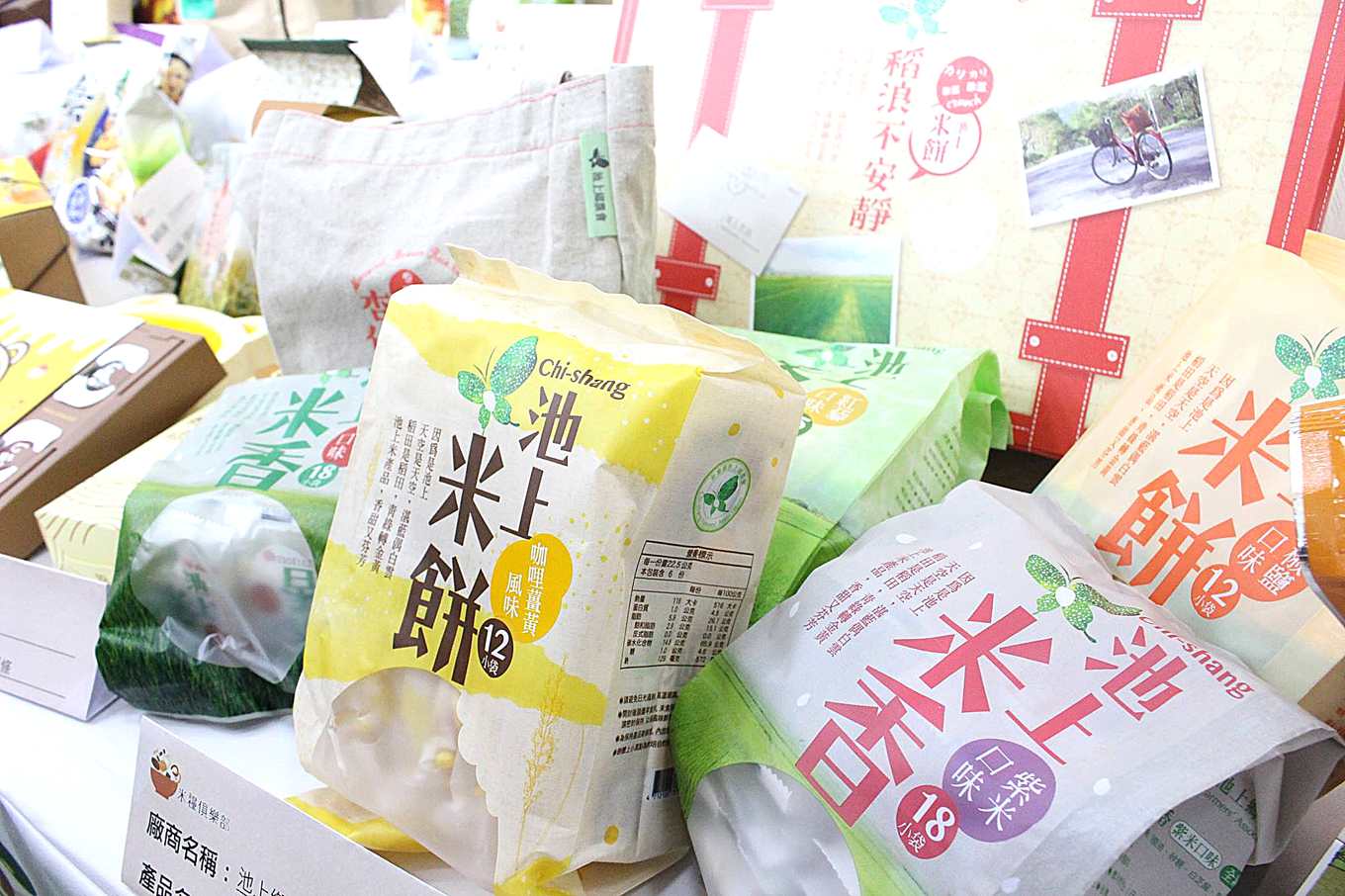
Taiwanese people eat less and less rice; in recent years consumption has held at 45 kg per person per year, and last year it hit a new low of just 44.5 kg. Compared with the 132 kg per person per year consumed forty years ago, that is only one third. Facing the challenge of a Westernized diet and declining rice consumption, the Agriculture and Food Agency has kept launching rice food events, and this time it has gone further by establishing the Rice and Grain Club, gathering more than a hundred businesses that produce rice, grains and miscellaneous crops, specialty rice food products, and baking competition winners, to build a rice food brand, select distinctive high-quality rice food products, and work with the well-known online group-buying platform GOMAJI, in order to promote diverse rice food products and raise the amount of rice Taiwanese people eat.
Promoting domestic rice: the Agriculture and Food Agency integrates the "Rice and Grain Club"
On the 10th, the Agriculture and Food Agency held a press conference for the "Rice and Grain Club." At the event, Agriculture and Food Agency Director-General Chen Jian-bin said that rice is the core of Taiwan's entire agricultural and food industry, with two crops a year totaling 275,000 hectares of rice paddies, close to 1.5 million tons of dried paddy rice. But calculated according to Taiwanese people's demand, rice production is in surplus, overproducing by ten percent.
Chen further said that young people love pizza, hamburgers and pasta, all made from wheat and flour, and even Japan and South Korea have been affected by the Westernization of diets. "But rice's nutritional value surpasses wheat's, it does not cause allergies, and rice has good processing characteristics, so we should put more ingenuity into developing better processed foods." He stressed that rice consumption is not just the basic staple of rice at three meals a day; rice can now also be made into Western-style pastries, bread, noodles and more, and whether in technology or recipes, these are already mature, and he hopes to strengthen promotion.
Chen also pointed out that more than ten million foreign visitors come to Taiwan for sightseeing each year, and they will certainly buy things as souvenirs, creating a very large market, while Taiwan rice processed into all kinds of products, combined with exquisite packaging, becomes a good souvenir choice.
The Agriculture and Food Agency has also worked hard in recent years to promote rice consumption. Chen pointed out, "In the past, our predecessors would say they hoped everyone would eat one more mouthful of rice, but the effect was not good. Now we do not dare say please everyone eat one more mouthful of rice either; that way of putting it is too dreamy. Instead, we have learned from the pain, catered to what people like, and put a lot of effort into diverse rice food products." In addition, in the past they only taught farmers to increase production and did not manage sales afterward. Chen promised that in the future, from field production and processing to market marketing, they will work and cooperate together.
Even with diverse products developed, consumers do not know about them, so the Agriculture and Food Agency further launched the Rice and Grain Club. Chen explained that many consumers do not know rice can make so many delicious products, and he hopes to make the information widely known and form a club, so that not only can manufacturers exchange information with one another; through holding open-air markets and the GOMAJI platform, these high-quality products can also be promoted; and the Agriculture and Food Agency will also carry out regular promotion of high-quality rice food products at Hope Plaza, the Yuanshan Flora Expo venue, and the agency's branches across the country, county and city governments, and farmers' groups, expanding the effort step by step.