How to grow Japanese quince? Detailed guide to cultivation methods and precautions
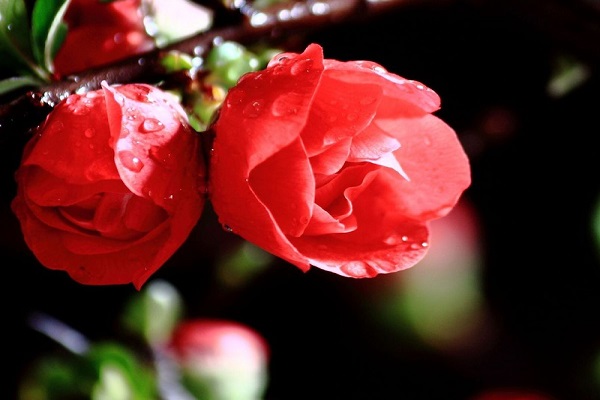
1. Cultivation methods
(1) Soil: For soil, acidic or neutral soil is best for cultivation. Its composition can be a mix of river sand, leaf mold and snakewood fern chips, or a nutrient soil made of leaf mold, field soil and sandy soil in a 5:3:2 ratio. Be careful not to use saline-alkali soil or clay soil, otherwise it will lead to poor growth.
(2) Temperature: Its optimal growing temperature is between 18 and 20°C. Because it is relatively cold-resistant, the room temperature only needs to be no lower than 10°C, and placing it outdoors is no problem either.
(3) Sunlight: It is a plant that relatively likes sun, suitable for placing in a sunny spot with good light, while maintaining good ventilation. If it is placed in a shaded, lightless place for a long time, growth will be hindered, so make sure it can get a sufficiently long period of light.
(4) Watering: During the budding period, water as little as possible. During the growing season, the amount of watering can be increased, watering twice a day is enough. When watering, pay attention to your technique: do not splash water on the stems and leaves. Water slowly along the edge of the flowerpot, otherwise water accumulating on the stems and leaves can easily cause rot.
(5) Fertilizing: Normally it does not need fertilizing, but in autumn when the Japanese quince sheds its leaves it loses a large amount of nutrients, so apply a heavy feeding once to replenish nutrients. In early spring, apply fertilizer once and water thoroughly once, which allows the fertilizer to fully penetrate into the soil.
2. Precautions
After it sheds its leaves and before it buds in spring, it needs a careful pruning: cut off dead branches, diseased branches and weak branches to increase its light penetration and ventilation. If you want to increase the number of flower buds, you need to shorten the long branches so that other axillary buds can obtain more nutrients, and you also need to pinch it back in time so that nutrients are not dispersed.