What to do if your succulents aren't growing? It's most likely root rot
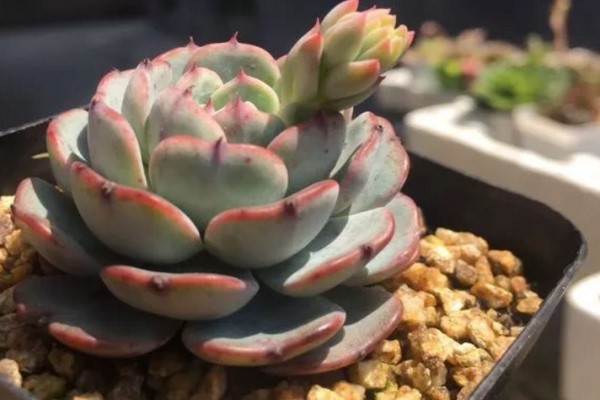
Judging root rot by looking at the leaves
Leaves are obviously dry and wrinkled
Overwatering causes severe waterlogging in the potting soil, the roots cannot breathe, leading to black rot and root rot, making it difficult to transport water to the leaves, which causes the leaf surface to appear dry and wrinkled, a sign of severe water shortage.
Leaves fall off at the slightest touch
Sometimes the leaves look plump and healthy, but they fall off at the slightest touch. This is a sign that the succulent is unhealthy, and you should consider whether root rot has occurred.
The base of the leaves turns to mush
When repotting and letting the roots recover, it is normal for leaves to turn to mush. This is the leaves providing nutrients for their own growth, a normal consumption. But if after a week the mushy condition not only hasn't improved but has gotten worse, you need to consider whether it is root rot.
Solutions
1. Remove from the pot
Take the succulent out of the pot and clean the soil off the roots.
2. Trim the root system
Trim according to the degree of rot on the succulent's roots and stem, and be sure to cut off all the rotted parts.
3. Let dry
After trimming, apply carbendazim to disinfect, and place in a cool, ventilated place for half an hour.
4. Repot
Repot the succulent, water thoroughly, and place it in a cool, ventilated place where the temperature is not lower than 8°C, watering once every half a month.
Besides succulents, home-grown potted plants are also very prone to root rot. Root rot in potted plants can be observed and judged from several aspects.
Judging root rot by looking at leaf color
Judging root rot by looking at leaf tips
Under normal circumstances, the roots absorb nutrients and transport them to the branches and leaves, keeping them bright and glossy. But if the potting soil is waterlogged, the roots cannot breathe or even rot, so nutrients cannot be transported normally, causing the leaf tips to turn yellow and dry out from lack of nutrients.
Judging root rot by feel
Under normal circumstances, because the leaves store a large amount of water, they appear plump and glossy, and feel cool to the touch. Conversely, if they don't feel moist and cool when touched, but feel slightly warm, it means the plant may have root rot.
Judging root rot by looking at leaf shape
When the leaves of foliage plants become wrinkled, showing abnormal shapes or even shrinking, you need to consider whether root rot has occurred.
Judging root rot by looking at the potting soil
For indoor potted plants, the most common problem is soil compaction. Once the soil is compacted, water is very difficult to penetrate when watering, and it easily becomes waterlogged, causing a lack of oxygen in the soil and ultimately leading to root rot.
Solutions
Although some plants have root rot, the "rot" is not fatal, and they can be saved by taking some measures. Taking the clivia as an example, Huahua will explain how to solve root rot.
1. First, according to the specific condition of the plant's roots, cut off the rotted parts.
2. Apply carbendazim or other liquid medicine to the cut surface to disinfect it.
3. Repot the treated roots, not too deep. Then just wait for new shoots to grow~
Now you understand what's wrong with your plants, right?
If you think the article is pretty good
Share it with other gardening friends!