A Detailed Explanation of the Logic of Matching Orchid Pots with Growing Media in Orchid Cultivation
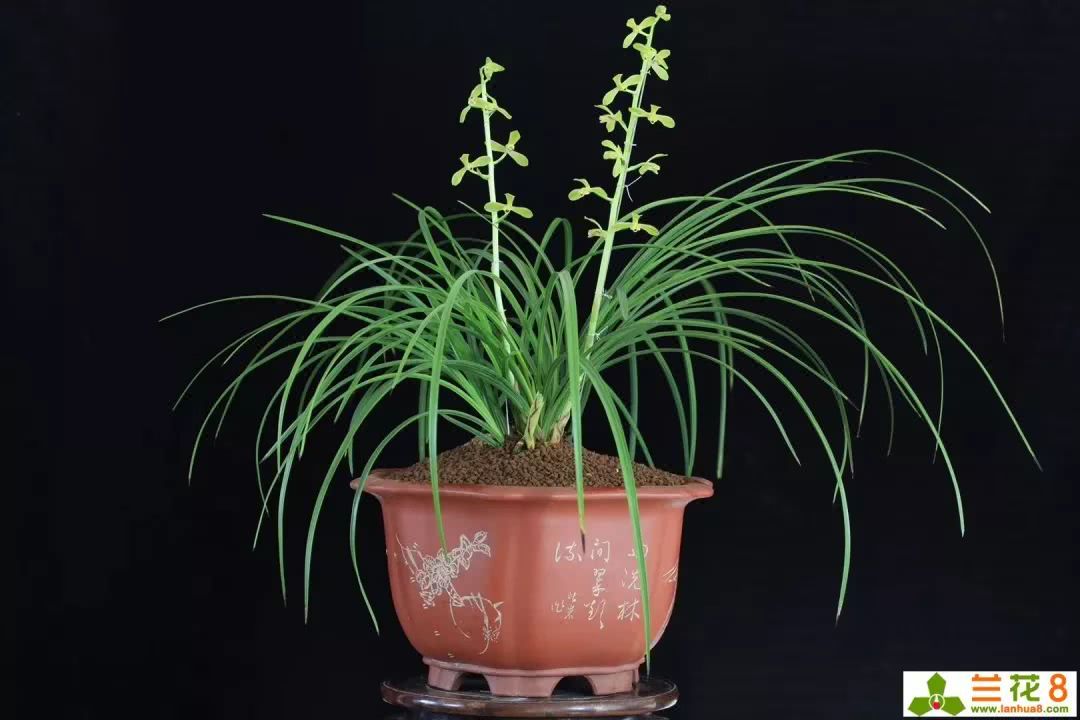
Promote Chinese orchid culture, spread orchid knowledge
Common orchid pots include clay pots, purple clay pots, purple clay glazed flower pots, southern clay pots, coarse pottery glazed pots, fine pottery pots, plastic pots, and so on. Due to the characteristics of the materials, the formed pots have different degrees of porosity (micropores), and the degree of porosity determines how well an orchid pot absorbs and releases moisture. Pores and holes differ greatly in geometric size. Pores have the function of absorbing and releasing moisture, while holes serve to provide air permeability. Moisture absorption and release should be a criterion for evaluating the performance of a pot. After water is poured into the pot, in the first stage, excess water drains out through the bottom hole, and at this point the growing medium reaches a state of saturated water absorption. If orchids are regarded as plants that do not like water, then in the second stage, a pot with good moisture absorption and release can, through the siphon action of micropores, transport the water contained in the growing medium to the outer surface of the pot and release it into the air. This slow process continues until the environmental humidity and the humidity inside the pot are similar. The release of moisture from the growing medium in the pot, in addition to being conducted out through the pot wall, also partly evaporates from the pot surface and other holes in the pot.
In pots with poor moisture absorption and release, or with no moisture absorption and release at all, the water in the growing medium inside the pot is mainly released through the pot surface and holes (without considering absorption by plant roots). The process from watering until the water in the growing medium inside the pot is almost fully released can be regarded as the watering cycle.
The saturated water absorption rate of various growing media is different, and the ability to absorb water depends on the structural form of the growing medium. The water absorption capacity of highly microporous particles with a very large specific surface area is clearly greater than that of densely structured weathered rock particles, while a whole pot of mountain soil absorbs water more easily than a whole pot of sintered akadama. When pots with different moisture absorption and release properties are matched with growing media of different water retention rates, their watering cycles should be different. Growers must determine the watering cycle according to the selected pot and growing medium as well as the environmental temperature and humidity, and must never make sweeping generalizations or trust immature experience that does not suit their own conditions.
Judging from the orchid pots and growing media currently chosen by orchid growers, it really is a case of every radish and cabbage having its lover. Some people pay great attention to the moisture absorption and release properties of orchid pots, choosing clay pots and fully fermented, loose organic growing media to grow orchids. The orchid roots do not hang suspended in the growing medium, fertilizer is applied moderately, and after watering, excess water is absorbed and released through the micropores in the pot wall to the outside of the pot wall and evaporates away, so water damage to the root system rarely occurs. Although this is a bit more traditional and the growth rate is not very fast, there is less disease, the orchids grow sturdy and are not "cai", and the floral fragrance reaches the fragrance intensity and purity it should have; the orchids look very much like orchids. Some people use plastic pots and sintered granules to grow orchids, especially those granules whose name sounds so nice, called "Zhijinshi". This concept alone is enough to entice people, using orchids as a metaphor for gold, making a beautiful dream come true. Who cares whether it is organic or inorganic? Anyway, they say that stuff contains trace elements. Nowadays trace elements are highly praised, and besides, after growing them for several years they still bloom, still smell fragrant, and still like to send up shoots. The orchid roots seem to have suffered a little grievance, but some orchids on the mountain have growing conditions even worse than this. Spurred on by high-tech fertilizer, the orchid seedlings grow swish-swish, just like using chemical fertilizer to grow bean sprouts, very high-yielding and very profitable, and the orchid is still an orchid.
And some people grow orchids with an emphasis on elegance and luxury, and try to embody the profound cultural heritage of orchids through the pots. Never mind how the orchids grow; just looking at the exquisite craftsmanship of the pot and the pot stand is enough to delight the eye. Who still cares whether the pot wall transmits moisture? If it transmits moisture, that is terrible; dirtying the pot and hindering the view is a big deal. Passed down to later generations and placed on a curio shelf, it will appreciate in value. A famous person likes good clothes, a good horse deserves a good saddle, and a delicate orchid is grown in a precious pot, fully displaying opulence. There are also people who choose pots randomly, with pots of many kinds, growing media of many kinds, and the same watering cycle, though spring, summer, autumn, and winter are still distinguished. Mixing in a large amount of raw growing medium is common, and even when the orchids get sick, the root cause cannot be found.