Garlic prices fall, Lin Tun-cheng: The government can do more than just subsidize wholesalers
Every year when the news of garlic prices crashing comes out, you see local officials in Yunlin County start holding up garlic to show support for farmers, the central government says it will launch a subsidy mechanism, and consumers start to wonder, why are market prices still high when prices have crashed? They start calling to curse at garlic suppliers and garlic farmers, and even question whether farmers are driving up prices?
Every year when this phenomenon occurs, what I think in my heart is, enough. Why does this phenomenon have to be replayed every single year?
Garlic is harvested once a year, the harvest and drying process is complicated, and the market price is decided in one go
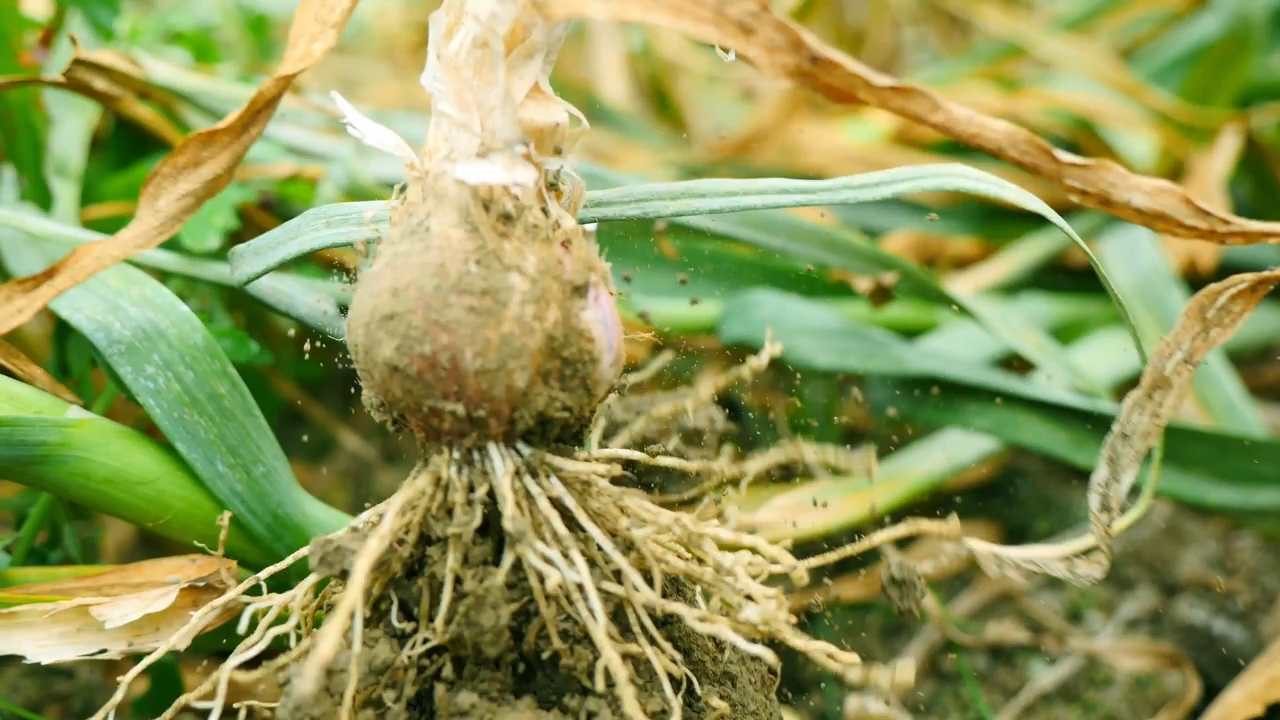
April garlic is wet garlic, planted in August of the previous year. Garlic, originally from the high mountain ranges of Asia, as the name suggests can only form bulbs in subtropical Taiwan in winter, and only sprouts when the weather is cold enough. When farmers plant garlic, besides having to deal with the risk of typhoons and flooding in July and August during the planting period, they also have to deal with a once-a-year harvest, so the market price is decided in one go, and one year's harvest must supply Taiwan's entire year of use.
Consumers do not know that if you want to buy wet garlic at a purchase price below 20 yuan, of course you can buy it, but no one is willing to sell you 10 jin or 20 jin at a time, and when you buy it and take it home, the wet garlic with soil and moisture needs 20 days in a dryer, or if sun-dried by hand it must be dried until after the Start of Summer, about one month. An ordinary small household cannot easily handle this complicated sun-drying work, having to turn it over frequently every day, not to mention needing a wide sun-drying platform.
And a large amount of garlic is not fine just because it has been sun-dried until after the Start of Summer. If ordinary temperature and humidity control is not done well, it is also prone to mold and spoilage.
Why not use the high subsidies to guide farm households in establishing their own brands?
Regarding subsidies, there should be a different way of thinking. This old drama of price collapse has been playing for several years. Why not use this high subsidy to guide farm households in establishing their own small brands, a cooperative with the strongest concept of a social enterprise, so that farmers can produce and sell their own goods and reduce the many layers in between? It is time to let farmers make their own decisions, isn't it?
Subsidizing wholesalers does not solve the problem. Subsidies are not the only way to solve the problem; they merely create more problems, and are even an ostrich mentality of burying one's head in the sand and pretending the problem does not exist. But I also want to emphasize in particular that although wholesalers disappoint many farmers, there are also many good middle wholesalers in this world. They stand between consumers and farmers at the same time, becoming a bridge for stable supply and stable prices. Being a wholesaler is not a moral error, but there can be better ways of doing things.
If we think more creatively about subsidy funds, we could even design this publicly run social enterprise cooperative so that only the children and descendants of farm households can operate it, with a term limit, increasing the success rate of local youth returning home to start businesses. Wouldn't this be a way to satisfy both sides?
Please let consumers support local garlic in a good way
In addition, I think some consumers' mindsets are also a bit problematic. After the Council of Agriculture held a press conference and said it would "keep the price of wet garlic at 15 yuan per jin," according to what the author knows, many consumers called the farmers and asked to buy "garlic at 15 yuan per jin." Consumers do not know that when wet garlic is dried into garlic, it is only 0.6 of its original weight (1000 grams of wet garlic = 600 grams of garlic), and losses must also be added. Moreover, a wet garlic price of 15 yuan per jin can at best only count as the planting cost, and should not be used as a benchmark.
Consumers do not understand that when they see news saying the price of wet garlic is only 10-plus yuan, but the retail price has not changed, they think they have been overcharged. Consumers do not know that the price of agricultural products from production area to retail is stacked layer by layer due to various service costs, yet they directly direct their negative emotions at the farmers producing at the front line. If you want to support Taiwan garlic only because of moral coercion in the media, and then when you buy directly from farmers at the front line you adopt the lowest price that does not match cost, undermining the farmers' eight months of labor, then I think such consumers might as well generously support cheap imported garlic. Otherwise, you can also try renting a plot of three fen and planting garlic for eight months to see for yourself.
No one starts out wanting to do wrong; only a terrible and toxic environment forces producers into having no choice. If consumers in Taipei were truly fortunate enough to cultivate a plot of fertile soil and devote all their effort to the crops in their hands, you would not use that kind of tone toward every farmer on this land.
I hope that you, the reader of this article, will no longer merely engage in hipster-style scolding, hipster-style going to the fields to take photos with farmers, and then, like every politician in Yunlin, drinking tea at the homes of local political supporters. Of course, there are also very good consumers who directly support local garlic at the production area at prices that match farmers' costs. Please support local garlic in a good way. Being able to buy Taiwan garlic is still a blessing!