What makes drinking Fuding spring white tea so special?
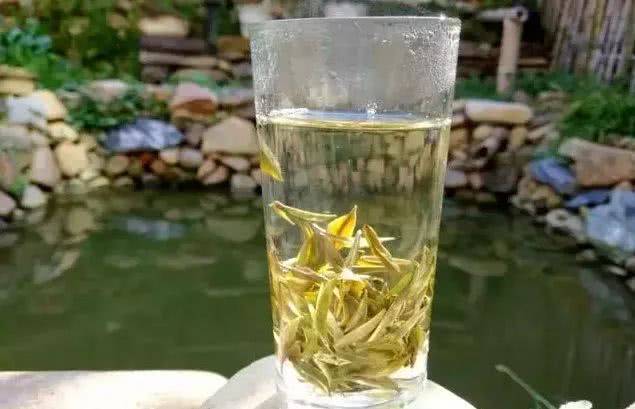
As all things revive and yang energy rises, the accumulated internal heat toxins in the body's internal organs begin to manifest as spring dryness, leading to excess liver fire and bodily inflammation, with symptoms such as mouth ulcers, sore and swollen throat, constipation and dark spots. Add to this the warming spring weather, the body loses a large amount of water, and the weather is constantly changing, so drinking white tea to clear internal heat and reduce inflammation becomes very important for health.
Drink white tea to clear spring internal heat
In spring, people are prone to excess internal heat, showing symptoms such as a yellow-coated tongue, bitter taste in the mouth and dry throat. Add to this the gatherings with family and friends during the Chinese New Year, eating and drinking, often staying up late into the night, and excess internal heat is unavoidable.
Among the people there is a legend that the Goddess Taimu used white tea to treat measles in children. Tea farmers often use aged white tea to treat sore and swollen throat, toothache, acclimatization, unexplained fever and stubborn ailments.
White tea contains 17 amino acids, including 8 essential amino acids for the human body, as well as special amino acids such as methionine and R-aminobutyric acid. Its ampelopsin content is 4.2%-27.2%, of which dihydromyricetin accounts for more than 80%, and total flavonoids account for less than 20%. Dihydromyricetin can act as an anti-arrhythmic, inhibit platelet aggregation in vitro and thrombosis in vivo, and increase SOD activity. It is used to relieve heat and inflammation, remove wind-dampness and strengthen bones and tendons, and treat headaches, sore and swollen throat, hepatitis, scabies and mouth ulcers. Practice has proven that white tea also effectively reduces alcohol-induced damage to liver cells and protects liver tissue. So drinking a cup of white tea to clear liver fire is very necessary.
Drink white tea to prevent spring fatigue
In spring, as temperatures gradually warm up, people easily become drowsy, listless and sleepy. Some call this "spring fatigue syndrome."
"Spring fatigue" makes the body weary and the spirit low. White tea has the effect of refreshing the mind and fighting fatigue, so drinking white tea in spring can eliminate spring fatigue and is very beneficial for restoring energy. The best time to drink tea is around two or three in the afternoon, when drowsiness strikes, and drinking some white tea has the effect of refreshing the mind and sharpening the senses, ensuring you stay energetic through the afternoon and improving work efficiency.
Tea can be harvested in all four seasons, but graded by taste, spring tea is the best.
Spring tea is made from the buds and leaves that sprout after the tea plant overwinters. After a winter of dormancy and nutrient accumulation, the tea buds are rich in organic substances. Combined with moderate spring temperatures and ample rainfall, the spring tea buds are plump and rich in internal substances, with extremely high freshness, fullness and harmony. Especially the first spring tea, which contains the essence of the entire spring.
The right time to chase spring tea
First-picked tea
This refers to the first picking of a very small amount of buds and leaves that have reached the picking standard after the tea garden opens in spring. Because the quantity is extremely small, the range for selection is very narrow, so first-picked tea is used to trial-produce the very first batch of spring tea.
First spring tea
The first batch of tea picked in spring - as long as it is the first picking of the year, it is all first spring tea. For China's famous and high-quality teas, first spring tea represents the highest quality. But even for first spring tea, the picking time varies for different types of tea. Fuding white tea is generally picked in early March, while in high-altitude tea gardens in the same tea region, the picking time for first spring tea is even later.
Pre-Qingming tea
Tea picked and made before Qingming Festival. After a winter of rest, the tea plant itself has a relatively rich content of substances. In addition, temperatures before Qingming are generally lower, so not only is the number of tea buds limited but their growth rate is also slower, and very little reaches the picking standard. Hence the saying "Pre-Qingming tea is as precious as gold." Simply put, Pre-Qingming tea is of good quality, but its quantity is small and it comes to market early, so it holds considerable appeal for consumers.
Pre-Guyu tea
Tea picked and made before Guyu. Although Pre-Guyu tea is not as tender as Pre-Qingming tea, because temperatures are higher at this time, the buds and leaves grow relatively faster and accumulate richer internal substances, so Pre-Guyu tea often has a fresh, rich taste and withstands multiple infusions.
Picking standards
Picking of Baihao Yinzhen
For making Yinzhen, the first one or two rounds of spring buds are the best in quality, with plump terminal buds and large downy centers. The picking requirements for Baihao Yinzhen are extremely strict. Generally, a sunny day must be chosen, and a north wind day is best. There is a rule of ten no-picks, namely: no picking on rainy days, no picking when dew has not dried, no picking of thin and slender buds, no picking of purple buds, no picking of artificially damaged buds, no picking of insect-damaged buds, no picking of open-hearted buds, no picking of hollow buds, no picking of diseased buds, no picking of frost-damaged buds.
Picking of high-grade White Peony
The requirements for fresh leaf raw materials are very strict, generally picking tea buds and fine tender buds with one bud and one initial leaf or one bud and two initial leaves. It is required to pick early and pick tender, generally starting around Qingming. This type of picking standard is demanding, highly seasonal, labor-intensive and low-yielding.
Picking of ordinary White Peony
The requirement is for fresh leaf raw materials of moderate tenderness, generally picking mainly one bud and two leaves, along with some one bud and three leaves and young tender opposite leaves. This picking standard balances tea yield and tea quality, with high economic benefits.
Fuding white tea retains the most traditional picking method - hand picking. Although hand picking is labor-intensive and low in efficiency, it is precise, allows for more batches, has a longer picking period, is easy to pick according to standards, and produces good-quality buds and leaves.