Succulent plants grow rapidly in spring, so watering requires flexible techniques
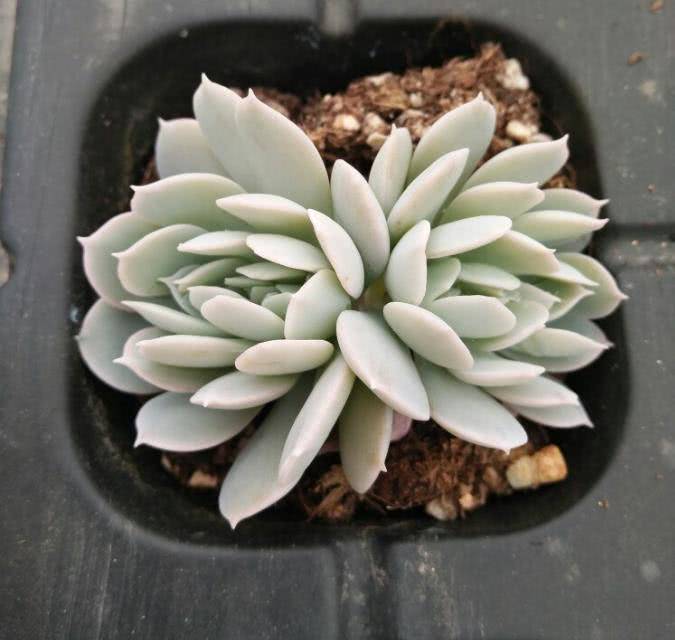
Succulents becoming plump is actually just storing water in preparation for drought. When caring for them, we need to make these plants feel as if they are in an environment that may become dry, and appropriately provide enough water for them to store. If the living environment is abundant in water, who would have the spare time to store water? They would all be busy growing. If there really were a foolish one single-mindedly storing water, growing short and round leaves, how would it compete for sunlight with those with thin and large leaves? Plants are actually quite shrewd.
Some flower enthusiasts wonder, why do succulents still not show their colors even after water control? Because water control does not play a decisive role in the succulents' condition; it only has the effect of adding brilliance to what is already beautiful and providing timely help. The dominant factors that truly bring out succulents' colors are low temperature (temperature difference), and light.
When your care environment is good enough (good light, not hot), water control can make your succulents grow smaller and smaller (growth cannot keep up with consumption), and they may even become wrinkled from lack of water. At this time, the colors are often more beautiful than usual, but the beauty is premised on suppressed growth, which counts as adding brilliance to what is already beautiful. The water-controlled succulent Echeveria glauca does indeed grow smaller and smaller, and more pink and tender, but light and temperature are still indispensable.
The key here is controlling the amount of water given. This amount must be explored and grasped by yourself according to the specific care environment, and the principle is to create a low-water environment: it cannot be too wet, nor dry for too long. The size of the succulent root system relative to the above-ground part can be roughly understood as the size of the two crowns, and can also be converted into the strength of water absorption capacity. For example, when some are repotted, the roots are damaged and water absorption capacity weakens, which is equivalent to the root system becoming smaller, but its recovery speed is faster than that of a truly small root system. Therefore, to fatten up succulents, you first need a healthy large root system.
Granular soil is the best medium for fattening, because water control with granular soil is relatively much easier, but this does not mean that peat cannot grow plump and solid succulents; it is just that moisture is relatively harder to control, and if controlled well, it can also grow plump succulents. Although roots grown in granular soil are thick and drought-tolerant, when they first begin rooting in the early stage, because granular soil dries easily, it is difficult to maintain the humidity needed for rooting for a long time. Therefore, rootless or few-rooted plants placed directly in granular soil to root often face slow root growth or even no growth.
This is a gathering place for succulent plant enthusiasts, sharing succulent care tips. Welcome to follow and exchange ideas.