Choose these 9 vegetables for beginner container gardening; leave them alone and they grow like crazy, one pot is more than the whole family can eat
Lately, food safety problems have become more and more serious, and I envy my classmates in the countryside more and more for having a vegetable garden. If only vegetables could grow in flower pots just like flowers and plants. So I decided to just do it, and after my continuous experiments, I found that these 9 vegetables are the most suitable for growing at home, with almost no management needed, and a few pots at home may be more than the whole family can eat.
Chinese chives
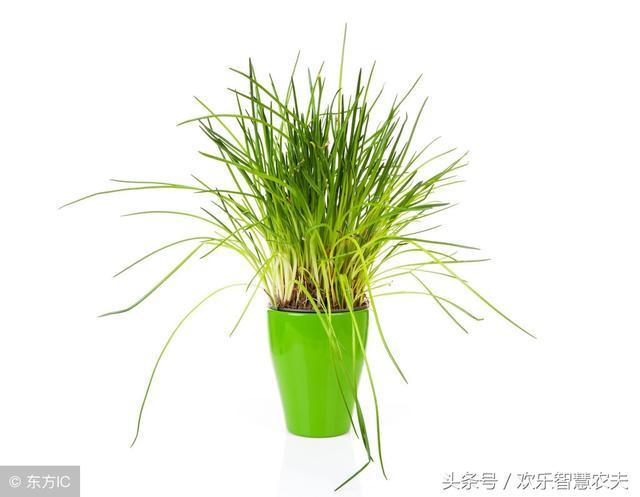
If you do not dislike the taste of Chinese chives, the first choice for home container vegetable gardening is Chinese chives. Because Chinese chives are entirely leaves with no stems, there is no such thing as leggy growth, so no matter how poor the light at home is, it is suitable for growing Chinese chives. Even under completely lightless conditions, Chinese chives can still grow normally, but the leaves will turn yellow, which is yellow chives.
Chinese chives can be grown from chive roots or from chive seeds. For chive roots, just bury them in a flower pot in early spring. If you are growing them from seeds, be sure to first soak them in warm water at 35 to 40 degrees to speed up sprouting, then scatter the sprouted seeds evenly over the prepared soil, then cover with a layer of fine soil about 8 to 10 mm and wait for them to sprout.
Water spinach
Water spinach is very suitable for home container growing mainly because it is easy to obtain, easy to grow, and tasty. Water spinach almost never gets diseases, and as long as the soil is fine, container-grown water spinach will simply not have pest problems. Water spinach does not need much sunlight, so just place it indoors, and it does not need much management either, just remember to spray it with water.
Water spinach can be grown from seeds, but I feel cuttings are more convenient. Take water spinach bought from the supermarket, eat the leaves, and the stems can be inserted directly into the pot. Water them every day and they will grow normally in 5 to 7 days. Water spinach grows very fast. After we pick the leaves, it will quickly grow new leaves. If you do not eat it in time, it will gradually become old and affect the texture.
Swiss chard
Also called leaf beet, with the scientific name chard. Swiss chard leaves have a very nice texture and are very tasty, and its leaves can be peeled off layer by layer from the outside and eaten, growing while being peeled, and the more you peel, the more it grows. Swiss chard is generally grown from seeds. You can soak the seeds in warm water at 45 to 50 degrees to speed up sprouting before sowing. After the seedlings emerge, almost no care is needed, but it is best to place it on a south-facing balcony.
Malabar spinach
Malabar spinach is a bit vining, and when eaten it has a texture very much like wood ear mushrooms. Not only can it be harvested continuously, growing while being harvested, but more importantly, if the temperature is suitable, it can live for several years.
Malabar spinach seeds have a very thick outer shell, so they must be soaked in warm water at 25 to 35 degrees Celsius to speed up sprouting, usually for 3 to 5 days. Malabar spinach is not very tolerant of low temperatures, and the nighttime temperature is best above 16 degrees Celsius.
Scallions
Scallions are what we usually call small green onions. There is no need for me to talk about their taste and uses. Scallions can be grown from seeds or from roots. Seeds can be soaked in warm water to speed up sprouting before sowing, or they can be sown directly. If using roots, just cut scallions bought from the supermarket 2 to 3 cm above the roots and plant them in a pot.
Lettuce
Generally no one dislikes this, right? Lettuce is crisp and rich in water, truly extremely refreshing. Not only that, lettuce can also grow while being picked, but you have to pick from the outside inward, harvesting and eating it circle by circle, and it can keep growing. How nice.
This lettuce is generally grown directly from seeds. Just scatter them directly into a flower pot, then cover with 8 to 10 mm of fine soil, spray with water, and above 20 degrees they will sprout in two or three days.
Amaranth
Do you recognize this? This is one of my favorite vegetables. Although it cannot be harvested indefinitely, it can indeed be planted all year round. Before sowing, loosen the soil first, then evenly scatter amaranth seeds over the potting soil, then cover with a thin layer of soil, moisten with a spray bottle, and they will sprout in about a week.
Parsley
Although we usually eat parsley as whole plants, it can actually also be eaten by peeling off the outer stalks, and besides growing it from seeds, you can also directly plant parsley bought from the store. Just cut off the bottom 2-3 cm and plant it in a pot.
Sedum aizoon
This is neither Panax notoginseng nor Tianqi, but its taste is quite good. It can be easily propagated directly from root divisions, and can also be grown directly from cuttings. It can be harvested crop after crop just like Chinese chives, and all we need to do is probably just water it.
The above 9 vegetables will grow like crazy with almost no care at all. Every time you plant one pot, the family cannot finish eating it. Not only does it save time and effort, it is also green and environmentally friendly. What do you think?