Symptoms of occupational pneumoconiosis silicosis and its diagnosis and treatment in traditional Chinese medicine
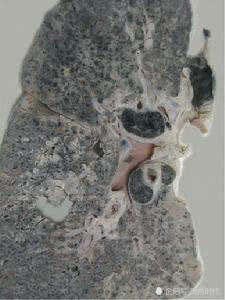
Silicosis is a disease name in Western medicine; in traditional Chinese medicine it belongs to the category of cough and dyspnea, cough, consumptive lung disease, and flaccid lung. From the Western medicine perspective, it is a nodular fibrotic lesion caused by workers in stone powder factories and coal mines inhaling large amounts of free-state silica dust; it is also called silicon lung, and is the most common type of Western medicine pneumoconiosis, as well as one that develops rapidly and is highly harmful. In China, about 20,000 new cases of silicosis and other pneumoconiosis occur each year, and the onset of the disease is closely related mainly to the concentration of dust in some stone powder factories and coal mines, and the frequency of exposure.
Coal silicosis
In traditional Chinese medicine, silicosis also indicates the cause as inhaling too much stone powder dust and coal dust; in ancient medical books it is also called miners' cough disease, stonemasons' consumptive disease, metal-stone lung, and so on. Traditional Chinese medicine holds that after stone powder, coal powder, and the like invade a person's lungs, they form dry qi; because the lungs are disturbed by dry qi, body fluids become deficient, and phlegm-fire becomes bound and stagnant, causing the disease. The symptoms are mainly cough with phlegm, chest tightness and shortness of breath, dizziness and palpitations, chest epilepsy (chest seizures), insomnia and fatigue, and poor appetite (no appetite). In treatment, traditional Chinese medicine mainly focuses on promoting fluid production and relieving thirst, and softening hardness and dispersing nodules; auxiliary treatment focuses on transforming phlegm and clearing heat, and relaxing the chest and relieving diaphragmatic oppression, with flexible modifications according to slight differences in symptoms.
Coal miners
Using Western medicine to describe the causes of silicosis formation, what is seen on chest X-ray, and so on, is generally easy for people to understand because these are visible tangible things. However, in terms of treatment effect, although traditional Chinese medicine's theoretical explanations are mostly intangible and hard to understand, its effects are much better than those of Western medicine. For example, Chuanbei, Jiegeng, and Baijiezi can transform phlegm and expel stasis; Chaihu can soothe the liver and regulate qi; Renshen, Dangshen, and Xiyangshen can tonify qi. These are all difficult for Western medicine and Western drugs to match.
Ginseng
The onset of silicosis also includes chronic, acute, and intermediate-speed silicosis between these two; this is in fact mainly closely related to dust concentration, exposure frequency and duration, and an individual's physical constitution. What should be noted even more is that improper treatment of silicosis can lead to hemoptysis and complications such as pulmonary tuberculosis, pulmonary fibrosis, lung cancer, and bronchiectasis, after which severe systemic symptoms such as massive hemoptysis, dizziness, and palpitations appear, making treatment even more difficult and greatly reducing the possibility of control and cure. Therefore, silicosis patients and their family members should seize the best treatment opportunity in the early stage of silicosis and use traditional Chinese medicine treatment to obtain the best results.