What are the emergency self-rescue methods for bronchial asthma in spring
The occurrence of bronchial asthma is due to numerous triggering factors, such as the various house dust mites in the home, which live parasitically in people's skin flakes, hair and other objects. In addition, after spring the climate becomes suitable, and various pathogenic pathogens multiply and breed on a large scale. Therefore, even with great attention to prevention, relapses of bronchial asthma are hard to avoid. In particular, for groups with too weak resistance such as infants, children and the elderly, the relapse rate increases markedly. Therefore, for patients themselves and their family members and relatives, mastering the necessary self-rescue methods for acute attacks has become a must.
Any patient who has suffered from bronchial asthma, as well as their family members and relatives, will know some or comprehensive first-aid methods for acute attacks of bronchial asthma. In fact, patients themselves and their family members and relatives should first establish the awareness and concept of mastering this kind of first-aid knowledge. Because the triggering factors of bronchial asthma are dense, the relapse rate is very high, and generally after a relapse the symptoms gradually worsen, so the necessity of first aid keeps increasing.
The prerequisite for mastering first-aid methods for bronchial asthma is to understand and recognize the signs that require first aid. Once a patient or family member or relative finds that after a cold or contact with allergens such as pollen, one or more prominent symptoms appear such as nasal itching, throat itching, sneezing, dry cough, runny nose, and chest tightness, attention should be paid, for example by removing the interference of allergens, calming the patient down, and doing deep breathing to avoid further development.
For patients who have had relapses or multiple relapses of bronchial asthma, as well as their family members and relatives, they will certainly carry short-acting beta2-receptor agonists such as salbutamol aerosol, or emergency medications such as budesonide/formoterol powder for inhalation. If the patient has already shown worsening of bronchial asthma, a family member or relative must also stay with them long-term and carry a simple peak expiratory flow meter (PEF), salbutamol aerosol and other short-acting beta2-receptor agonists and other emergency medications. Once acute symptoms appear, the patient should use PEF for self-measurement and keep a record. Inhale a short-acting beta2-receptor agonist, 2 to 4 drops each time.
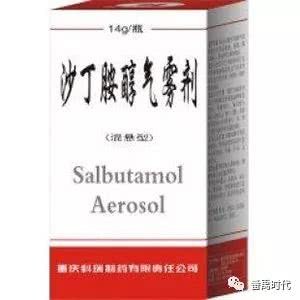
Salbutamol aerosol
After 15 minutes, use PEF for self-measurement. If it recovers to 50% to 80% of the usual highest value, then within one hour, spray or inhale once every 20 minutes, 2 to 4 drops each time, and also add a small amount of controlled-release theophylline tablets. If after 15 minutes the PEF self-measurement shows that the recovery rate does not reach 50%, then within 1 hour, inhale emergency medications such as a short-acting beta2-receptor agonist every 20 minutes; in addition to taking a small amount of controlled-release theophylline tablets, also take oral prednisone tablets 20 to 30 mg, and contact a doctor for treatment as early as possible.
Simple peak expiratory flow meter (PEF)
During an acute attack of bronchial asthma, when medical care is not available, after self-measurement and spray treatment, self-measurement should be done again after an interval of 15 minutes. When 15 minutes after spray treatment the PEF measurement reaches the normal predicted value, or 80% of the usual highest value, then a short-acting beta2-receptor agonist and other emergency medications can be sprayed or inhaled every 3 to 4 hours, still 2 to 4 drops each time. At present, PEF (simple peak expiratory flow meter) is not yet widely available. When this kind of self-measurement device is not available, one should inhale emergency medications such as a beta2-receptor agonist once every 20 minutes within 1 hour, and depending on the situation add or not add controlled-release theophylline tablets or prednisone tablets in the subsequent inhalations. If self-rescue within 1 to 2 hours has no obvious effect, seek medical care as early as possible.