Prevention and Treatment of Rose Black Spot and Powdery Mildew
This is day 838 of Blue Demon's daily original articles
This article is one of Blue Demon's original theories
Excerpt from the "Three-Step Rose Growing Method" series
In yesterday's article, Blue Demon introduced the rose stem sawfly. Actually, in this season, besides the high incidence of the rose stem sawfly, the two major diseases of roses are also in their budding stage, namely black spot and powdery mildew.
Black spot and powdery mildew are extremely harmful to roses, and their incidence rate is very high, especially in spring, in seasons with high air humidity and high temperatures, rose black spot and powdery mildew easily break out.
Today Blue Demon will talk about the prevention and treatment of rose black spot and powdery mildew.What is black spot?
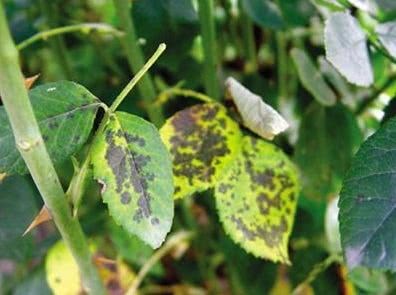
Rose black spot is a disease caused by fungal infection, in which black spots appear on rose leaves, petioles, leaf tips, young shoots and pedicels. It mainly harms rose leaves, causing black spots to appear on the leaves, which turn yellow and eventually fall off.Characteristics of black spot:
Black spot mainly occurs when temperatures are relatively high and there is more rain, with a high incidence from June to September, and it is also prone to occur in spring when there is a lot of rain. Rose leaves infected with black spot will develop black spots, and with further development the leaves will turn yellow and then fall off. If a rose is infected with black spot and left untreated, the leaves will quickly drop completely.Control measures for black spot:
The prevention and control of black spot is relatively simple. Zineb can be used for prevention. If you do not want to use chemicals for prevention, you can use the method of covering with plastic film to prevent the production of black spot fungal spores.
If you find that a rose has been infected with black spot, measures should be taken promptly: remove the infected leaves and spray with fungicides such as thiophanate-methyl and mancozeb for treatment. Never leave it untreated and let it develop, or all the rose leaves will fall off and it will most likely die in the end.What is powdery mildew?
Powdery mildew, like black spot, is a fungal disease. After a rose is infected with powdery mildew, white powder will appear on the rose's leaf surface, young shoots, flower buds, etc. In severe cases, the leaves turn yellow and fall off, affecting the normal growth of the rose and causing the flower buds to wither.Characteristics of powdery mildew:
Powdery mildew tends to occur from April to June and from September to October, in seasons with high air humidity. In the early stage of the disease, the edges of the rose leaves curl, and white powdery material can be seen when the underside is turned over, then it gradually spreads to the stems and flower buds, where a layer of white powdery material can be seen covering the stems and flower buds.Control measures for powdery mildew:
The occurrence of powdery mildew is mainly due to excessively high air humidity, so keeping the environment ventilated and relatively dry can effectively prevent the occurrence of powdery mildew. Before the disease occurs, zineb can be used for prevention. If you find that it has already been infected with powdery mildew, first cut off the infected leaves, then spray with myclobutanil.
Based on Blue Demon's own summary of medication use, lime sulfur mixture is considered to have a relatively good effect on powdery mildew, it just smells a bit strong. Gardeners growing outdoors can first use lime sulfur mixture for treatment. When treating with myclobutanil or kresoxim-methyl, zineb or a small amount of soapy water should be added to increase the spreading property of the solution.
Because ordinary chemicals do not easily adhere to the fungal spores of powdery mildew, the treatment effect is relatively poor. Adding soapy water can increase the spreading property of the solution, making it easy to adhere to the powdery mildew fungus, giving a better sterilizing effect.
Besides black spot and powdery mildew, rose downy mildew is also a disease with high incidence during the Spring Festival.Characteristics of downy mildew:When downy mildew occurs, smear-like brown spots will appear on rose leaves. In the early stage of the disease, water-soaked scars will appear, which require attention.
Downy mildew, black spot and powdery mildew all belong to fungal diseases, and fungal medications should be used for treatment. If medications for treating bacterial diseases are used to treat fungal diseases, the effect is minimal, and this must be firmly kept in mind.
Besides these three major diseases, there are many other common rose diseases. What other rose diseases would you like to know about? Feel free to leave a message for Blue Demon below. In tomorrow's article, Blue Demon will further discuss the prevention and treatment of common rose diseases.
Have you ever encountered the following problems?
You read many methods for growing roses and thought they were very useful at the time.
But when you actually try to put them into practice, you find that you simply do not know how.
From this point, it can be said that fragmented growing methods, although useful, are not suitable for you right now. What you need now is,systematic rose growing theory. For this reason, Blue Demon's "The Road for Rose Beginners to Quickly Advance to Master" systematic course was born. This course can help you avoid many detours,saving at least 2 years. Because Blue Demon has already walked all these detours. If you need to study Blue Demon's "The Road for Rose Beginners to Quickly Advance to Master" systematic course, long-press the QR code below and order it directly.
Welcome to share it with more gardening friends. Gardeners who need rose seedlings can go to the Blue Demon flower shop to buy them. Roses have already been restocked!