The Essential Flower Roster for Spring Outings - You'll Rely on It When You Set Off to Admire the Blooms
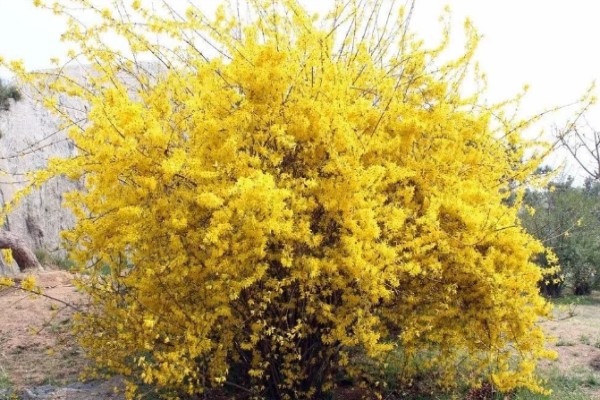
Winter Jasmine
Winter jasmine always blooms early to welcome the arrival of spring. Its goose-yellow flowers are full of vitality, and its fragrance is fresh and delightful.
Forsythia
At first glance, forsythia looks a lot like winter jasmine. Huahua will teach you the quickest way to tell them apart: just count the petals. Forsythia generally has 4 petals, while winter jasmine generally has 6 petals.
Magnolia
Magnolia flowers are pure and spotless white, and they also give off a fragrance that makes people reluctant to leave. They linger under the tree for a long time, intoxicated by the floral scent.
Cherry Blossom
How could you miss the romantic and fragrant cherry blossoms in spring? Huahua loves standing under the cherry tree, waiting for the breeze to blow and the petals to drift lightly onto heads and shoulders, making people feel as if they've arrived in a fairyland.
Crabapple
Crabapple flowers bloom so brilliantly and freely that the dense clusters of blossoms almost bend the branches! Patches of vivid crabapple flowers are impossible to look away from, making you wish you could breathe in all their fragrance. There are many varieties of crabapple, so it takes quite a bit of time to learn them all.
Redbud
Redbud blooms most luxuriantly around Qingming. Its purplish-red flowers cover the entire branches, and from a distance, they look like a stretch of red clouds.
Lilac
Lilac flowers are a soft purple, and their leaves are heart-shaped. Even if you're exhausted while out exploring, one whiff of their fragrance will make you feel much more energized!
Wisteria
Wisteria is a climbing vine that can cover a whole roof before you know it. Its flowers bloom in dangling clusters, hanging in the air - you can't even describe how beautiful it is!
Camellia
Some flower lovers can never grow camellias well. Why not take advantage of the holiday to go out - maybe you'll get to admire camellias in full bloom!
Kerria
Kerria flowers are golden yellow, and a whole tree of golden petals looks even more beautiful against the green leaves. Kerria comes in single-petaled and double-petaled varieties.
Purple-Leaf Plum
The leaves of purple-leaf plum are reddish-brown and very eye-catching. Its flowers are a soft pink, and it can even produce plums.
Tree Peony
"Only the peony is truly national beauty; when it blooms, the whole capital stirs." Tree peony is a woody flowering plant. Its flowers are large and gorgeous, with rich colors, and many flower lovers have grown them.
Herbaceous Peony
Herbaceous peony flowers are bright and lovely. Some flower lovers can't tell herbaceous peony and tree peony apart. Herbaceous peony is a herbaceous plant, no more than 1 m tall at most, while tree peony is woody and can grow to 2 m! Have you all remembered that, flower lovers? Don't mistake them next time!
Elm-Leaf Spiraea
The leaves of elm-leaf spiraea look like elm leaves, and its flowers closely resemble plum blossoms, which is why it's called elm-leaf spiraea. The flowers hang in clusters all over the branches, so lively and cheerful!
Fuchsia
The name fuchsia sounds quite imposing, and its flowers hang on the branches like lanterns, with a rather peculiar shape.
Hyacinth
Hyacinths come in a rich range of colors - white, pink, red, purple, and more. When you're tired, a sniff of their fragrance can make you feel much better.
Daisy
Daisies are relatively short, each about 10 cm tall, and come in abundant colors. In flower beds, you can often see patches of innocent, lovely daisies.
Cineraria
Cineraria is a herbaceous flower, generally 20-90 cm tall, with bright and rich colors. Some flowers are even red-and-white bicolor.
Nasturtium
A single nasturtium plant can produce dozens of flowers, and each flower only withers after being open for eight or nine days. It also has a pleasant fragrance, and its plump green leaves are adorable.
Pansy
Why is it called pansy? Because its flowers generally come in three colors - white, yellow, and purple. Plant them in a garden and they'll quickly grow into a carpet of flowers!
Oriental Paperbush
The yellow flowers of oriental paperbush give off an alluring fragrance. Its branches are so soft that you can tie a knot in one without breaking it, and they can be shaped into all sorts of forms, which is why people call it "knot fragrance flower."
Kapok
Kapok is also called the hero flower. When it blooms, it has no leaves, its trunk is tall and sturdy, and its flowers are bright red, as red as a hero's blood.
Paulownia
Paulownia flowers are a soft purple, shaped like little trumpets, and fragrant. Huahua still remembers that in elementary school, there was a paulownia tree not far from the classroom, and when there was nothing to do, Huahua loved going to pick up the fallen flowers to play with.
Azalea
"The cuckoo cries blood, the gibbon wails." According to legend, the color of the azalea was dyed red by the blood spat out by a certain bird, which is why its flowers are incomparably vivid.
Michelia
Michelia is also called white magnolia. Its flowers have a rich fragrance, and it can even bear fruit in July-August.
Black Locust
Black locust, also called false acacia, has thorns at the base of its leaves, about 1-2 mm long. Black locust flowers are edible, and the tree can also produce large amounts of nectar.
When Admiring Flowers, Don't Touch These Ones!
When out enjoying spring flowers during the holiday, seeing bright and beautiful blossoms sometimes makes people unable to resist touching them or even breaking off branches to take home. But some flowers must never be touched or picked carelessly!
1. Oleander Is Highly Toxic
Every part of the oleander is highly toxic. It secretes a milky-white poisonous substance. Never ingest it by mistake, and try not to touch it either, otherwise it can cause vomiting, nausea, and even death. So just admire it from a distance.
2. Mimosa Is Toxic
Mimosa leaves fold up immediately when touched by a hand, which is very interesting, so some people poke them frequently. Stop right there! Too much contact can cause hair loss, yellowing hair, and general discomfort.
3. Poinsettia Is Toxic
The entire poinsettia plant is toxic. Never ingest it by mistake. When admiring flowers during the holiday, be sure to keep an eye on children to prevent them from swallowing leaves, flowers, and so on and getting poisoned. Don't break off branches either, to avoid contact with the secreted liquid, which can cause skin redness and swelling.
4. Corn Poppy Is Toxic
Corn poppy flowers are gorgeous, but the whole plant is toxic, so never ingest it by mistake. Just be an honest flower admirer.
This holiday flower-viewing roster,
is full of Huahua's heartfelt sincerity.
Are you satisfied, flower lovers?
If you find it useful,
then share it with your relatives and friends!