What to Do About Root Rot in Agave americana 'Marginata'? Cause Analysis and Treatment Methods
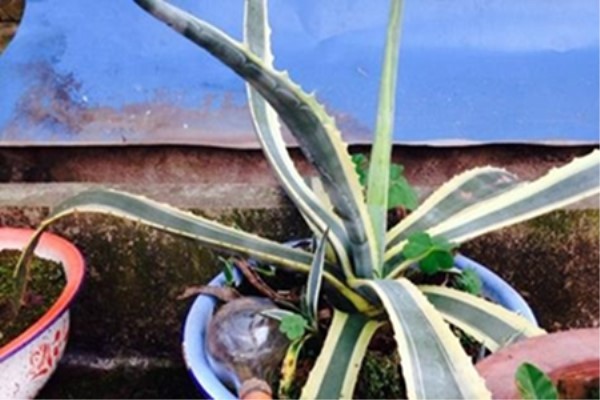
1. Check whether it is a watering problem
First, check whether it is a problem with water. It is very likely that because it was watered too much, its roots rotted. It likes humid air, but if it is watered frequently, its roots rot very easily. So during the growing period from March to May, water it once every three to four days; normally, watering once a week is enough. In winter, when it enters dormancy, it needs to be watered once a month, and the watering should be thorough. If the surface layer of the soil has become compacted, loosen the soil as well. Use a spray bottle to mist the leaves regularly to maintain humidity. If using tap water, let it sit for one or two days first. Do not spray water at the center of the leaves; if water accumulates, it will rot.
Solution: If it is a watering problem, replace the potting soil and cut off the rotted roots. Before cutting off the rotted roots, first disinfect the scissors in alkaline water. It is best to add perlite to the soil, breaking it into small pieces. This improves the soil, making it more loose and airy, which helps the roots breathe.
2. Check whether it is a bacterial infection
If its roots have rotted, it may also be due to erosion by pathogens. Bacteria or fungi may be present in the soil, water, and environment. If we do not pay attention to eliminating bacteria, they will multiply in large numbers in the soil and surrounding environment and harm the plant. Sometimes, if it is accidentally bruised, or bitten by insects, these wounds become pathways for pathogen invasion. If the surrounding environment is favorable for the reproduction of pathogens, it is even more likely to die.
Solution: First take it out of the potting soil, cut off the rotted root system, and apply medicine to disinfect it, then plant it in new potting soil.
3. Check whether it is improper care
If management is improper, the roots rot very easily. For example, if the pot is often too wet, the roots will lack oxygen and be quickly damaged. Then, if they are also exposed to strong sunlight, ventilation is poor, and the temperature is too high, root rot becomes even more likely. If fertilizer is too concentrated or not fully decomposed, it will also burn the roots and cause rot. If the temperature is inappropriate, its respiration rate will increase, it will consume energy faster, its growth will weaken, and its roots will rot.
Solution: Adjust its growing conditions and give it a suitable growing environment.