How to care for camellias after flowering? Post-bloom care methods explained in detail
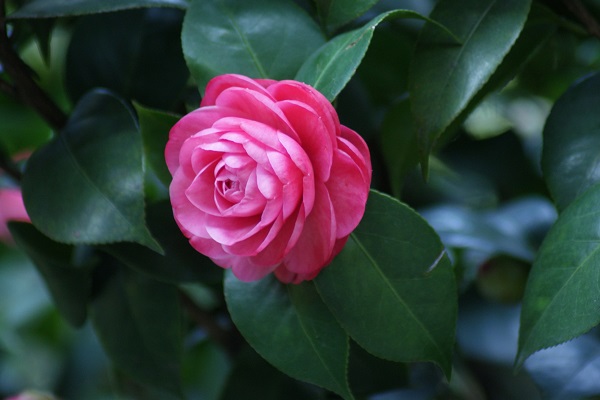
1. Its flowering period
Compared with other plants, its flowering period is quite late, around October. However, its flowering can last a relatively long time, not ending until May. So around May, you can carry out post-flowering care for it.
2. Specific post-flowering care
(1) Pruning: Pruning after flowering is very important. We mainly target weak branches, branches that have suffered from disease, overly cluttered branches, and so on. This is done to avoid the spread of pathogens after flowering, and it can also reduce the consumption of nutrients, which is more conducive to the plant's recovery. In addition, for aesthetic purposes, you can prune according to your personal taste to make the plant's overall appearance look better.
(2) Fertilizing: Many people think that since the plant consumed a lot of nutrients during flowering, it needs to be replenished in large amounts after flowering. However, this plant is not like that. After flowering, it is not suitable to continue applying fertilizer. Still, it does need to replenish the nutrients it consumed, but this must be done through other methods. It is best to place it in a spot with better light. In this way, it can carry out photosynthesis better and can also effectively accumulate enough nutrients.
(3) Temperature: This of course also needs to be at a suitable level for the plant to recover better. Specifically, it can be kept at 10 to 20 degrees.
(4) Preventing pests and diseases: After flowering is finished, both diseases and pests occur more frequently, especially the disease "anthracnose." So what we need to do is monitor it in real time promptly, carry out prevention promptly, and not let it cause too much harm.