How to cultivate perilla? Propagation methods and key cultivation points
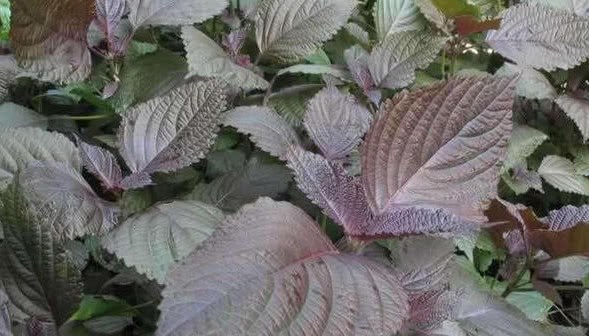
Perilla is a seasoning. It has strong adaptability to climate and is cold-tolerant. Moreover, it grows in relatively moist environments. In daily life, commonly used dishes include perilla cucumber, perilla river snails, and others, and it is very popular among people. Below is a summary of perilla propagation methods and key cultivation points based on what the editor knows!
Perilla does not have strict soil requirements, but it grows well in a relatively warm climate, in well-drained sandy loam and neutral soil.
1. Seed storage and treatment: The seed dormancy period lasts as long as 120 days. Freshly harvested seeds need to have their dormancy broken, so the seeds must be placed in a 3°C environment for 5 days, and soaked with gibberellin to promote germination. Perilla seed germination is photoblastic. Harvested seeds should not be stored dry. After air-drying them in a cool place for 2-3 days, mix them with an equal amount of river sand, maintain suitable moisture, put them into a basket and bury it in soil to promote germination.
2. Sowing and raising seedlings: The seedbed should be ventilated and well-lit, with loose, fertile soil and good water and fertilizer retention. The seedbed land should be plowed and harrowed finely, and the bed surface should be level. The bed width should be 1-1.3 m, length 20 m, and bed height 20 cm. Prepare the seedbed area at 10% of the planting area. Water thoroughly before sowing. The sowing rate per square meter of seedbed is 10-14 g. The seeds are very small, so when sowing, plant ash or fine sand can be mixed in to evenly distribute the seeds. After sowing, press lightly with a wooden board, then cover with rice straw and spray water, then cover with agricultural film. Seedlings emerge after 7-10 days. After emergence, remove the film. After the seedlings are fully emerged, thin them 1-2 times; the thinned seedlings can also be eaten. Pay attention to ventilation to prevent spindly growth. When there are 3-4 pairs of true leaves, they can be transplanted.
3. Transplanting and management: Prepare the land 10-15 days before transplanting, deep plow and sun the soil clods, apply 3000 kg of decomposed organic fertilizer, 30 kg of calcium magnesium phosphate, and 100-200 kg of plant ash per mu, and make beds 1.3-1.5 m wide and 25 cm high. Also, 4-5 days before transplanting, spray herbicides such as Duer, acetochlor, or Roundup, 100-110 ml per mu, mixed with 30-40 kg of water. Transplanting spacing is 15-20 cm square. Water immediately after planting, and keep the soil moist thereafter. About 25 days after transplanting, begin removing the first-flush leaves. The standard is to remove all leaves below the 4th node. After that, harvest leaves successively. During the peak period, harvest 1 pair of true leaves every 3-4 days; at other times, harvest 1 pair of leaves every 6-7 days, continuing until early September. Yield can reach about 1200 kg per mu. The first-flush leaves are relatively small; the leaves harvested later are fully grown finished leaves. After every 2-3 harvests, apply decomposed manure water or 0.5% urea solution as a top dressing. During the bud emergence and flowering stage, spray 1-2 times with 0.2% monopotassium phosphate or 0.1% phosphorus-potassium concentrate, which can promote good growth and development of the flower spikes. From July to September, the weather is dry, so pay attention to irrigation. Each irrigation should be thorough, and excess water should be drained promptly. Irrigate heavily again when the soil surface turns white.
4. Disease and pest control: No diseases have yet been observed in perilla. During the growing period, grasshoppers, beet armyworms, and others damage the leaves, causing holes in the leaves and affecting market value. Pesticides such as Kuailing, Sumicidin, and Qiangbang can be sprayed for control.
Key cultivation points
1. Sprout perilla cultivation: Use heated hotbeds or greenhouses to cultivate sprout perilla in winter and spring, with very high returns. Plow and prepare the land, apply 1000-2000 kg of decomposed organic fertilizer per mu, broadcast the seeds, and after emergence apply 0.1% urea solution as a top dressing. When the seedlings grow to 3-4 pairs of true leaves, cut them off at ground level with scissors, box them for sale or transport fresh. During cultivation, make the seedlings receive as much light as possible, maintain soil and air humidity, and prevent dryness so the seedlings have bright color.
2. Spike perilla cultivation: Use hotbeds or small tunnels to raise seedlings. During seedling raising, shade with black agricultural film in the morning and evening so that daily light during the seedling stage is only 5-6 hours. When there are 3-4 pairs of leaves, transplant into a greenhouse, planting 3-4 plants per hole, with hole spacing of 10-13 cm. After transplanting and establishment, maintain the temperature and allow natural light. When the seedlings grow to 6-8 pairs of leaves, they begin to bolt and show buds. Harvest promptly when the spikes are 8 cm long. Tie every 10-15 spikes into a bundle for market sale. Products with bright flower colors and densely set buds are considered top grade. When producing spike perilla, dwarf early-maturing varieties should be selected.
Today let's share which common perilla varieties there are. What are the environmental requirements for perilla cultivation? Perilla, also known as guiren, red perilla, white perilla, etc., is an annual herbaceous plant in the genus Perilla of the Lamiaceae family. It originated in China. In our country, wild and cultivated species are found in North China, Central China, South China, Southwest China, and Taiwan, China. In the world, it is mainly distributed in Southeast Asian countries, and cultivation is also relatively common in Japan. Written records of perilla in our country date back more than 2000 years.
Perilla is an annual upright herbaceous plant. Wild species are 0.3-1.0 m tall, while cultivated species are over 1.8 m tall. It has a fibrous root system. The stem cross-section is four-angled and densely covered with fine, long soft hairs. Leaves are opposite, green-purple or purple, round-ovate or broadly ovate, 7-13 cm long, with a sharp acuminate tip, rounded or broadly wedge-shaped base, and coarsely serrated leaf margins. Wild species have densely fine hairs on the leaf surface, while cultivated species are hairless. Petioles are 3-5 cm long. Racemes are terminal and axillary, with labiate flowers in purple-red, pale red, or white. Nutlets are grayish brown, nearly spherical or ovate, containing 1 seed. The 1000-seed weight is about 0.89 g.
What are the environmental requirements for perilla cultivation?
Perilla prefers a warm and humid climate, is relatively tolerant of high temperatures, and mature seeds also have strong tolerance to low temperatures. Seeds can germinate when the temperature is above 8°C, and the optimum germination temperature is 18-23°C. The suitable temperature during the flowering period is 26-28°C. The suitable temperature for plant growth is 22-30°C. It flowers in autumn and is a typical short-day plant. Fertilizer should be mainly nitrogen fertilizer. During the stem and leaf growth period, it is not tolerant of drought and requires the soil to be kept alternately dry and wet. Loam or sandy loam with a soil pH of 6-6.5 is suitable. When the air is too dry and the temperature is too high (above 35°C), the stems and leaves become coarse and hard, with more fiber and poor quality.
What varieties of perilla are there?
Perilla includes two varieties: curled-leaf perilla, also called huihui perilla and cockscomb perilla; and pointed-leaf perilla, also called wild perilla. Among cultivated types in various places, curled-leaf perilla is more common, and garden cultivation also has ornamental value.
Perilla is cultivated sporadically in all parts of our country. The varieties used are long-standing farm varieties. According to leaf color, they can be divided into red perilla and green perilla (green leaves); according to maturity, they can be divided into early-, mid-, and late-maturing varieties; according to use, they are divided into sprout perilla, leaf perilla, and spike perilla.
For perilla planting, the furrow sowing method can generally be used. Before planting, apply a certain amount of organic fertilizer to the soil, but it must be well fermented. When sowing, first make several rows of small furrows on the soil surface, with a furrow depth within 1 cm and a distance of 10 cm between furrows. Then water inside the small furrows, watering as much as possible so the seeds have enough water to absorb. After that, sow the seeds in the small furrows, with a seed density of 1 seed per 0.5 cm. Finally, cover the seeds with 0.5 cm of semi-dry fine soil, and the sowing process is complete. If the weather is dry when sowing in spring, after sowing you can cover the soil surface with a layer of plastic film, which can effectively keep warm and moist. Remove the film after the seedlings emerge.
Perilla likes warmth. In the lower reaches of the Yangtze River region, sowing in April is suitable. It can be sown directly or transplanted after raising seedlings. For home potting, because the quantity is small, the direct sowing method can be used. Choose a plastic pot about 20 cm. Use 8 parts mature garden soil, 1 part decomposed organic fertilizer, 0.5 part compound fertilizer, plus a small amount of superphosphate, mix and prepare to fill the pot. Sow 1 hole per pot, with 3 seeds. After sowing, cover with soil and water thoroughly for seedling emergence. After emergence, if the soil is compacted, loosen the soil once. After 30-40 days, thin the seedlings, leaving 1 healthy seedling per pot.