How to prevent and control citrus bacterial wilt? Technical countermeasures for the mandarin orange area of Xinkou Town
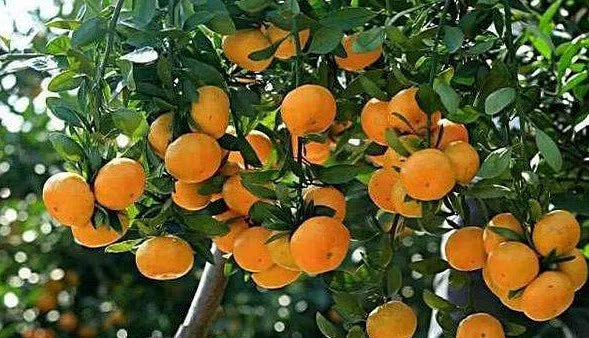
Citrus bacterial wilt is highly destructive; once the disease occurs, it can cause citrus plants to die rapidly. The following article uses the mandarin orange area of Xinkou Town as a practical case study to explain the occurrence and prevention and control techniques of citrus bacterial wilt.
1 Current development status of the citrus industry in the mandarin orange area of Xinkou Town
Xinkou Town is located in the southwestern suburbs of Sanming urban area, at a geographical coordinate of 117.54037 degrees east longitude and 26.16164 degrees north latitude. The climate shows diverse characteristics, and the landforms are mainly hills and mountains. The town has 1400 hm of cultivated land and 1560 hm of forest land, and the soil has a high organic matter content, making it very suitable for fruit production, among which citrus production is especially famous.
As an important citrus production area, Xinkou Town ranks among the top in Fujian Province in terms of citrus planting area and production output. The town has 2000 hm of citrus planting area, and the main citrus varieties produced include early-ripening Satsuma mandarin, Newhall navel orange, and others, making it a well-known citrus production area in the Sanming City region. As of 2017, the annual citrus output of Xinkou Town had already exceeded 5.0×10 kg, and citrus output alone accounted for 62.28% of the total fruit tree output of all Sanming City. The citrus production area of Xinkou Town is mainly concentrated in the Shaxi River basin area. With the favorable climatic and environmental conditions of the Shaxi River basin, the citrus production area of Xinkou Town shows concentrated characteristics. In recent years, Xinkou Town has also made industrial adjustments to the mandarin orange area based on the Fujian Province modern fruit industry construction project, successively establishing demonstration areas for new varieties such as early-ripening Satsuma mandarin, red-fleshed navel orange, and Newhall navel orange. At present, the total demonstration area has exceeded 400 hm, which has effectively driven the adjustment of citrus variety structure in the city's mandarin orange areas.
Of course, citrus planting in Xinkou Town also faces problems, because after entering May and June each year, citrus plants suffer large-scale diseases, including black spot, anthracnose, bacterial wilt, and others, among which bacterial wilt is especially the most serious, causing large-scale yield reduction in the local mandarin orange area. Its causes and symptoms must first be identified, and prevention and control must be carried out.
2 Analysis of issues related to citrus bacterial wilt in the mandarin orange area of Xinkou Town
Once bacterial wilt occurs in citrus plants, it may cause at least 1/3 of the plants in the entire orchard to become diseased, and it spreads very quickly. At present, its pathogen remains uncertain, but it should generally be related to insufficient grafting compatibility of the plants or external pathogen infection.
2.1 Types of bacterial wilt occurrence
At present, the types of citrus bacterial wilt occurrence in the mandarin orange area of Xinkou Town mainly include two types: acute sudden onset type and chronic type. The first is the acute type. Acute bacterial wilt has been recorded from the 1960s to the present. This type of occurrence has a rapid pace and a relatively short disease course. For citrus plants, the disease course from symptom appearance to plant death is generally only about 7-12 d. This type of bacterial wilt occurrence is rare in the mandarin orange area of Xinkou Town. Relatively more common is the chronic type. Chronic citrus bacterial wilt commonly exists in the mountainous areas of Jiangxi and Guangdong, including the mandarin orange area of Xinkou Town. Its disease course is longer and can reach 2-3 a, and because the disease course is long, its symptoms are also divided into 3 stages: early, middle, and late.
Taking the chronic bacterial wilt occurrence type for analysis, first its early symptoms are relatively special. Initially infected citrus plants will sprout and grow one large scaffold branch in spring, and a few plants will grow large scaffold branches on the whole plant. This kind of "unexpected branching" will seriously affect the growth and development of the plant, causing "diapause." Compared with healthy plants, the spring shoot development of initially infected plants is relatively slower, and the number of flowers is also significantly reduced. Its most distinctive manifestation is that flower bud development is quite abnormal, with buds only the size of soybean grains, and even when the buds bloom they are only 1/3 the size of normal flowers. In addition, by the fruiting stage its diapause phenomenon becomes even more obvious, being about 21-25 d later than the fruiting stage of normal plants. From this it can be judged that the plant has already been infected with bacterial wilt. The fruit shape it produces will be only 1/4 that of normal fruit, and the fruit cannot mature normally, with relatively poor quality and no commercial value. From the perspective of disease occurrence patterns, the initial infection stage of early diseased trees will last 1 a or even longer, and only then will they enter the middle disease course.
In the middle stage of bacterial wilt, citrus plants show more typical diapause phenomena, and the branches and leaves of the plant show longitudinal curling. If it is a diseased plant, this condition appears on sunny days in May each year. If it is a mildly leaf-curled diseased plant, it can remain for about 1 a before entering the late disease course. If it is a severely leaf-curled diseased plant, it indicates that it will soon enter the late disease course.
In the late stage of bacterial wilt, the diseased plant has already fully gone through the two stages of diapause and leaf curling. In the late stage, the leaves of the diseased plant show severe water loss and rapidly wither, and the large scaffold branches that appeared in the initial infection stage also dry up and die first. The root system of late-stage citrus plants is also much smaller than that of healthy plants, and some diseased plants even directly show complete root necrosis.
2.2 Technical countermeasures for prevention and control of citrus bacterial wilt in the mandarin orange area of Xinkou Town
Citrus bacterial wilt in the mandarin orange area of Xinkou Town mostly occurs at the turn of spring and summer (5/6), and some occurs at the turn of autumn and winter (10/11), mainly the chronic type. In fact, chronic bacterial wilt already begins to show disease symptoms in spring (March), such as obvious diapause in citrus plants. For this reason, the agricultural technology station of Xinkou Town has also conducted research around the occurrence patterns of bacterial wilt in the mandarin orange area and summarized the basic principle of "prevention first, control as the main approach."
2.2.1 Early prevention technical countermeasures
The key to preventing bacterial wilt in citrus plants lies in the early stage. Taking the mandarin orange area of Xinkou Town as an example, its citrus planting should achieve 4 preventive measures:
First, the groundwater level in the mandarin orange area should be lowered as much as possible in spring to avoid a rapid rise in groundwater level after the plum rain season arrives in May-June, which would make the groundwater level uncontrollable during heavy rain, that is, waterlogging damage must be prevented in advance to ensure plant safety.
Second, rational close planting should be carried out, and attention should be paid to shaping and pruning to avoid canopy closure in the mandarin orange area.
Third, soil management should be strengthened, and the application of organic matter fertilizer should be increased to a certain extent, always ensuring that the planting soil of the plants is deep and loose and ensuring good soil aeration.
Finally, a certain amount of phosphorus and potassium fertilizer should be appropriately added, ensuring that the ratio of nitrogen, phosphorus, and potassium is reasonably controlled at 3:2:5, ensuring that citrus plants can grow healthily while also increasing a certain degree of disease resistance and stress resistance for the plants themselves.
In terms of early prevention, inspection and strengthening work during the spring bud germination period should also be done well. For example, once citrus plants in the mandarin orange area enter the germination period, plant-by-plant observation and recording activities should be carried out once every 5-6 d, mainly to observe and record the budding progress of the plants and see whether there is an early diapause problem. If found, the plant rescue period should be entered as early as possible to avoid spread of the pathogen. As mentioned above, the judgment of bacterial wilt in citrus plants should also be based on large scaffold branches. If large scaffold branches are found, the diseased plant must undergo whole-plant skeleton renewal, and primary and secondary large scaffold branches can be retained according to the situation. After whole-plant skeleton renewal, the diseased plant should be transferred to an intensive management and care stage. While treating it for bacterial wilt, key prevention and control of gummosis should also be carried out to ensure restoration of normal growth and normal flowering and fruiting of the citrus plant before 2 a.
2.2.2 Chemical control techniques for bacterial wilt
For the prevention and control of bacterial wilt in citrus plants, the mandarin orange area of Xinkou Town also adopted the following two control measures.
First, heavy pruning of the canopy combined with exposing the root soil layer to air-dry the roots was used to prevent pathogen invasion. At the same time, each plant was irrigated with 1.5-2.5 kg of Bordeaux mixture at a ratio of 1:1:100, and after applying the medicine, foreign soil was used to bank up the base, followed by heavy pruning without medicine, ensuring rapid recovery of tree vigor. In addition, a method of no medicine and no heavy pruning can also be used for comparative treatment, with targeted analysis and treatment according to the specific symptoms of the diseased plants.
Second, diseased bacterial wilt plants should be observed on site in the mandarin orange area. When the top leaves of citrus plants just begin to dry and curl, whole-plant heavy pruning should be carried out immediately, and at the same time 1/3 of the curled-leaf branch parts of the bacterial wilt plant should also be cut off, while a 1% concentration copper sulfate solution should be sprayed to disinfect the diseased plant. In addition, fertilizer and water management should be strengthened. During the spring disease period, appropriate organic fertilizer and nitrogen, phosphorus, and potassium fertilizer should be applied to ensure that after pruning the diseased citrus plants can recover to some extent in the following year and resume production again.
According to the above methods, the mandarin orange area of Xinkou Town carried out staged diagnosis, inspection, and treatment of citrus plants with bacterial wilt and achieved certain prevention and control results. In the future, research on citrus bacterial wilt in the mandarin orange area should be further deepened, scientific management should be achieved, and good and stable citrus production benefits in the region should be ensured.