The concept of bonsai and how it differs from potted plants and scholar's rocks
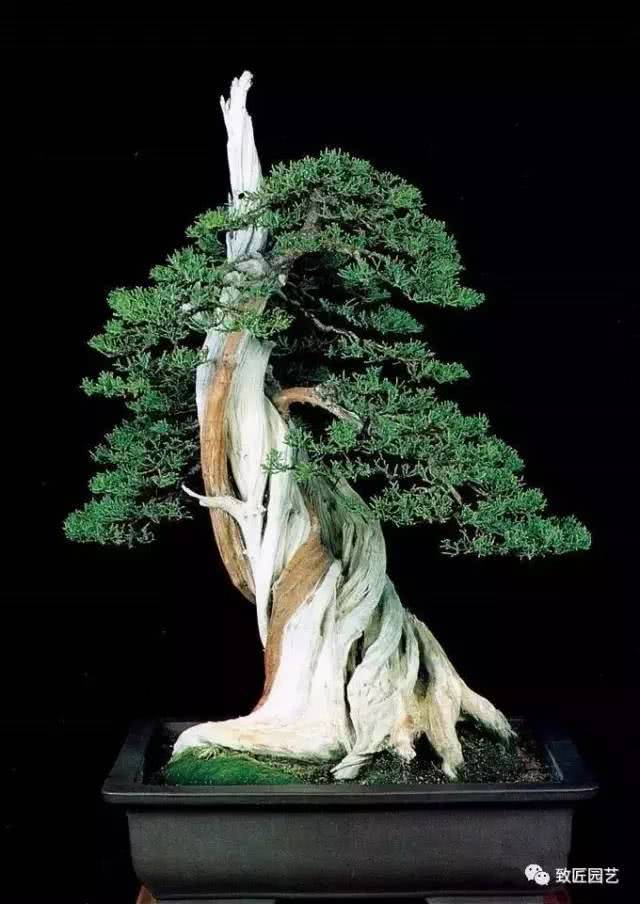
Bonsai originated in China. It is a traditional Chinese art treasure with a long history, deeply loved by the broad masses of people, and enjoys prestige around the world. Bonsai is an ingenious combination of plant cultivation techniques and formative art. It uses plants, rocks and other materials, which through artistic processing are planted or arranged in a pot to imitate beautiful natural scenery as a decorative item; it is the crystallization of cultivation techniques and formative art, and also the combination of natural beauty and artistic beauty.
Before the 1930s, potted plants and bonsai were collectively called penjing. But because they differ in whether trees form the main subject or whether mountain and rock scenery forms the main subject, and because trees are living plants that constantly change with the seasons and as they age, while mountain and rock scenery changes little; at the same time, the trees in landscape bonsai are artificially made, and there is also "single-stone bonsai," in which one stone forms a landscape; whereas "scholar's rocks" do not change. Therefore, two different kinds of artwork gradually took shape: those with trees as the main subject are called potted plants or tree-stump bonsai; those with mountain and water scenery as the main subject are called bonsai or landscape bonsai. At present, the name "potted plants" is mostly used internationally for those with trees as the main subject, and it is transliterated as "Bonsai." But in daily life, people are still accustomed to using the term "bonsai."
Tree-stump bonsai
Landscape bonsai
It is worth mentioning that bonsai developed further from potted plants (pot cultivation), but there is a fundamental difference between bonsai and potted plants. Generally, growing plants in pots and vessels is all called potted plants. Potted plants merely plant plants in a pot for viewing in all four seasons, and their aesthetic object is only the bright colors and shapes of branches, leaves, flowers, fruits and so on; whereas bonsai is an artwork created as a scene through artistic treatment and horticultural craftsmanship. In addition to achieving the ornamental purpose of potted plants, it must also, through careful artistic shaping, express endless poetic sentiment and pictorial imagery, express a natural beauty that captivates the mind and stirs the imagination, and express people's love for nature. Therefore, bonsai is also the repository and expression of the creator's artistic emotions, the revelation of subjective spirit. Bonsai is a fusion of scenery and emotion, an organic combination of natural beauty and artistic beauty, the condensation of nature's charm, with both form and spirit revealed.
The differences between bonsai, potted plants and scholar's rocks
Bonsai is the miniature of natural scenery, a comprehensive formative art that integrates garden cultivation, literature, painting and other arts, combining and blending them into one. The bonsai artist uses creative techniques and reasonable layout, and in pots of various depths, lengths and widths, with different shapes and sizes, and with different colors and textures, cultivates trees, flowers and grasses that have undergone a certain artistic shaping, or various rocks that have undergone artistic processing, so that they form a scene imitating nature and an ideal three-dimensional picture surpassing the original state of mountains and fields. This formative art is called bonsai.
Bonsai uses plants, mountains, rocks, water, soil and so on as materials, and is completed through the creator's conceptual design, shaping and processing, and careful maintenance. Arranged in a tiny pot, "shrinking a thousand miles of land" and "shrinking a dragon to a cun," it can display the infinite scenery of nature, so bonsai is praised as "three-dimensional painting" and "silent poetry." As time and seasons change, it can also present different postures, colors and moods.
In a certain sense, bonsai is also a synthesis of aesthetics, literature and science. So-called aesthetics: the making of bonsai must give people aesthetic appreciation, ancient elegance and delicate beauty, vivid charm, and be thought-provoking; so-called literature: the shaping and conception of bonsai has poetic sentiment and pictorial imagery, high and low levels, modulation and cadence, introduction, development, turn and conclusion, reflecting a relatively high level of literary grace; so-called science: the main shaping material of bonsai is plants, which have the characteristics of life and the laws of growth and development, and this determines that making it requires mastering knowledge of horticultural science as well as long-term artistic processing and maintenance management work. Only in this way can its survival and beautiful posture be ensured.
Featured content