Should the Clivia be watered? 3 small methods to help you judge
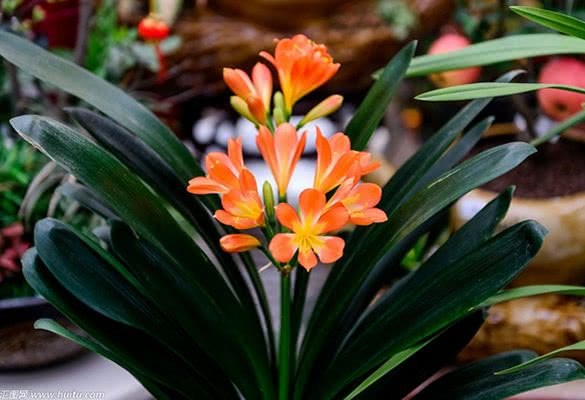
There are too many cases of Clivia being watered to death. If you do not water well, it mostly will not go well, and it is a great pity when a Clivia is watered to death. 3 small methods to help you judge whether the Clivia should be watered!
Clivia is evergreen all year round, with thick and large leaves and very strong shade tolerance, and its roots are fleshy roots with a powerful water-storage function. According to measurements, Clivia contains 60%-80% water in its body and has strong resistance to drought. Below let us look at how to judge whether the Clivia should be watered.
1. First look at whether the surface soil is dry or wet. If the surface soil is already dry, dig it open and look at how thick the dry soil layer is; if it is only a thin layer, there is no need to water. If the dry soil layer has reached l/4 to 1/3 of the potting soil, it indicates that the potting soil has begun to lack water or has already lacked water, and water should be added immediately.
2. Gently tap the middle of the flowerpot wall with your hand. If the sound is crisp, it means it is time to water; if the sound is dull, it means the potting soil has sufficient moisture and does not need watering.
3. Ordinarily, before watering the Clivia, hold the flowerpot in your hand and weigh it to feel the weight; after watering, weigh it again to feel the weight. After a long time and with some experience, you will know whether it is time to water just by weighing the flowerpot.
Clivia likes neutral water. Clean, pollution-free tap water, well water, river water and so on can all be used for watering, but in ordinary flower growing, we most commonly use tap water to water flowers. Before watering, be sure to first collect tap water in a small bucket or basin, leave it for 2 days, and then water.