Which flowers symbolize love? An experienced gardener's roundup for you
Whenever love is mentioned, people can't help but think of the solemn vows between couples, or the sweet intimacy between lovers. Of course, there are also the passionate, romantic roses and the warm, sweet chocolate. However, perhaps you don't yet know that some flowers can also represent beautiful love. What exactly are they? Next, the experienced gardener editor will introduce them to you in detail.
First, the balloon flower
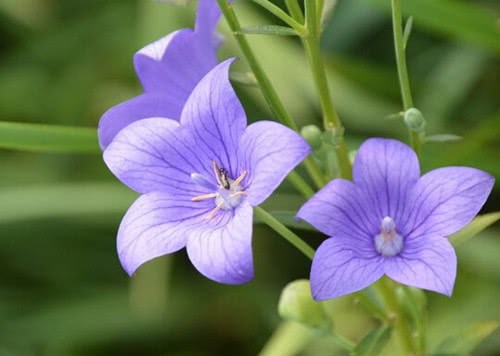
The balloon flower (Platycodon grandiflorus) is a perennial herbaceous plant. It also has many descriptive names, such as monk's cap flower, bellflower, and six-angle lotus, among others. The balloon flower is a flower variety unique to China, and it can be seen all over the country. The balloon flower plant is relatively large, reaching up to about one meter at its tallest. Its leaves are fresh and emerald green, its flowers are large, and its color is light purple, looking quiet and elegant, with a distinctive charm. In addition, the balloon flower also has a beautiful flower meaning: it symbolizes eternal, unchanging love. The balloon flower is naturally light-loving, and it also likes a moist and warm growing environment. However, the balloon flower does not tolerate shady environments. If it is kept in an environment with insufficient light for a long time, its normal growth will be affected. In addition, the balloon flower also very much likes fertile, moist, loose soil with good drainage, while heavy clay soil is not conducive to the growth of the balloon flower.
Second, the white rose
The white rose is a shrub plant in the Rosaceae family. It is also a plant variety unique to China, with a cultivation history of over a thousand years in China. The white rose plant is elegant and distinctive, with dark green, glossy leaves. Especially its flowers, shaped like jade plates and pure white in color, look fresh and elegant, full of a holy sentiment. In flower language, the white rose symbolizes purity, nobility, innocence, and pure love. Usually, the white rose prefers a growing environment with ample sunlight and a cool, dry climate. It also has a certain cold resistance and drought resistance. The most suitable growing temperature for the white rose is 15-25 degrees. In addition, the white rose is not strict about soil requirements; as long as it is fertile neutral or slightly acidic soil, the white rose can maintain good growth.
Third, lavender
Lavender is a type of small shrub plant. Its main places of origin are the Atlantic islands and the Mediterranean region. Although it is also planted within China, there are only two species of lavender there. The lavender plant is robust, with emerald green leaves. Its flower shape is a spike, and its color is deep purple, looking full of warmth and romance. Lavender has relatively strict requirements for its growing environment; it is more suitable for growing in a climate with warm winters and cool summers. The most suitable growing temperature for lavender is 26-32°C, and it has a certain cold resistance. According to experiments, lavender can endure low temperatures of -5 to -8°C. When it enters dormancy in winter, its underground parts can even endure low temperatures of -20°C.
Fourth, hyacinth
Hyacinth is also called colorful narcissus, or Dutch hyacinth. It is a perennial herbaceous bulb plant. Its places of origin are the coastal areas of the Mediterranean and the region of Asia Minor. According to scientific research, hyacinth is one of the most fragrant flower varieties in the plant kingdom. In addition, the flower colors of hyacinth are also very rich, including red, pink, yellow, purple, orange, and so on. It is a flower species deeply loved by people. Hyacinth naturally likes sunlight and has a certain cold resistance. It is very suitable for growing in a cool, moist environment and in loose, fertile sandy soil. However, hyacinth is relatively afraid of waterlogging, so during cultivation we must control the appropriate amount of water.
Above, the experienced gardener editor introduced the characteristics of several flowers, hoping this content can bring everyone some valuable reference. How much more do you know about the topic of this article? You are welcome to share your views in the comment section below. If you like this article, you might as well subscribe, and there will be more wonderful articles to share with you.