Lychee stink bug control relies on the Anastatus japonicus wasp, pesticide reduction works, bees pass safely
It is once again the flowering season for lychee and longan, and the lychee stink bug, which gives farmers endless headaches, is also stirring into action. Unlike the past, when pesticides were mostly used to "deal with" them, this year the lychee and longan production areas will have an army of Anastatus japonicus wasps stepping out to take on the lychee stink bug.
The local agriculture bureaus of Taichung and Kaohsiung are expected to release 1 million and 400,000 Anastatus japonicus wasps respectively; and the agricultural research and extension units are actively promoting not spraying during the flowering season, and have also introduced comprehensive control measures for the lychee stink bug. With efforts from all sides, beekeepers have also noticed. Pan Chien-ming, secretary-general of the Beekeepers Association, said that a month ago beekeepers went to Kaohsiung to collect lychee honey, "there was not much danger." The next step will be to move to central Taiwan to collect longan honey. If all goes smoothly, this year's honey harvest is expected to be abundant.
Anastatus japonicus wasps deployed to deal with the lychee stink bug and avoid pesticides harming bees
Whenever March and April come around, the lychee and longan flowering season, the problem of lychee stink bug infestations emerges along with it; the lychee stink bug comes on fiercely, causing serious flower drop and fruit drop problems. To protect their harvest, many farmers choose to apply neonicotinoid pesticides such as imidacloprid and clothianidin, as well as insecticides such as chlorpyrifos, carbosulfan, and cyhalothrin. However, last year in Kaohsiung and Nantou, many beekeeping households successively reported cases of bee colony disappearance and death, and outside observers have pointed to pesticides as the culprit, especially the insecticides used to control the lychee stink bug outbreak.
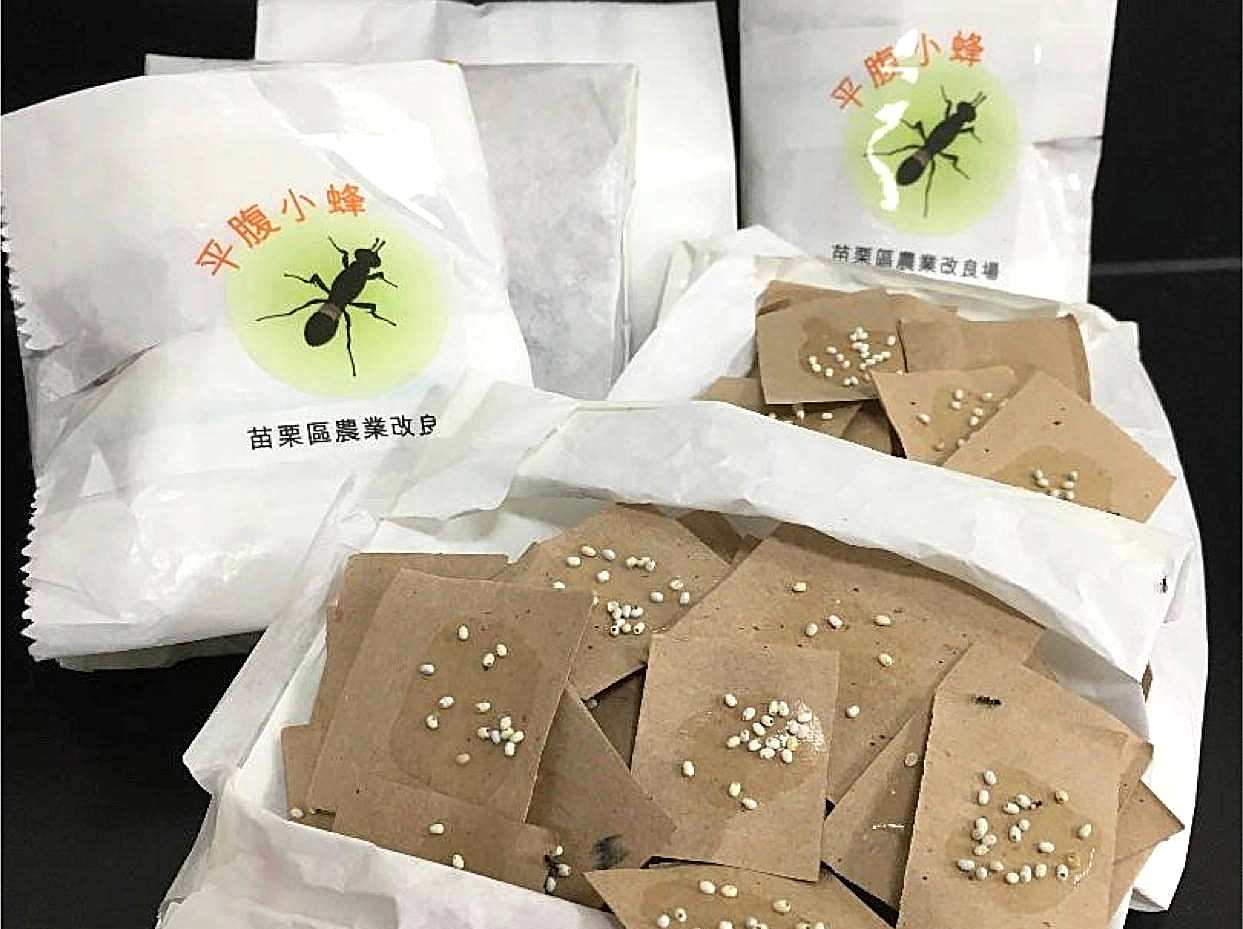
To protect lychee and longan from lychee stink bug damage while also avoiding bee colonies being affected by spraying during the flowering season, the Miaoli District Agricultural Research and Extension Station last year published a practice called "Anastatus japonicus biological control," using the biological characteristic that Anastatus japonicus wasps parasitize their eggs inside lychee stink bug eggs, to achieve the goal of lychee stink bug control; that year the Miaoli Station provided 120,000 Anastatus japonicus wasps in March and April respectively to longan and lychee production areas in Kaohsiung and Taichung.

Beekeepers notice: This year OK, not much danger to bees
To prevent a repeat of the regrettable situation of wanting to kill lychee stink bugs but accidentally killing honey-gathering bee colonies, all sides have heavily invested in physical control and Anastatus japonicus biological control, and even beekeepers have noticed. Pan Chien-ming, secretary-general of the Taiwan Beekeepers Association, said that last month beekeepers had already gone to the Dashu and Yanchao areas of Kaohsiung to collect lychee honey, "that stage of honey collection has already been completed, OK no problem, (the bees) were not in much danger."
And in the next three weeks, beekeepers will move to a new position, heading to central Taiwan to collect longan honey. Pan said that, as he understands it, central Taiwan has been actively promoting that fruit farmers avoid spraying during the flowering season, and the subsequent honey collection situation still remains to be seen, "but for now, there is a chance of a bumper harvest."