Different Growth Stages of Plants: Practical Flower-Growing Techniques Differ Greatly
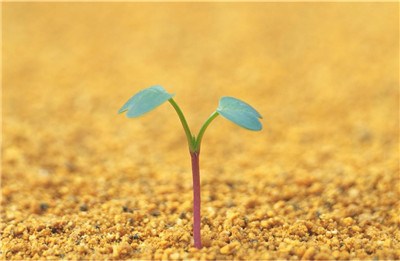
Plants have different flower-growing techniques at different stages, so dear readers, treat them differently too!
1. Seedling stage
For all kinds of plants started from seed, whether flowers or vegetables, this refers to the initial stage of growth, from breaking through the soil to before 3~4 true leaves.
At this stage, the roots are shallow and the seedlings are small. For those planted in garden soil, basically no topdressing is needed; but for those planted in a low-nutrient substrate, when the temperature is suitable, topdressing can be applied as appropriate, and note that the amount should be less than during the vigorous growth period.
As for watering, before the cotyledons unfold, the soil should be kept moist; after the cotyledons unfold, you can switch to the method of watering thoroughly whenever the surface soil looks dry.
This care method, for perennial plants, applies to the early sprouting stage of bulbous plants and the early sprouting stage of various woody plants (especially those with the habit of leaf-shedding dormancy; when they start sprouting again, some species will synchronize with the bud stage, or it will appear only after flowering, and usually it lasts only a short time).
2. Vigorous growth period
At this stage, the plant grows rapidly and it is one of the periods when water and fertilizer are needed. The watering method is also to water thoroughly whenever the surface soil looks dry; the only thing you can control is the frequency. Whether potted or planted in the ground, as long as the temperature is suitable, you can
apply fertilizer as appropriate. After all, there is an important principle for topdressing: do not fertilize until new leaves (buds) appear. For foliage-oriented plants, the fertilizer should contain a somewhat higher proportion of nitrogen; for flower- and fruit-oriented plants, fertilizers with more phosphorus and potassium can be appropriately added.
For different types of plants, the timing of the vigorous growth period varies. Annual plants: it occurs in the early growth period, that is, the time from the seedling stage to before budding.
Foliage-oriented plants: the suitable-temperature spring and autumn seasons are the vigorous growth period. Woody plants: it mainly depends on the species; for some, the vigorous growth period is also the period when young fruits swell and grow, especially for fruit trees such as apples, peaches, and pears.
3. Bud stage and fruiting stage
This period is also the time when plants need water and fertilizer the most. Unlike simple leaf growth, the growth of buds and fruits consumes nutrients, while leaf growth accumulates nutrients.
But for different types of plants, the stages in which this appears also differ. For annual and biennial plants with short growth periods, it appears in the middle and late stages of plant growth, such as sunflowers, various beans, and rapeseed (considering the time of harvesting rapeseed), etc. For perennials, the differences are even greater: some appear before leaf growth, such as various Lycoris species and woody plants that bloom in early spring, especially those that bloom before leafing out, such as forsythia, winter jasmine, and magnolia, etc.; some are almost synchronized with the vigorous growth period (when budding and flowering occur, branches and leaves also grow vigorously at the same time), such as pomegranate, crape myrtle, and Jasminum floridum, etc.
The watering method is the same as in the vigorous growth period: water thoroughly whenever the surface soil looks dry, and adjust the frequency appropriately according to the plant's growth conditions and temperature changes. However, for foliage-oriented plants, since the ornamental effect of flowers and fruits is inferior to that of the leaves, and sometimes in order to make the leaves grow better, you may instead need to consider removing the flowers and fruits (such as Hydrocotyle vulgaris and Peperomia obtusifolia, etc.) to avoid excessive nutrient consumption. Therefore, for such plants, this stage basically does not apply.
4. Dormant period
This stage is the period when plants rest and recuperate, and growth almost completely stops (applicable to most plants, especially some evergreen plants) or even leaf drop occurs (for some woody plants with the habit of shedding leaves in winter), and all aboveground plant parts wither, leaving only the perennial root or bulb state (for some perennial herbaceous plants), with very little demand for water and fertilizer.
The general care point is to stop fertilizer, but not to stop water. That means: during dormancy, there is no need to fertilize it; but watering is still the same as usual, watering thoroughly whenever the surface soil looks dry, only much less frequently than during the usual vigorous growth period, as well as during budding, flowering, and fruit growth; for example, for the same plant, during the dormant period, watering is about once every 7~14 days or even longer; but during the usual vigorous growth period, watering is about once every 4~7 days or even shorter.
5. Recovery period after transplanting
This is a special stage. It appears when a plant has been transplanted or newly purchased and its growing environment has changed greatly. Its care method has nothing to do with what period the plant is in. During the recovery period, the care method is rather special; the care method for this period can completely draw on the care used during dormancy, which is to stop fertilizer but not water, water as usual, and water thoroughly whenever the surface soil looks dry; because at this stage the root system has not yet grown well and is also sensitive to fertilizer, there is no need to consider topdressing.
As for how long it takes for the plant to resume growth, it all depends on how it performs.
When transplanting, if few roots are damaged, the plant is herbaceous, and the seedling is small, then the recovery period will be relatively shorter; if at transplanting the plant is bare-rooted or even has fairly severe root damage, is woody, and the seedling is large, then the recovery period will be relatively longer.
During the recovery period, no matter what habits the plant has, generally speaking, it is recommended to place it in a spot with scattered light and good ventilation, and temporarily hold off on sun exposure. After it resumes growth later, then care for it according to its own habits (sun-loving ones must be given sun exposure; shade-loving ones should continue to be placed in a spot with scattered light and good ventilation); for a few very tough plants, such as moss rose and Tradescantia zebrina, types that root easily even from cuttings, during the recovery stage, appropriate sun exposure will not affect their survival, and for these plants, management is even easier.
6. Flowering period
It is also a special period, and different types of plants have different requirements.
For those with seasonal flowering and a generally very short flowering period, such as apples, pears, and apricots, during full bloom, since flowers are relatively sensitive to fertilizer, it is not recommended to fertilize them when they are blooming heavily.
There are also plants that bloom continuously all year round and have a very long flowering period, such as petunia, dianthus, geranium, and moss rose. During heavy blooming, when the temperature is suitable, fertilizer can be applied as appropriate (fertilizer with more phosphorus and potassium).
As for the watering method, it is likewise to water thoroughly whenever the surface soil looks dry. This method is basically universal and applies to almost all plants.
A few supplements
1. Plant dormancy is affected by multiple conditions together. Besides low temperatures in winter, it is also related to short-day conditions; in summer, when the weather is too hot and too dry, it can also cause plant dormancy.
This depends not only on habits, but other conditions should also be paid attention to together; after all, plant dormancy is its way of resisting unfavorable environments.
2. Repotting is major surgery. How to do it also depends on conditions. Generally speaking, choosing to do it during the dormant period and early growth stage has the least effect on the plant, even negligible; but if it is done during the recovery period, vigorous growth period, bud stage, flowering period, and fruit growth period, then there will be adverse effects, ranging from delaying growth to abnormal flower and fruit drop in severe cases; except for some plants that go dormant in summer, for most plants, midsummer is the least suitable time for repotting, especially during high-temperature periods. In short, no matter what, repotting should be done more cautiously, and you should choose the right timing before considering it.
LOVE. Soilless Farm
Soilless FarmShengguo Ju Mall
Discover the beauty of growing flowers