6 succulents that are easy to grow and quickly fill their pots, even beginners can grow plump, chubby leaves
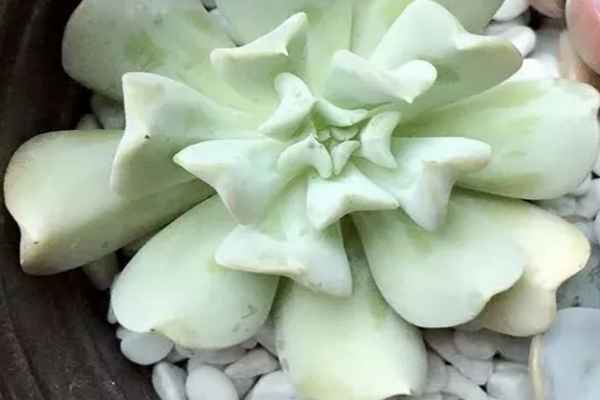
Echeveria 'Topsy Turvy'
Echeveria 'Topsy Turvy' has a super strong ability to produce pups, and its leaf shape is very special too, with a groove on the back of each leaf that you won't forget after one look. How should you care for it to make it fill its pot faster?
1. Apply a little phosphorus and potassium fertilizer
Spring is the growing season for succulents, so you can apply a little phosphorus and potassium fertilizer to them. Decomposed peanut bran fertilizer liquid can be watered onto the succulents, once a month, and do not pour it on the leaves.
2. Give it more sun, and the leaf color will be brighter
As temperatures rise in spring, you can move the succulents outdoors to bask in the sun. With more sun exposure, it is easier to bring out their best condition, the leaf color becomes brighter, and the leaves become plumper!
3. Stick the leaves in soil, and they fill the pot in no time
Pluck off the leaves of Echeveria 'Topsy Turvy' and stick them into the soil, and they sprout new buds at astonishing speed. In 1-2 weeks they cover the whole pot surface, truly the fighter jet among succulents! No more worrying about slow leaf propagation filling the pot! In the blink of an eye, you'll have 100 pots!
Pachyphytum 'Amethyst' (Peach Egg)
The leaves of Peach Egg are round and plump, just like little balls, and after filling the pot they look even cuter, almost like grapes. Peach Egg naturally loves to produce pups, and with proper care, filling the pot is no problem at all!
1. Want it to grow plump? Behead it first
In spring you can behead Peach Egg, which will make it grow plumper and rounder, and the cut stems stuck into soil will quickly fill a pot again!
2. Sprinkle a little fertilizer in the pot
Peach Egg is a succulent that likes fertilizer. In spring you can sprinkle a little slow-release fertilizer at the bottom of the pot to provide plenty of nutrients for growth and make it produce pups faster!
3. Use a mixed soil
Huahua suggests fellow plant lovers mix coal cinder and peat soil at a ratio of 1:2, and not use a single type of soil alone to grow succulents.
Echeveria 'Hyalina' (Nüchu)
Those who grow Nüchu at home surely already know its pup-producing ability. Once it starts producing pups, it really cannot be stopped, you cannot even squeeze a needle in, and the plump leaves crowd together so adorably that you can never get enough of looking at them all day, so cute it kills you! How should you care for it to make it fill its pot like crazy?
1. In spring, be sure to give it plenty of sun
If you want Nüchu to look beautiful, you must give it plenty of sun, and the leaves quickly take on a jelly color, truly so beautiful. With a Nüchu at home, you won't even want to go out.
2. Water only after the soil dries
Never water too much, and be sure to wait until the soil is dry before watering. When watering, use a watering can with a narrow spout, and do not pour water on the leaves, otherwise sun exposure will cause sunburn spots.
3. Remove some leaves appropriately
Echeveria 'Topsy Turvy' will keep growing many pups, and if they grow too densely, you can remove some leaves to improve airflow around the leaves, otherwise over time they are prone to pests, black rot, and mold.
Cotyledon tomentosa (Bear's Paw)
The leaves of Bear's Paw have little claws that look like tiny bear paws, and who knows how many hearts it has captured. There are also lots of people growing Bear's Paw.
1. Repot once a year
Bear's Paw grows relatively fast, so generally repot once a year. The new pot should be larger than the old one, and change the soil to a loose, breathable mix of peat soil, river sand, or vermiculite, which can make Bear's Paw grow faster and produce more pups.
2. Do not use leaf propagation, use stem cuttings
Leaf propagation of Bear's Paw is very hard to succeed with, so fellow plant lovers can use stem cuttings. Cut off a stem with 4-6 leaves, let the wound dry first, then insert it into soil, using a mix of vermiculite and perlite.
3. Water once every 7-10 days
Bear's Paw shows its best condition most easily when grown outdoors. With more sun, the bear paws turn red. Generally water once every 7-10 days, and water only after the soil dries, and do not let water accumulate and rot the roots.
Sedum 'Laurus' (Laura)
Laura is truly a little expert at producing pups, effortlessly producing over a dozen of them, with leaf after leaf pressed tightly together, and the leaf color is so beautiful that you cannot look away.
1. After beheading, even more pups
Cut off the topmost head of Laura, which can stimulate more side buds to grow and produce pups like crazy. The cut-off head can be directly used for cuttings, but do not pluck off the leaves for leaf propagation, as leaf propagation is not easy to keep alive.
2. Give it more sun, and it gives off a lovely fragrance
With more sun, Laura not only gets a better leaf color, but also gives off a fragrance.
3. When the wind is strong, move it indoors
Spring winds are relatively strong, so if Laura has just started being grown outdoors, move it indoors promptly when strong winds and colder weather arrive.
Sempervivum tectorum (Hens and Chicks)
Hens and Chicks is especially easy to grow, and it can fill its pot before you even realize it, growing like an open lotus flower. There are also lots of people growing Hens and Chicks.
1. Pull off the lower leaves to encourage pups
Remove 2-3 layers of leaves from the lower part of Hens and Chicks to expose the growth points at the base, and after 7-15 days, pups will grow.
2. Light must be sufficient
Spring is the growing season for Hens and Chicks, so give it more sun to make the leaves grow plumper and the leaf color brighter, and water only after the soil dries.
3. Apply fertilizer once a month
Apply bone meal to Hens and Chicks once every 1 month. If you apply the fertilizer in the morning, water thoroughly the next evening to dilute the fertilizer a little.
These succulents that easily fill their pots,
do you like them?
If you think what Huahua said is useful,
then share it with others to take a look!