China's most beautiful Buddhist nunnery, where no incense is burned and only flowers are planted, drew even Han Hong to visit
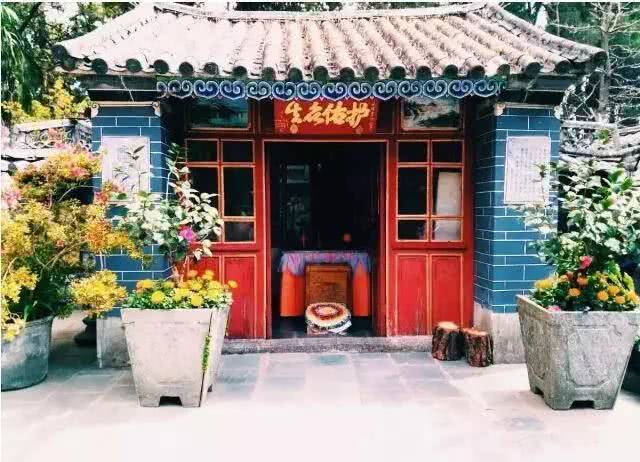
At the southern foot of Shengying Peak of Cangshan in Dali, Yunnan,
hides a rather famous temple.
Though small, it carries many accolades:
China's most beautiful Buddhist nunnery, China's most artistic temple!
It also has a beautiful name:
JizhaoNunnery!
The name Jizhao Nunnery
comes from"Moved, one attains understanding; in silence, one sees clearly",
The temple was first built in the early Ming Dynasty, then destroyed,
and during the Republic of China period, Tang Jiyao oversaw its reconstruction.
The inscription "Jizhao Nunnery" on the gate was written by him.
Around the temple, pines and cypresses form shade, and the environment is serene.
Everywhere reveals a fresh and elegant atmosphere,
interpreting true poetic beauty.
In many people's impressions,
temples are mostly magnificent halls with thriving incense.
However, Jizhao Nunnery is exactly the opposite.
Here it is simple and small, and no incense is burned.
The reason it is so beloved
is also becauseit is filled with all kinds of flowers and plants。
Stepping across the temple's threshold,
both sides are lined with all kinds of flowers and plants.
You will marvel that there is no trace of a temple here at all.
It is more likean artistic garden filled with spring。
Only after visiting can you understand what it means:
"A winding path leads to a secluded spot, where the meditation room lies deep among flowers and trees"!
Following the path into the temple,
sight and smell are drawn in by the flowers and plants,
exceptionally fresh, artistic and full of life.
Wind chimes sway, their ringing crisp,
echoing through the silent mountain forest.
The spiritual charm and Zen essence of this fragrant Buddhist land
unwittingly seep into the heart.
Photo by Shuying
Turning the corner to the front courtyard,
various fresh flowers and succulents come into view.
Standing casually before any pot of flowers or plants,
one can be made to stop and sniff for quite a while.
Passionate, subtle, vivid, delicate...
In all their myriad forms, it is truly a paradise for succulents.
Echeveria 'Yudie' (Echeveria secunda), bigger than a fist,
is like lotus flowers full of Zen meaning,
a perfect match for this pure Buddhist ground.
Looking around the entire front courtyard,
you will actually find surprises everywhere.
Every succulent is matched with exquisite perfection!
This old wooden boat
has been planted full of various succulents,
gorgeous and colorful, as if naturally formed!
Weathered wood
has also been given new life.
Photo by Shuying
Some succulents hang in hanging baskets,
rippling with the breath of spring in these deep mountains.
Examined closely,
not one fails to stir tender affection.
Photo by Shuying
The back baskets hanging on the wall
are also filled with the taste of spring.
Bamboo baskets large and small
are also planted full of colorful succulents.
How one wishes to carry away this basketful of spring.
And in all kinds of vessels...
Even this large stone mill
reveals vitality in its aging years.
How is this like a temple?
It is clearly a garden of a hundred flowers,
with the language of flowers everywhere, clean and serene.
In the courtyard, before the steps, even under the eaves and on the walls,
everywhere is a profusion of flowers, gentle and elegant,
seemingly casual yet meticulous in every detail.
With so many exquisite flowers and plants before one's eyes,
there must be a caring "owner" behind them.
This "owner" isMaster Miaohui。
In 1982, Jizhao Nunnery was restored.
In 1989, Master Miaohui became the abbess of Jizhao Nunnery and remains so to this day.
With morning bells and evening drums, accompanied by green lamps and ancient Buddhas,
for decades, Master Miaohui, with a resilient heart,
has repaired the once dilapidated Jizhao Nunnery into the image in her heart.
Photo by Yanzi
Master Miaohui loved flowers since childhood.
Whenever she saw a flower she liked, she would bring it back to grow seedlings.
Year after year, day after day,
now it is a garden full of flowers.
Especially the "Hundred Flower Garden" in the backyard of Jizhao Nunnery,
which is Master Miaohui's favorite place outside of her spiritual practice.
There are two greenhouses here:
one for cultivating succulents and moss, one for growing fresh flowers.
The bhikkhunis of the nunnery
are all happy to come here in their spare time to tend the flowers and plants.
In these greenhouses,
there is the fresh fragrance of soil,
and lush green filling the eyes.
In the day-after-day chanting of Buddhist songs,
they seem to receive the Buddha's blessing,
radiating vibrant vitality.
Besides the front and back courtyards being full of flowers,
in the main hall of Jizhao Nunnery - the Mahavira Hall,
no incense burner can be seen on the Buddha altar either.
What is placed there are all fresh flowers.
Stepping into the hall, waves of delicate fragrance greet the nose,
suddenly feeling spotless and refreshed in spirit!
Photo by Shuying
Han Buddhism values thriving incense above all,
but in Jizhao Nunnery, flowers are used to honor the Buddha and make offerings.
Why is this so? Master Miaohui says:
The Buddha lacks nothing and does not care about a stick of incense from you,
but cares about your heart.
Photo by Shuying
It is precisely with this pure and resilient heart
that today's Jizhao Nunnery exists,
a temple that perfectly combines Zen meaning and aesthetics.
Brilliantly colorful fresh flowers, soaring morning bells and evening drums,
Zen words drift through the empty valley, birdsong warbles behind the eaves.
In such a quiet and beautiful place,
many female visitors even want to stay after visiting.
Last May,
Han Hong also visited Jizhao Nunnery, drawn by its fame,
and while chatting freely with Master Miaohui,
she also left behind the ink inscription "Jizhao Buddha Light, Purple Mist Brings Wisdom".
Stepping through the secluded path and over stones to enter the monastery gate, summer rain and gentle breeze cleanse the mortal dust;
The courtyard full of flowers speaks of elegance, quietly listening to Zen sounds reflects on half a lifetime.
Here, there is no need to say anything,
the heart inexplicably feels a sense of tranquility, calm and peace,
and then Zen slowly permeates body and mind.
Accompanied by flowers and plants,
facing the turmoil of the mortal world, one can still smile gently.
Content with simplicity, happy in solitude.
Besides the flowers and plants,
the halls of Jizhao Nunnery also have a unique style,
seemingly simple, yet full of sentiment and wisdom,
fresh, beautiful and artistic.
Master Miaohui said,
the house was originally built slowly with stones picked up from the mountain
and old wood given by the villagers at the foot of the mountain,
the interior decoration was designed with help from a person from Hangzhou,
and all the materials used were old ones too,
although it looks refined and complex,
in fact not much money was spent on luxury,
just a little more thought and time.
Jizhao Nunnery is not only quiet and elegant in environment,
the vegetarian meals here also make people feel pure and desireless after tasting them,
many people come drawn by its fame, also for this bowl of vegetarian food.
At first, Jizhao Nunnery provided vegetarian food for free,
later, as believers and tourists increased,
Jizhao Nunnery charged 20 yuan per person,
free on the 1st and 15th of each lunar month and on weekends.
Later still, there were really too many people,
the temple could not bear it,
so it could only be free on the 1st and 15th of each lunar month.
Those who have been here,
all praise the vegetarian meal here endlessly,
the reason is simply: delicious!
And Master Miaohui said,
the vegetarian food here is just ordinary food,
completely home-style cooking,
the cooks are all ordinary volunteers,
no outside chefs are hired.
It is just that they are indeed particular about the ingredients,
going to the market to buy at around 4 in the morning every day,
only selecting those grown by farmers themselves,
even if they have been bitten by insects and look a bit ugly,
as long as they have not been sprayed with pesticides, they will take them.
And things like rice, potatoes, pumpkins,
are even "custom-grown" for the temple.
Nowadays, two to three hundred people come here every day to eat the vegetarian meal,
Master Miaohui also personally holds up a sign,
promoting to everyone to cherish food,
take as much as you can eat, and take more if not enough,
absolutely do not waste, that is a sin.
There was once someone who left food uneaten and wasted it,
so they could only go kneel in the Buddha hall.
But most people,
will eat everything clean.
Eating the vegetarian meal at Jizhao Nunnery,
is not just eating a meal,
but also a culture, a philosophy, a cultivation.
Besides the vegetarian food, you can also brew a pot of Zen tea in the tea room,
sit peacefully for an afternoon, not noticing that the days and months in the mountains are long.
Outside the tea room door there is a small fish pond,
flowers and plants are scattered around the pond, and fish frolic happily in the pond.
Every plant and tree, every brick and tile,
a bowl of vegetarian food, a cup of clear tea,
every inch of time at Jizhao Nunnery,
is so beautiful.
Lingering Buddhist sounds, purity from the start,
the Zen life, the heart's home.
When spring comes, flowers naturally turn green; when autumn arrives, leaves drift down,
Infinite prajna, the heart is free; in speech and silence, in movement and stillness, the body is natural.
We do not all need to live dazzlingly,
inner freedom and peace,
are what matter most.
When the heart is free, the body is free.
May you and I, no matter what we face,
both be calm and detached, peaceful and kind,
like the Buddha's flower-held smile.
--THE END--
"Wildflowers & Nature"
The most readable WeChat public account in the floral art field
Floral Art Aesthetics | Plant Aesthetics | Life Aesthetics | Plants & Floral Art Exploration