Grow Kalanchoe like this, and it will be hard not to have it burst with blooms
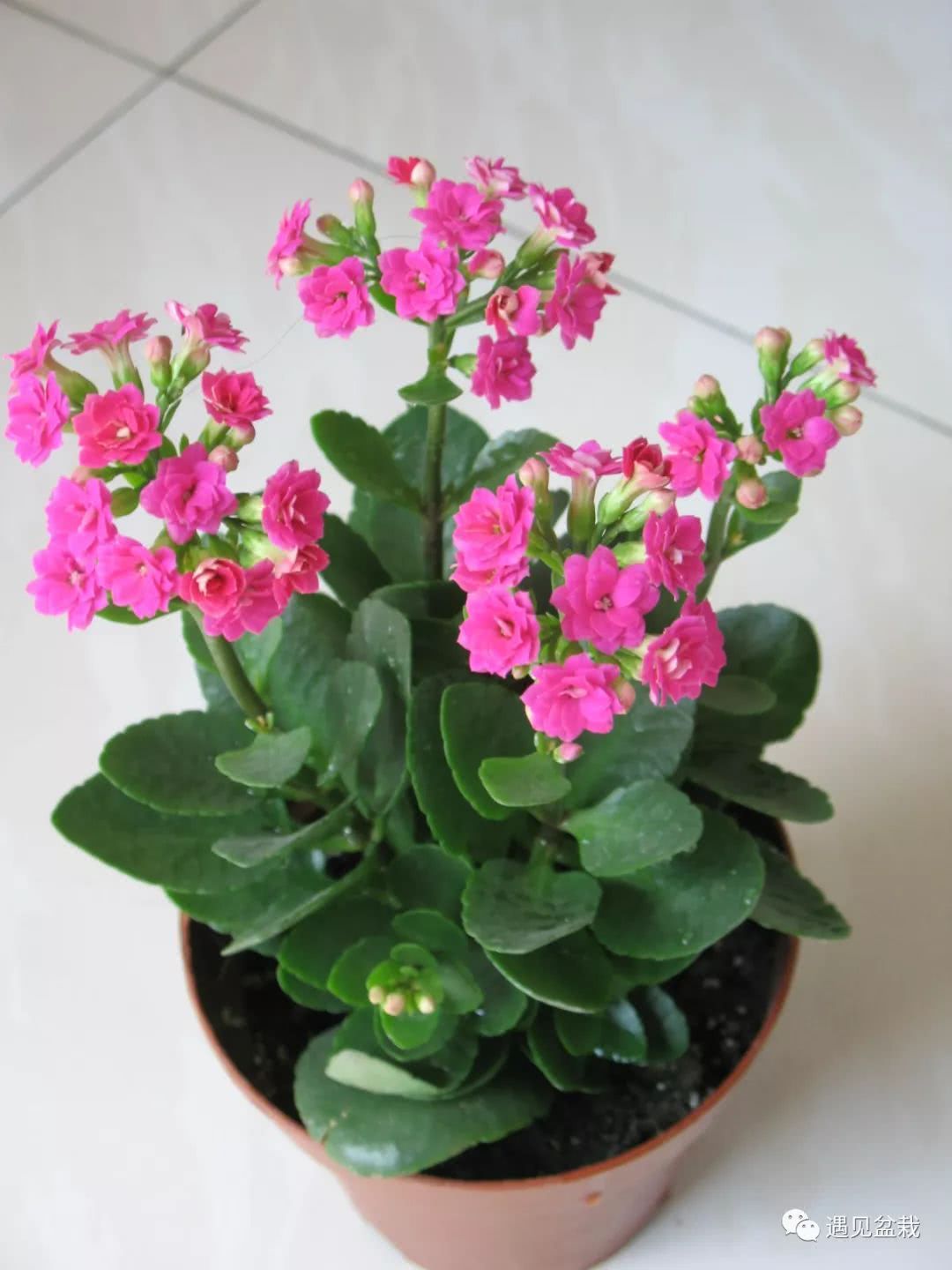
Kalanchoe has emerald green leaves, dense flowers, and a compact plant shape. It is a potted plant very suitable for growing indoors in spring, and Kalanchoe carries the beautiful meanings of long life and good fortune, making it deeply loved by flower lovers. I believe many flower lovers like to grow a few pots at home, so what should be noted when growing Kalanchoe? Let's talk about it today.
1. Soil
For the soil used to grow Kalanchoe, it is recommended to use a mixture of leaf mold, garden soil, and river sand, with a ratio of 4:4:2. This kind of potting soil is loose and fertile, slightly acidic, and has good drainage, which is beneficial to root development.
2. Temperature
The most suitable temperature for Kalanchoe is 17-25 degrees. When it is below 10 degrees or above 30 degrees, Kalanchoe will enter a dormant period and stop growing. Therefore, in summer when the temperature is relatively high, avoid exposure to strong sunlight and take good shade measures. In winter when the temperature is below 10 degrees, it is recommended to move it into a bedroom with temperature control conditions for growing.
3. Light
Kalanchoe likes places with plenty of sunlight. Except in the hot summer, when shade should be provided at noon, it can be placed in a spot with direct sunlight in other seasons. Long-term insufficient light may cause the branches to become slender, the leaves to be thin and small, the number of flowers to be few, and the flower color to be dull, affecting its ornamental value.
4. Watering
As a type of succulent plant, Kalanchoe, like other succulents, contains a large amount of water in its body, so it does not need too much watering. Watering once every 3-4 days is enough, and the soil just needs to be moist. In the hot summer, you can spray around the plant to increase air humidity.
5. Fertilizing
Spring and autumn are the peak growing seasons for Kalanchoe. A dilute liquid fertilizer can be applied once every half a month. Around November, Kalanchoe will grow flower buds, and some phosphorus and potassium fertilizer can be applied. After entering winter in December, stop fertilizing.
6. Propagation
Kalanchoe has strong rooting ability, so it is suitable for cutting propagation. The time can be chosen in March-May or August-September each year. When cutting, choose mature stems, then cut them into small sections of about 6 cm, insert them into soil, water thoroughly, cover with plastic film, and they will take root in about half a month. After a full month, they can be transplanted.
7. Pinching
In order to make Kalanchoe grow more branches and make the plant shape fuller and more compact, pinching can be done 1-2 times in the early stage of the peak growing season.
8. Pruning
Spent flowers will consume a large amount of nutrients, so once flowers are found to have withered, they should be pruned in time to avoid affecting the number of blooms next time.
After mastering these methods, don't you feel that Kalanchoe is very easy to grow? Follow "Meeting Potted Plants," and let's exchange those little tips about growing flowers together!