Detailed Explanation of Water Control Techniques for Orchids at Different Growth Stages
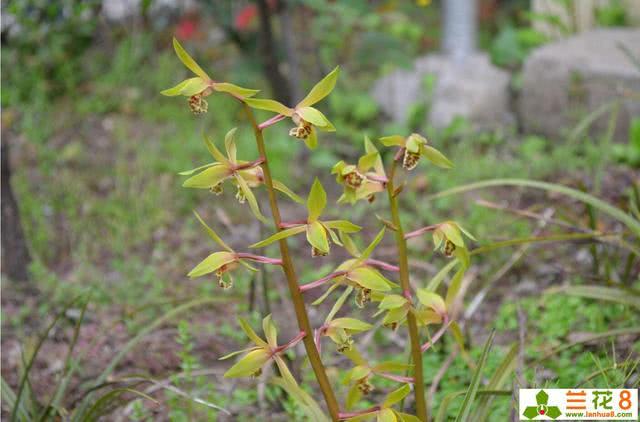
In orchid growing, watering is the key. As the saying goes, "watering takes three years of skill." If you grow orchids without thinking about watering and without experimenting, then even thirty years will not give you the skill that others gain in three. So once watering is done well, many problems can be readily solved. First, watering must suit the orchid, and you must understand the orchid's growth characteristics; second, water according to the orchid's characteristics, combined with your own growing environment and potting medium; third, water according to the orchid's different growth stages. In fact, only the first point matters, and in the end it comes down to matching the orchid's growth characteristics. The vast majority of friends who are just starting to grow orchids are afraid the orchid will die of drought, so they water as soon as the pot surface dries, or they frequently mist the orchid leaves, and some even set the bottom of the orchid pot in a tray with water. This keeps the pot overly wet for long periods, affects root respiration, causes root death and scorched root tips, and sometimes forms "hydroponic roots," so that when the pot is emptied the roots are hollow when dry, and after transplanting the plant does not easily settle in; it also easily allows harmful bacteria to multiply rapidly and the orchid to become diseased; some orchids look like a full pot of growth but simply do not bloom, and so on. These are all kinds of problems caused by watering too frequently. During the course of a year's growth, orchids do not need much water most of the time. If you can hold out when the pot is dry, then your watering has basically passed the test. To achieve a dry pot, you need to control water for the orchid. Water control means controlling the water given to the orchid, also called withholding water. But during the orchid's growth process, water is not controlled for long periods; when it should be wet, it still must be wet, and when it is time to control water, you must control it. Broadly speaking, water must be controlled during the following periods:
1. Water control during the orchid's flowering period. To produce good flowers, besides growing the orchid well and strong, you must also master water control during the flowering period. When the orchid's flower scape elongates and the flower bud is about to shed its bract, give the orchid one thorough watering, and then do not water again until several days after the flower is cut off. In this way the flowers open with ever greater spirit, the scape stands upright and the petals are well formed, the petals are less likely to curl backward and twist, the outer petals elongate, and the drooping of the lateral petals when the flower has been open a long time is controlled, and the degree of opening of the column and the backward curling of the lip are also reduced, and the flowering period lasts longer. Therefore, for flowers entered in orchid shows, in order to have a long-lasting good flower form, water control is very important. A flower entered in an orchid show was awarded a gold medal on the first day, and by the second day its flower form would not even have won bronze. Apart from the flower's own staying power, the most important reason is that water was not controlled. For flowers with poor staying power, water control must be done even earlier.
2. Water control during the new shoot growth period. Nowadays, since there are not many growers who cultivate orchids in a completely natural way, the timing of shoot emergence varies a lot, so it cannot be fixed to specific months. During the sprouting stage, orchids should be kept moist, on the wet side, in order to let the new shoots come up smoothly and produce more shoots. But after the new shoots emerge from the pot and open, water control should be carried out gradually, shifting from wet to mainly moist. You can use the alternating methods of light watering, heavy watering, and empty-pot intervals to control water. Light watering means stopping as soon as water comes out of the bottom of the pot; heavy watering means watering from above, letting it drain from the bottom, watering thoroughly, and you may also pour back and forth several times; empty-pot means short-term water control, making the pot fairly dry. Depending on how moist the potting soil is, you can alternate heavy watering - light watering - light watering - empty pot - heavy watering - light watering... Light watering can be consecutive, heavy watering should not be consecutive, and the empty-pot period should come before heavy watering. Through this semi-water-control, you encourage the new shoots to grow roots, so they become self-reliant, increase the development of the new shoots' pseudobulbs, and lay the foundation for the new shoots to grow strong. In Jiangnan, during the new shoot growth period there is a plum rain season. Through semi-water-control, the probability of the new shoots developing stem rot, soft rot, and other diseases is greatly reduced. When the plum rain ends and after the lunar solar term Summer Solstice, most new shoots have grown to half size, the weather gradually becomes hot, and the degree of water control gradually increases. Being dry allows them to withstand the heat of the environment. When orchids are relatively dry, they can endure 35°C or even higher temperatures. At high temperatures, if it is too wet and not ventilated, all kinds of problems will come one after another. Avoid watering at high temperatures, and the period when the pot shifts from wet to moist should also be passed at lower temperatures. That is why orchid growers schedule summer watering at night when the temperature is lower, so that by the time the temperature rises the next day, the pot is not too wet. According to my observation, orchids can still grow rapidly at 32°C, so high temperatures are not to be feared; the key is to achieve water control and ventilation, and both are equally important. Friends who have cooling facilities such as air conditioning can carry out a semi-water-control state, and in one summer a second generation of new shoots will emerge.
3. Water control to promote flowering in orchids. Starting from when the new shoots open, gradually control water, and Cymbidium goeringii will produce its first batch of flower buds. Earlier flower buds appear in April, which is quite normal; sometimes a flower bud takes nearly a year from formation to blooming, and with proper later management it can bloom perfectly normally. But most Cymbidium goeringii flower buds form after August, that is, only after the lunar solar term Start of Autumn. After the Start of Autumn, the temperature is still high, but the air begins to dry out. If you do not control water, the pot will still develop an effect similar to water control. If you deliberately control water, the orchid can produce more flower buds. Water control to promote flowering is also different from ordinary water control. If an orchid does not easily produce flowers, you must control water very dry, making the orchid "feel" a sense of crisis, then give a light watering and control water again, and repeat this many times before you get a satisfactory result. Do not be afraid the orchid will die of drought, but weak and diseased plants must not be treated this way. For Cymbidium faberi to produce flowers, the vast majority respond well to water control. In this season at the turn of summer and autumn, although the new shoots are already large, the leaves are still tender, and together with the autumn tiger heat, the temperature is still high, so orchid leaves are prone to black spot disease. Water control can also control the occurrence of black spot disease, so promoting flowering and preventing disease are achieved in one stroke.
4. Water control in winter for orchids. Winter water control is mainly because orchids grow slowly in winter and need very little water, and it can also prevent freezing damage and ice formation at low temperatures caused by moisture in the pot. I will not go into further detail here.
These are just a few personal reflections, to discuss with everyone, and if there are mistakes, please point them out. I publish orchid knowledge and pictures every day, to take you deeper into understanding orchids and teach you to grow orchids easily. If there is anything about orchids you do not understand, you can ask me at any time or leave a comment below. If my knowledge has helped you, I hope you can give me a like or share it to help more people!