A major garlic wholesaler speaks out: Excessive imported garlic inventory is false; international garlic prices hitting local garlic prices is the main cause
By Upstream and Downstream reporters Kong De-lian and Cai Jia-shan
In recent years, domestic garlic prices have fluctuated unpredictably, affected not only by multiple factors such as changes in production area, yield levels, climate temperature differences and import volumes; farmers have also spoken with one voice, pointing directly at garlic traders who simultaneously operate imported garlic imports and purchase domestic garlic, "colluding to monopolize" and suppress local garlic prices, causing production income to plummet. Is it really true that Taiwan imports too much foreign garlic? Has garlic warehouse storage exploded? Why has garlic become a "speculative futures" commodity in the international market? Upstream and Downstream interviewed major garlic suppliers across Taiwan to speak out and clear the fog surrounding garlic production and sales.
Question one: Is it true or false that imports are excessive and domestic harvest is bumper?
On March 25, Kuomintang legislator Chang Li-shan and others held a high-profile press conference at the Legislative Yuan, pointing out that the drop in garlic prices was caused by inadequate government control of imports. They presented data showing that garlic imports over the years had been about 3,000 to 5,000 metric tons annually, surged to 18,000 metric tons in 105, and last year reached as high as 28,000 metric tons, increasing year after year.
Chang Li-shan further emphasized that last year there were still 11,662 metric tons of refrigerated garlic that had not yet been consumed, and under this year's favorable climate conditions and promising harvest, garlic traders worried they could not absorb it all and stopped purchasing, which together caused prices to plunge.
Regarding this claim, an unnamed Yunlin major garlic wholesaler (hereafter referred to as Garlic Trader A) refuted it, saying "it is completely fabricated." He both imports and purchases domestic garlic, and according to his knowledge, imported goods had long been mostly consumed, with at most one to two thousand tons remaining in storage.
He further pointed out that Taiwan's garlic usage is large; even in ROC year 103, when imported plus domestic quantities reached more than 60,000 metric tons, more than last year's 50,000-plus metric tons, it was still fully consumed. Moreover, this year's actual harvest in production areas is not as good as imagined, with overall estimated production increasing by less than 10%.
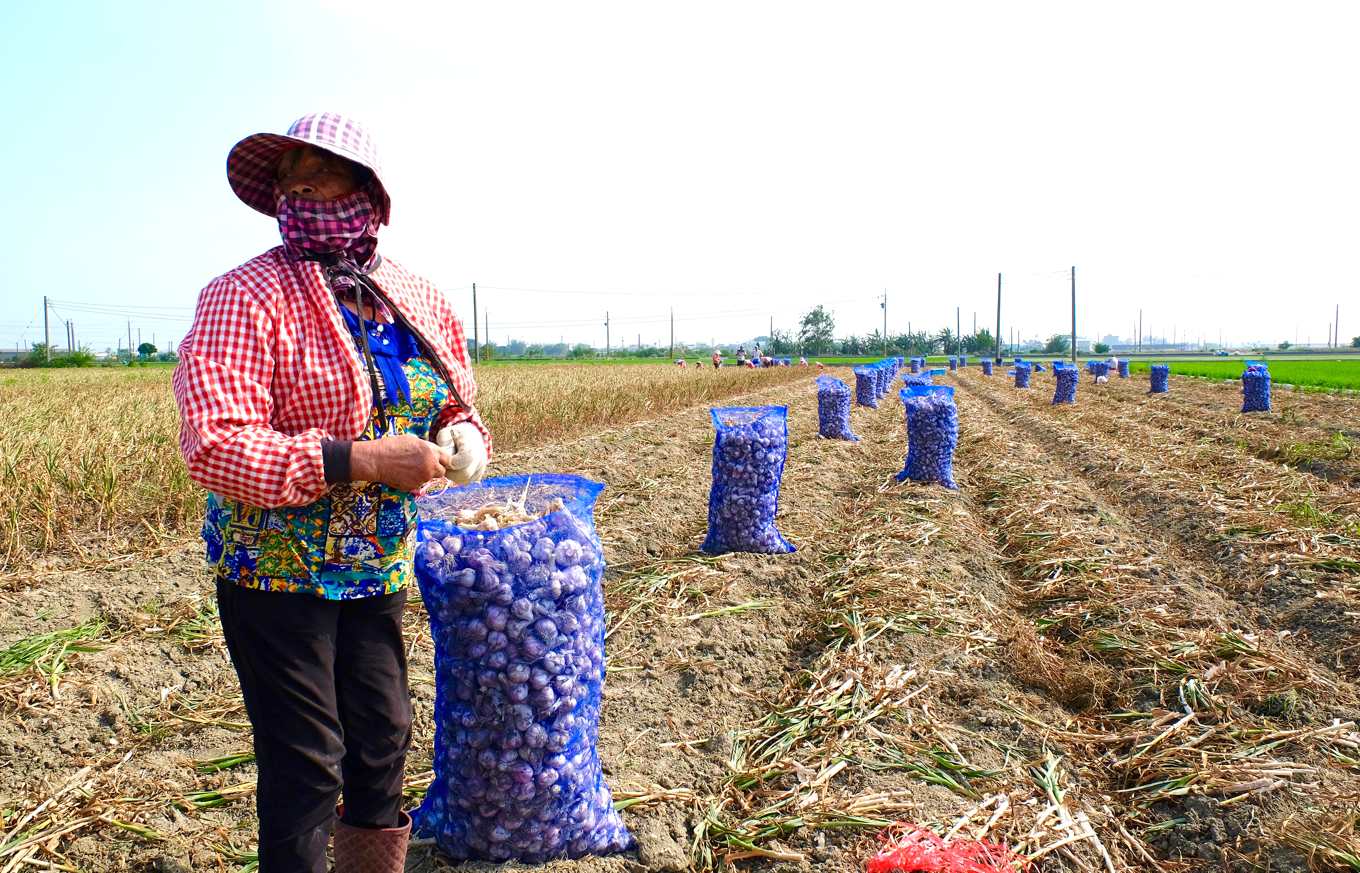
Arriving at a garlic field in Yunlin, under the strong sun, women wearing bamboo hats and fully geared up are busy harvesting with scissors. Asked whether it was a bumper harvest, the field owner, garlic farmer surnamed Tsai, said, "There's no bumper harvest! It's the businessmen squeezing tight and driving the price down!"
The garlic farmer surnamed Tsai said his harvest was still relatively good: one fen of land yielded 3,000 Taiwan jin of wet garlic, sold to a dealer at 15 yuan per Taiwan jin. Some people only harvest 2,000 Taiwan jin per fen, which does not even cover costs. According to estimates by the Agriculture and Food Agency, production cost per fen is about 40,000 to 50,000 yuan, meaning the cost per Taiwan jin could be anywhere from 12 yuan to 20 yuan.

- The garlic price war starts early! Did imported garlic cause trouble or are production area wholesalers monopolizing? How can farmers break through?
- How to distinguish Taiwan garlic from imported garlic? Experts from the improvement station teach you three steps